01
Consultation
Technical needs assessment


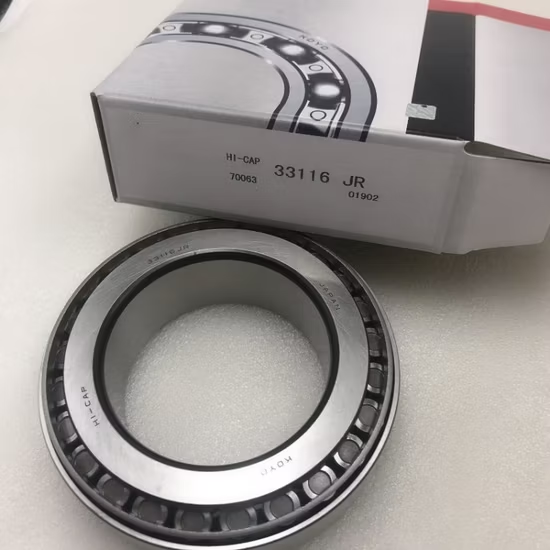

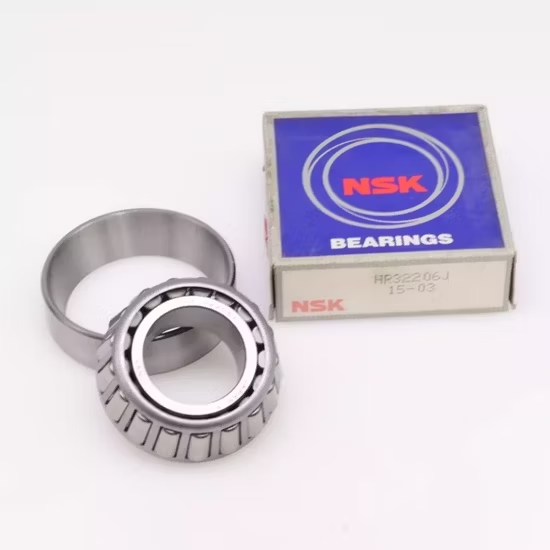


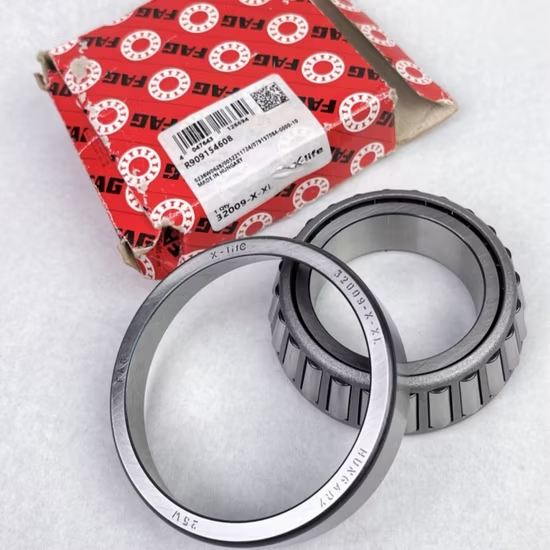
30201 30202 Tapered Roller Bearing P4 manufactured from Gcr15 steel for high hardness and wear resistance.
Cross-reference alignment verified — We match clearance, cage material, and precision suffixes for the 30201 30202 tapered roller bearing, not just the base number.
| Parameter | Value |
|---|---|
| Designation | 30201 30202 |
| Bearing Type | Tapered Roller Bearing |
| Number of Rows | Single Row |
| Structure | Taper |
| Precision Class | P4 |
| Cage Material | Nylon / Brass / Iron (available options) |
| Material | Gcr15 |
| Origin | Shanghai |
| Customization | Available |
Note: The identifier string groups multiple designations; specific internal variants require manufacturer catalog confirmation.
| Industry | Typical Applications |
|---|---|
| Automotive & Heavy Vehicles | Wheel hubs, truck axles, and heavy-duty drivetrain components |
| Industrial Machinery | Industrial gearboxes, manufacturing plant conveyors, and material handling drives |
| Marine & Construction | Marine drive shafts and building material processing equipment |
Matching the base number while ignoring internal geometry invites rapid field failure.
Sourcing replacement bearings often stops at confirming the basic designation, yet this approach routinely triggers thermal binding or cage disintegration under load . In high-temperature environments, a standard clearance unit installed where thermal expansion demands a C3 equivalent will seize quickly. Procurement teams frequently overlook how cage material and precision suffixes dictate survival in demanding gearboxes and truck axles.
Selecting the correct 30201 30202 tapered roller bearing requires aligning the P4 precision rating and specific cage material with the actual operational environment. Our technical review ensures the internal design variants match the combined radial and axial loads typical in automotive and industrial gearbox applications.
Heavy vehicle axles and industrial gearboxes subject bearings to severe combined loads and continuous shock impacts. Elevated operating temperatures alter internal clearance, making the correct initial clearance class vital to prevent thermal binding. Proper lubrication intervals and seal selection must balance contamination exclusion against friction heat generation . Misalignment during mounting further accelerates wear on the tapered raceways.
The P4 precision class ensures tighter dimensional and running accuracy, which is essential for minimizing vibration in high-speed gearboxes and marine drives. Gcr15 bearing steel provides the necessary core hardness and wear resistance to withstand heavy contact stresses. Depending on the specific speed and temperature profile, the cage can be configured in Nylon, Brass, or Iron variants. Nylon cages offer low friction and quiet operation at moderate temperatures, while brass or iron cages deliver superior durability under heavy loads and elevated heat.
Installing a bearing that matches the base number but lacks the correct internal design leads to unplanned downtime and catastrophic damage to adjacent shaft components. Premature failure voids equipment warranties and forces emergency procurement at inflated costs. According to ISO 15243 frameworks, improper clearance and cage selection are primary drivers of smearing and cage fracture .
We authorize distribution across all major brands, allowing a single order to fulfill mixed-brand requirements for complex machinery overhauls. Every batch includes traceability to the manufacturer, verified via QR codes on official brand apps. Cross-reference alignment covers clearance, cage material, and precision, preventing the costly mismatches common with basic number substitutions. Our application-based selection review evaluates your specific load, speed, and temperature parameters to confirm the exact internal variant required.
Provide your specific radial and axial load profiles, operating speeds, and temperature ranges to facilitate accurate L10 life calculations. Share OEM equipment numbers so our engineering team can execute a comprehensive cross-reference alignment. Detailing the installation space and environmental conditions ensures we supply the exact internal variant and cage material required for your application.
Q: How do I verify the authenticity and batch traceability of these bearings?
A: Each unit includes a Certificate of Conformity and batch traceability documentation. You can scan the provided QR codes using the manufacturer's official mobile application to instantly verify the origin, production date, and authenticity of the specific batch before installation.
Q: Why must cross-referencing align clearance and precision, not just the base number?
A: Matching only the base number ignores critical internal variations. Installing a standard clearance unit in a high-temperature gearbox causes thermal binding. Aligning the clearance class, cage material, and precision suffixes ensures the bearing survives the actual operational stresses without premature cage failure or seizure.
Q: What dictates the choice between Nylon, Brass, and Iron cage materials?
A: The selection depends on operating temperature, speed, and load. Nylon cages reduce friction and noise at moderate temperatures. Brass and Iron cages provide superior structural integrity and durability under heavy shock loads, high vibration, and elevated thermal conditions typical in heavy-duty industrial gearboxes.
Q: How does a P4 precision rating impact equipment performance?
A: P4 precision guarantees tighter dimensional and running accuracy compared to standard grades. This reduces vibration, minimizes heat generation, and extends service life in demanding applications like marine drives and high-speed manufacturing equipment where rotational stability is critical.
Q: What parameters determine the choice between metric and inch-series tapered bearings?
A: The choice is dictated by the original equipment design, shaft dimensions, and housing specifications. Metric series suit standardized industrial machinery, while inch-series are common in heavy automotive and agricultural applications. Providing OEM equipment numbers allows us to verify the exact dimensional and internal requirements.
Our 5-step process ensures every order is engineered, validated, and supported for optimal performance.
Technical needs assessment
Custom specifications
Free samples for $50k+
Pre-shipment inspection
On-site & predictive
Our certified engineers respond within 24 hours with detailed technical specifications, pricing, and lead time information.