01
Consultation
Technical needs assessment

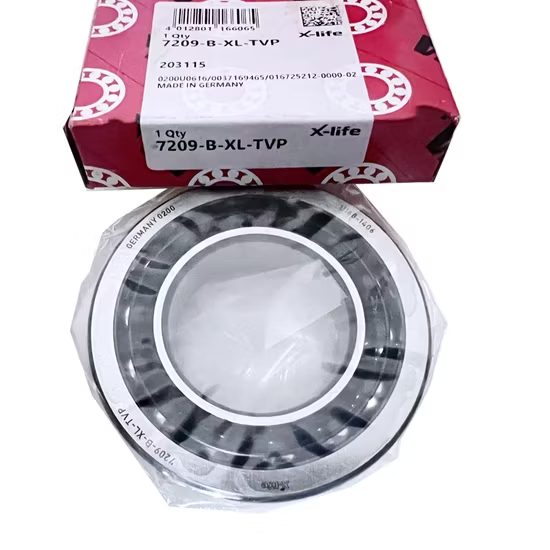
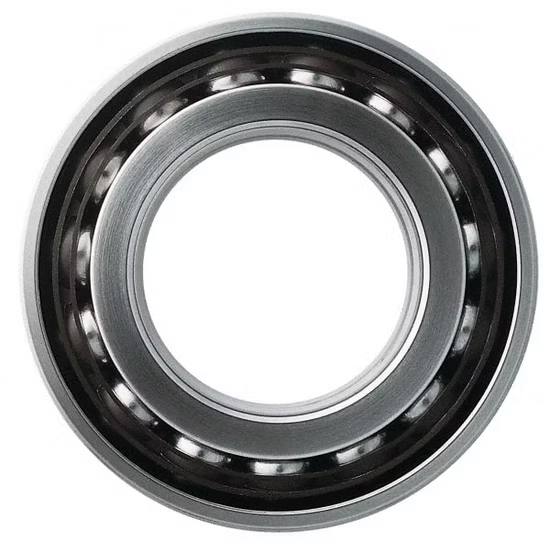
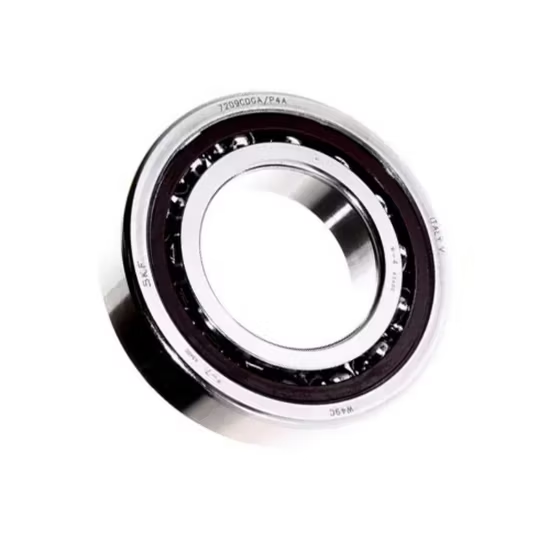
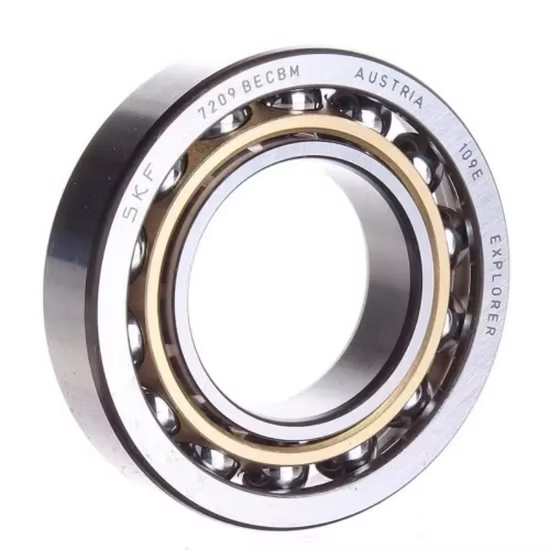
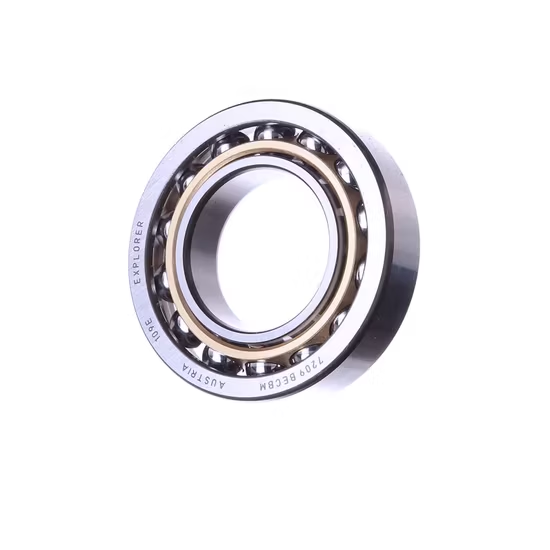
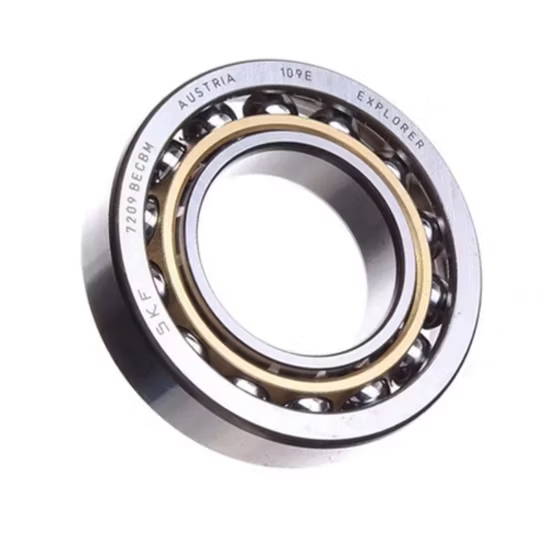
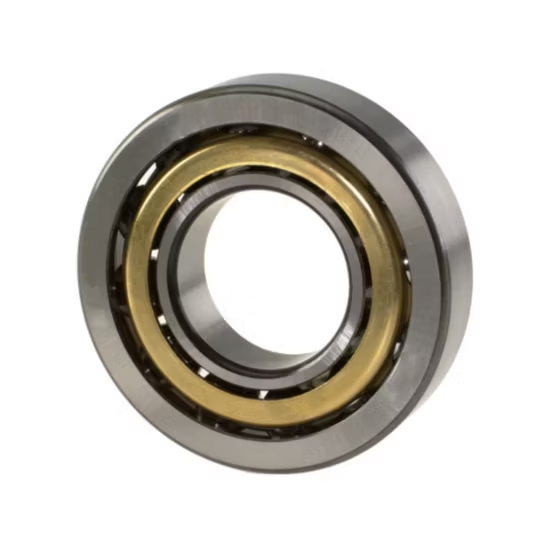
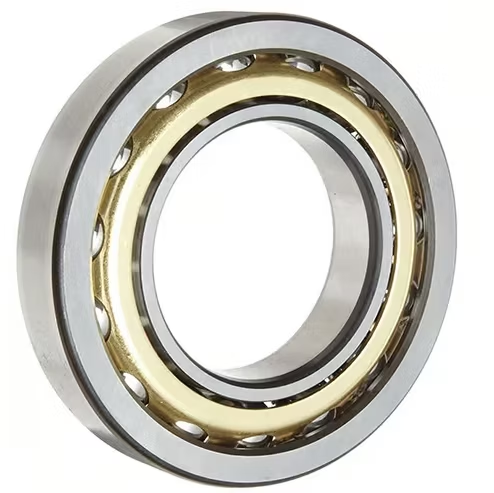
7209 Becbm Angular Contact Ball Bearing 45 mm Bore — machined from bearing steel to handle combined radial and axial forces in precision equipment.
Multi-Brand Sourcing — One consolidated shipment covers your SKF, FAG, and NSK requirements without juggling multiple vendor accounts.
| Parameter | Value |
|---|---|
| Designation | 7209 Becbm |
| Bearing Type | Angular Contact Ball Bearing |
| Bore Diameter (d) | 45 mm |
| Outside Diameter (D) | 85 mm |
| Width (B) | 19 mm |
| Contact Angle | 40° (B suffix) |
| Material | Bearing Steel (stainless or ceramic variants available upon request) |
| Cage Material | Machined Brass (ECM suffix) |
| Precision Class | P0 to P4A options available |
| Clearance Class | CN to C5 options available |
| Vibration Grade | Z1V1, Z2V2, Z3V3 |
| Origin | Germany / Japan / Sweden / Malaysia / China |
| Industry | Typical Applications |
|---|---|
| Machine Tool Manufacturing | High-speed spindle front and rear support nodes |
| Industrial Gearboxes | Helical gear shaft axial locating positions |
| Precision Robotics | Rotary joint actuator support and positioning axes |
| Fluid Handling | High-speed centrifugal pump thrust collars |
Matching the base number while ignoring the cage material and contact angle suffixes is the fastest route to thermal seizure.
I have walked into too many workshops in the Yangtze River Delta where a perfectly good spindle was ruined because a supplier swapped a 40° contact angle variant for a 15° one, or substituted a stamped steel cage for a machined brass one. When the 7209 Becbm angular contact ball bearing is installed in a high-speed spindle, the axial load capacity and thermal expansion characteristics are dictated entirely by those trailing letters. A mismatched cage material will gall under high RPM, and a wrong contact angle will cause the rolling elements to skid, generating enough heat to weld the inner ring to the shaft .
Machine tool spindles demand extreme rotational accuracy and the ability to handle heavy axial thrust from cutting tools. The 40° contact angle inherent in this design provides the necessary axial rigidity, while the machined brass cage ensures stability at elevated rotational speeds. When sourcing this component, we verify that the specific precision class and clearance align perfectly with your spindle manufacturer's original equipment specifications, preventing the microscopic deflections that ruin surface finishes.
High-speed precision equipment generates significant internal friction, making thermal management critical. The operating temperature directly dictates the required internal clearance; a standard clearance will collapse when the inner ring expands faster than the outer ring during high-RPM operation. Lubrication strategy—whether oil-air or grease—must match the cage design to prevent churning losses. Furthermore, sealing arrangements must balance contamination exclusion with friction heat generation, as contact seals can push operating temperatures beyond the thermal limit of standard bearing steel .
The "72" indicates an angular contact ball bearing of dimension series 02, balancing cross-section with load capacity, while "09" confirms the 45 mm bore diameter. The "B" suffix is critical, denoting a 40° contact angle optimized for substantial axial loads. The "ECM" suffix typically points to a machined brass cage guided on the rolling elements, though exact manufacturer variations exist and require catalog confirmation for specific OEM equivalents. While standard bearing steel is the default, stainless steel or ceramic rolling element options are available for environments requiring enhanced corrosion resistance or electrical insulation.
Treating angular contact bearings as generic commodities leads to catastrophic equipment damage. If a cross-reference matches the base dimensions but overlooks the universal matching preload or precision grade, the resulting uneven load distribution causes premature fatigue spalling. This unplanned downtime not only halts production but often damages adjacent shaft journals and housing bores, turning a simple component swap into a major mechanical rebuild.
We do not just read part numbers; we dissect the application requirements. When you need a 7209 Becbm angular contact ball bearing, we verify that the cross-reference matches the contact angle, cage material, and precision suffix simultaneously, not just the base dimensions. Our inventory covers all major international brands, allowing mixed-brand orders in a single shipment. Every unit is backed by batch traceability to the manufacturer's production facilities, ensuring you receive genuine components that pass official QR verification.
To ensure the selected variant survives your specific operating envelope, share your radial and axial load profiles, maximum RPM, and steady-state operating temperatures. This data allows our technical team to calculate the L10 life and verify if the internal clearance and cage design are optimal. If you are replacing an existing unit, provide the OEM equipment number so we can execute a precise cross-reference check.
Q: How do I verify the authenticity of high-precision bearings using official brand QR codes?
A: Every genuine unit features a unique laser-etched QR code on the packaging or outer ring. By scanning this code with the manufacturer's official mobile application, you can instantly verify the production batch, factory of origin, and distribution chain, ensuring the component has not been cloned or diverted from unauthorized channels.
Q: Why must clearance, cage material, and precision suffixes align perfectly during cross-brand interchange?
A: A base number match only guarantees physical dimensions. If the replacement has a stamped steel cage instead of machined brass, it may fail at high RPMs. Similarly, mismatched clearance causes thermal binding, and lower precision grades introduce vibration. All three parameters must align to maintain the original equipment's performance and lifespan.
Q: What are the operational differences between a 40° (B) and 15° (CD) contact angle in this series?
A: A 40° contact angle provides significantly higher axial load-carrying capacity, making it ideal for heavy thrust applications like pump impellers or vertical shafts. Conversely, a 15° contact angle offers higher radial load capacity and is better suited for ultra-high-speed spindle applications where axial loads are relatively light.
Q: How to select the correct universal matching preload for paired angular contact installations?
A: Preload selection depends on the required rigidity versus acceptable friction heat. Light preload is used for high-speed, low-load applications to minimize heat generation, while medium or heavy preloads are chosen for heavy cutting loads where maximum spindle stiffness is critical to prevent tool chatter and maintain dimensional accuracy.
Our 5-step process ensures every order is engineered, validated, and supported for optimal performance.
Technical needs assessment
Custom specifications
Free samples for $50k+
Pre-shipment inspection
On-site & predictive
Our certified engineers respond within 24 hours with detailed technical specifications, pricing, and lead time information.