01
Consultation
Technical needs assessment



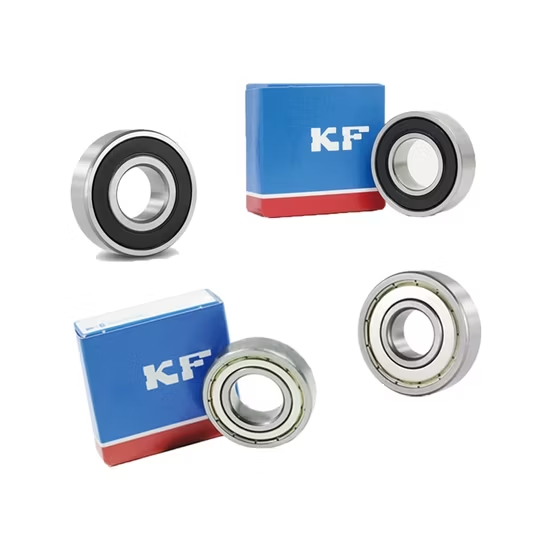


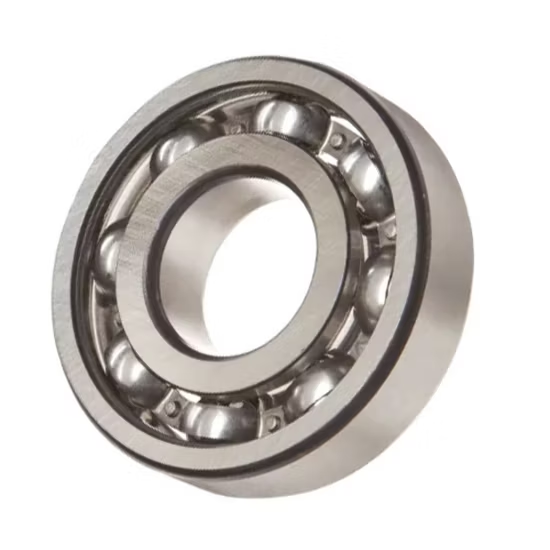
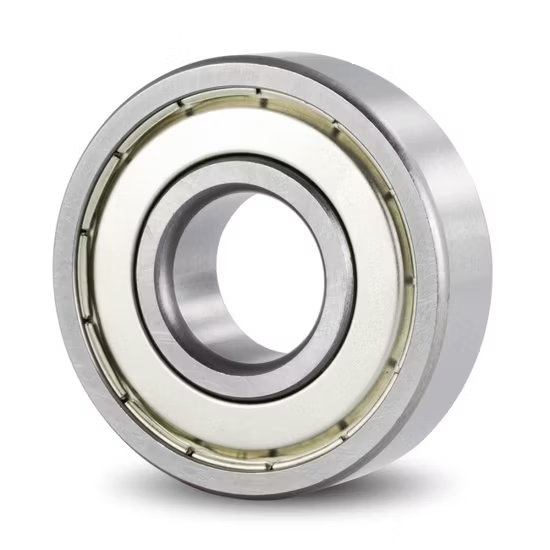
688 Deep Groove Ball Bearing — miniature unit supporting cross-reference 638/8 for electric motors and household appliances.
Exact Cross-Reference Alignment — We verify the base number, seal configuration, and vibration grades to ensure the replacement matches your miniature motor specifications perfectly.
| Parameter | Value |
|---|---|
| Designation | 688 |
| Bearing Type | Deep Groove Ball Bearing |
| Seal or Shield Type | Open, Rubber Seals, Iron Seals |
| Quality Level | Z1V1, Z2V2, Z3V3, Z4V4 |
| Origin | Germany, Japan, Sweden, Malaysia, China |
| Cross-Reference | 638/8 |
| Industry | Typical Applications |
|---|---|
| Electric Motors | Micro motor armature shafts, cooling fan spindle supports |
| Household Appliances | High-speed blender motor shafts, vacuum cleaner turbine bearings |
| Miniature Motors | Precision gimbal mechanisms, small drone propulsion rotors |
| Pumps & Conveyors | Miniature peristaltic pump drives, small conveyor idler pulleys |
Material hardness is the absolute baseline for high-speed miniature rotation.
During my years handling after-sales warranty claims in Ningbo, I dismantled countless micro-motors that failed within hours of operation. The root cause was almost always counterfeit bearings with soft inner rings that deformed under high-speed centrifugal loads, generating excessive friction heat. When sourcing a 688 deep groove ball bearing, buyers often focus solely on the base designation while overlooking internal metallurgy. This leads to catastrophic thermal binding in miniature applications where tolerances are measured in microns .
Selecting the correct shielding is critical for maintaining lubrication and excluding contaminants. An open configuration allows for external oil mist lubrication in specialized high-speed spindles, while rubber seals provide superior exclusion of fine dust in household appliances. Iron shields offer a non-contact barrier that minimizes friction torque, making them ideal for battery-operated miniature motors where energy efficiency is paramount. Our technical team reviews your specific environmental exposure to recommend the exact seal type for your 688 deep groove ball bearing application.
Miniature motors operate at exceptionally high rotational speeds, generating significant internal friction heat that directly impacts internal clearance and lubricant lifespan. If the initial clearance is too tight, thermal expansion will cause the rolling elements to bind against the raceways. Furthermore, the dynamic balance of the rotating assembly is highly sensitive to vibration. Selecting an appropriate Z-level quality grade ensures that the geometric precision of the raceways minimizes resonant frequencies, preventing premature fatigue in the motor housing .
The Z1V1 through Z4V4 quality classifications define the strict acoustic and vibration velocity limits of the bearing. While a Z1V1 grade is generally sufficient for standard household appliance motors, precision medical devices and high-end drone gimbals demand the ultra-smooth operation of Z3V3 or Z4V4 grades. These higher tiers require tighter control over raceway surface roughness and ball sphericity. Understanding these distinctions prevents the costly mistake of installing a standard-grade component into a noise-sensitive application, ensuring the 688 deep groove ball bearing delivers the required acoustic performance.
Installing substandard miniature bearings inevitably results in unplanned downtime and premature motor seizure. When the inner ring hardness falls below specification, the raceway quickly develops spalling under high-speed radial loads, leading to catastrophic damage to the surrounding motor windings. According to ISO 281 frameworks, operating a bearing outside its verified fatigue life parameters voids equipment warranties and drastically increases total ownership costs. Sourcing verified components eliminates these hidden financial drains .
We maintain authorized distribution channels across major global brands, ensuring every shipment is fully traceable to the manufacturer's production facilities. Our cross-reference protocol goes beyond matching the base 638/8 number; we verify that the seal type and Z-level vibration grades align exactly with your OEM requirements. We provide batch traceability documentation and support QR verification through official brand applications, giving you absolute certainty that the internal metallurgy meets original design specifications.
To ensure optimal lifecycle performance, please provide your specific radial and axial load profiles, operational speed ranges, and target ambient temperatures. Sharing your OEM equipment numbers allows our engineering team to execute a precise cross-reference check, confirming that the seal configuration and internal clearance perfectly match your original design intent.
Q: How can I verify the authenticity of miniature bearings using official brand apps?
A: You can scan the QR code printed on the individual packaging using the manufacturer's official mobile application. This instantly verifies the batch origin and confirms the internal metallurgy specifications, protecting your micro-motors from counterfeit products with soft inner rings that cause high-speed thermal failure.
Q: What critical cross-reference checks go beyond the base 688 number?
A: A reliable cross-reference to the 638/8 equivalent must also align the seal configuration and the Z-level vibration grade. Matching only the base dimensions while ignoring these critical suffixes often results in excessive noise or premature lubrication failure in high-speed miniature motor applications.
Q: How do I choose between rubber seals and iron shields for my motor?
A: Rubber seals provide excellent protection against fine dust and moisture but generate slightly higher friction torque. Iron shields offer a non-contact barrier that minimizes friction, making them ideal for battery-powered miniature motors where maximizing energy efficiency and reducing heat generation are the primary design goals.
Q: What do the Z1V1 to Z4V4 quality levels indicate for these bearings?
A: These designations classify the acoustic noise and vibration velocity limits of the bearing. Higher grades like Z3V3 or Z4V4 indicate superior raceway finish and ball sphericity, which are essential for precision instruments and high-end appliances requiring ultra-smooth, quiet operation at elevated rotational speeds.
Our 5-step process ensures every order is engineered, validated, and supported for optimal performance.
Technical needs assessment
Custom specifications
Free samples for $50k+
Pre-shipment inspection
On-site & predictive
Our certified engineers respond within 24 hours with detailed technical specifications, pricing, and lead time information.