01
Consultation
Technical needs assessment

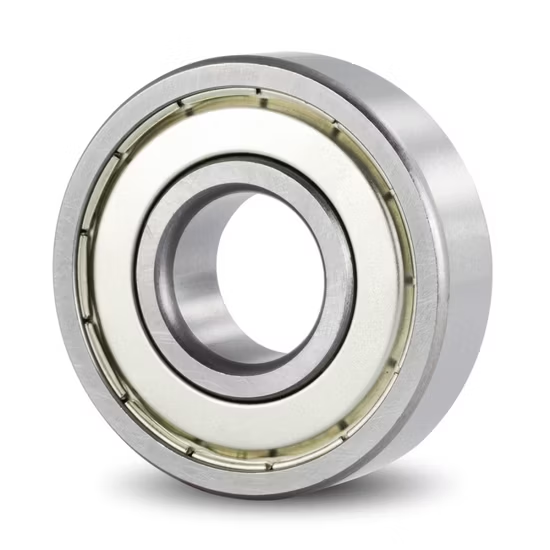
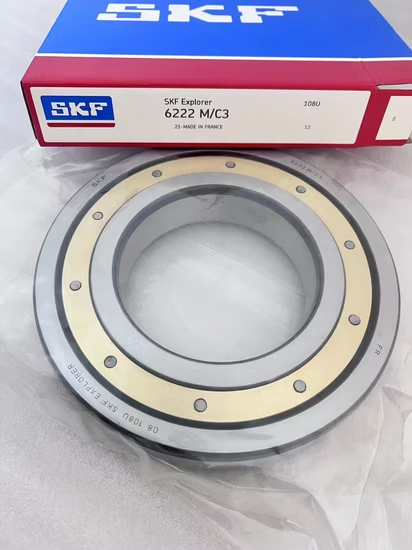
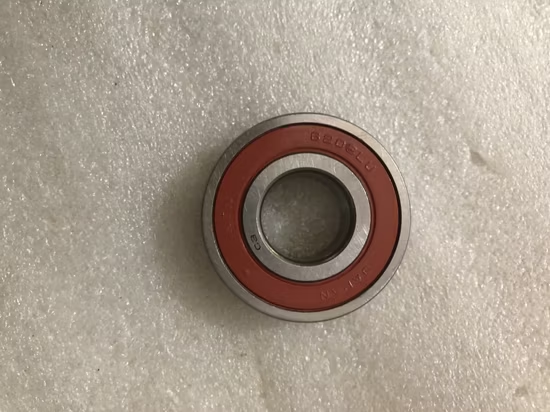


634 Zz Deep Groove Ball Bearing — available in open, rubber-sealed, and iron-shielded configurations with Z1V1 through Z4V4 quality grades for low-noise, high-speed operation in electric motors, gearboxes, and thin-walled equipment mechanisms.
Official App QR Verification — Every 634 Zz batch includes traceable lot codes scannable directly through the manufacturer's official authentication application.
| Parameter | Value |
|---|---|
| Designation | 634 Zz |
| Bearing Type | Deep Groove Ball Bearing |
| Precision Class | P4, P5 |
| Seal or Shield Type | Iron Seals, Rubber Seals, Open |
| Quality Level | Z1V1, Z2V2, Z3V3, Z4V4 |
| Origin | Germany, Japan, Sweden, Malaysia, China |
| HS Code | 848210 |
Note: The 'Zz' shield designation is an unverified suffix variant requiring confirmation against specific manufacturer catalogs for exact shielding configuration.
| Industry | Typical Applications |
|---|---|
| Electric Motors | High-speed rotor supports requiring low noise and high rotational accuracy |
| Thin-Walled Mechanisms | Precision instrument pivots and lightweight equipment joints |
| Household Appliances | Quiet operation components in high-speed domestic devices |
| Gearboxes | Low-friction shaft supports in compact transmission units |
Thermal binding from mismatched internal clearance destroys precision before the lubricant even degrades.
I have dismantled high-speed motors where the inner ring turned blue from severe friction heat. Procurement teams often match the base number but overlook the clearance suffix, installing standard clearance where thermal expansion demands a C3 equivalent. In thin-walled housings, this slight interference fit eliminates internal play entirely once the motor reaches operating temperature .
Sourcing a 634 Zz deep groove ball bearing for thin-walled mechanisms requires strict attention to dimensional tolerances. When the housing lacks structural rigidity, any deviation in the bearing outer ring diameter transfers directly to the shaft, causing vibration. We review application parameters to ensure the selected P4 or P5 precision class aligns with the equipment's rotational accuracy demands, preventing premature fatigue from localized stress concentrations.
Electric motors and high-speed gearboxes generate significant internal heat, making the choice between iron seals and rubber seals critical. Iron shields provide excellent dust protection with minimal friction, while rubber seals offer superior moisture resistance but generate additional drag. Selecting the wrong seal type alters the thermal equilibrium, potentially breaking down the grease film . Furthermore, high-speed operation demands Z3V3 or Z4V4 quality levels to minimize acoustic emissions and vibrational energy.
The transition from P5 to P4 precision dictates the strictness of the running accuracy and bore tolerances. For high-speed electric motors, achieving the specified Z1V1 to Z4V4 noise and vibration grades requires flawless raceway geometry and precise ball grading. The shield configuration, whether single or double iron seals, must retain the factory-applied lubricant without introducing eccentric drag. Understanding these internal geometries ensures the bearing sustains its dynamic load rating without generating excessive heat at elevated rotational speeds.
Installing a bearing with incorrect internal geometry or shield friction leads to unplanned downtime and catastrophic damage to adjacent shaft components. According to failure mode classifications in ISO 15243, thermal overload from clearance loss causes severe smearing and raceway discoloration . This premature failure voids equipment warranties and forces expensive emergency repairs, far exceeding the initial procurement savings of a mismatched component.
We provide authorized multi-brand coverage, allowing you to consolidate mixed-brand requirements into a single, fully documented shipment. Our cross-brand interchange process matches clearance, cage design, and precision suffixes, preventing the dangerous habit of substituting based solely on the base number. Every 634 Zz deep groove ball bearing we supply includes batch traceability to the manufacturer, verified through official QR applications. We conduct application-based selection reviews covering load, speed, and thermal expansion to ensure the chosen specification survives the actual operating environment.
To ensure accurate selection and L10 life calculation, please share your specific radial and axial loads, operating speeds, and expected thermal conditions. Providing the exact OEM equipment number allows our engineering team to perform a rigorous cross-reference check, verifying that the shield type and precision class match the original design intent. Detailing the installation space constraints helps us confirm the suitability of the thin-walled housing interaction.
Q: Why must clearance and precision suffixes be matched during cross-referencing?
A: Matching only the base number ignores critical internal geometry. A standard clearance bearing installed in a high-speed motor will thermally bind, while a P0 grade used in a precision spindle causes unacceptable vibration. We align the base designation, clearance, and precision suffixes to ensure the replacement performs identically to the original specification under actual operating loads.
Q: What is the practical difference between P4 and P5 precision classes?
A: P4 represents a tighter tolerance band for both dimensional accuracy and running precision compared to P5. In high-speed electric motors and thin-walled mechanisms, P4 minimizes shaft runout and acoustic emissions. We verify the exact tolerance class against the manufacturer's catalog to ensure it meets the strict requirements of your precision equipment.
Q: How do iron seals compare to rubber seals in high-speed applications?
A: Iron seals provide non-contact shielding, offering excellent dust protection with virtually no friction heat generation, making them ideal for high-speed rotors. Rubber seals provide contact sealing for better moisture and contaminant exclusion but introduce friction drag. The selection depends entirely on the contamination risk versus the thermal limits of the application.
Q: How can we verify the authenticity of the supplied bearings?
A: Every shipment includes batch traceability documents and QR codes that can be scanned using the manufacturer's official mobile application. This direct verification confirms the production facility, batch number, and original specifications, effectively eliminating the risk of counterfeit products with soft inner rings or cloned visual markers.
Our 5-step process ensures every order is engineered, validated, and supported for optimal performance.
Technical needs assessment
Custom specifications
Free samples for $50k+
Pre-shipment inspection
On-site & predictive
Our certified engineers respond within 24 hours with detailed technical specifications, pricing, and lead time information.


