01
Consultation
Technical needs assessment




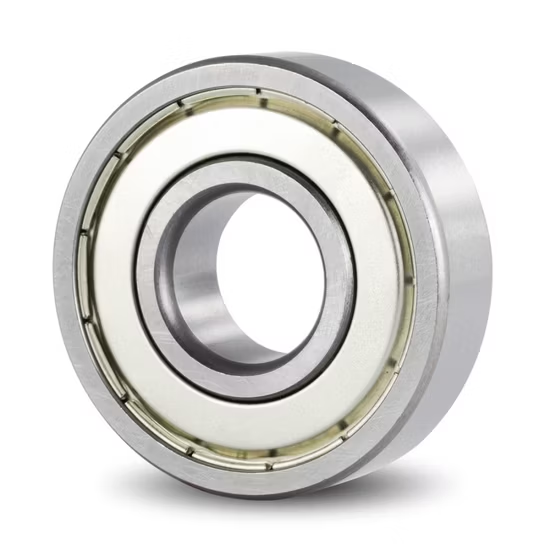
6301 2RS Deep Groove Ball Bearing — engineered with double-sided contact rubber seals to retain factory lubricant and block moisture ingress, ensuring reliable, maintenance-free performance in electric motors, pumps, and conveyors.
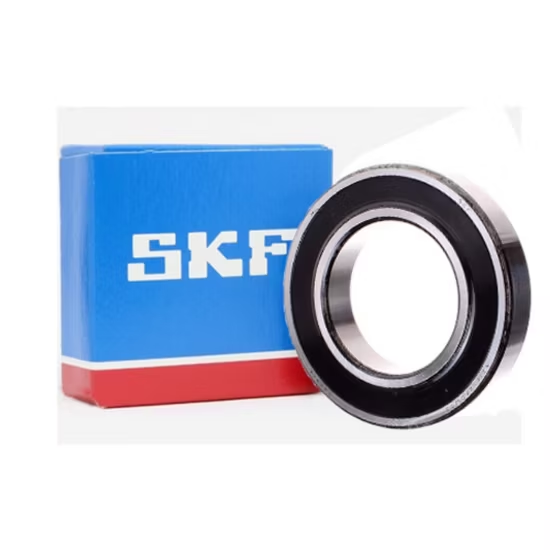
Multi-Brand Authorized Coverage — Source SKF, FAG, and NSK equivalents for the 6301 2RS deep groove ball bearing in a single consolidated shipment without juggling multiple vendors.
| Parameter | Value |
|---|---|
| Designation | 6301 2RS |
| Bearing Type | Deep Groove Ball Bearing |
| Seal or Shield Type | Double-sided contact rubber seals (2RS) |
| Vibration and Noise Level | Z1V1, Z2V2, Z3V3, Z4V4 |
| Origin | Germany, Japan, Sweden, Malaysia, China |
| HS Code | 848210 |
| Industry | Typical Applications |
|---|---|
| Electric Motors | Rotor shaft support in fractional horsepower motors |
| Pumps | Impeller shaft stabilization in centrifugal water pumps |
| Conveyors | Idler roller endpoints in light material handling systems |
| Gearboxes | Input shaft sealing in small reduction gear units |
| Household Appliances | Washing machine drum support and fan motor assemblies |
Seal integrity dictates survival in abrasive environments.
Working across sites in Dubai and Riyadh, I have seen countless standard iron-shielded bearings fail prematurely because fine silica dust bypassed the non-contact shields and contaminated the grease. When a basic designation matches but the seal suffix is overlooked, the internal rolling elements act like a grinding paste. This causes rapid temperature spikes and cage degradation long before theoretical fatigue limits are reached . Selecting the correct contact seal variant is not just a catalog detail; it is the primary defense against catastrophic field returns.
Electric motors and small pump assemblies demand reliable radial support while keeping contaminants out of the raceway. The 6301 2RS deep groove ball bearing provides this exact balance through its double-sided contact rubber seals, which retain factory grease and block external debris. Our technical review process ensures that the selected seal configuration aligns perfectly with your specific motor housing tolerances and operational speeds.
Fractional horsepower motors and conveyor rollers frequently operate in environments where ambient dust and moisture are constant threats. Radial loads remain relatively steady, but the presence of fine particulates requires a sealing solution that maintains contact without generating excessive friction heat. The rubber seals prevent abrasive ingress, preserving the internal lubrication film that separates the rolling elements from the raceways . If the application involves elevated temperatures, verifying that the seal elastomer and grease formulation can withstand the thermal expansion is critical to prevent the seal lip from hardening and losing contact.
The 2RS suffix indicates double-sided contact rubber seals, which provide superior exclusion of dust and moisture compared to non-contact iron shields (ZZ or Z). This contact design creates a slight friction drag, making it ideal for applications where sealing efficacy outweighs the need for ultra-high limiting speeds. Additionally, the availability of Z1V1 through Z4V4 vibration and noise grades allows procurement engineers to specify the exact acoustic and dynamic smoothness required for precision motor spindles or quiet household appliances. Selecting a higher vibration grade ensures tighter manufacturing tolerances for the inner and outer rings, directly reducing operational resonance.
Purchasing a bearing based solely on the base number while ignoring the seal or clearance suffix frequently leads to unplanned downtime. If an open or shielded variant is installed in a dusty pump environment, the resulting contamination causes premature spalling and catastrophic damage to the shaft journal. Furthermore, substituting a standard clearance with an incorrect variant can lead to thermal binding when the motor reaches operating temperature, voiding equipment warranties and triggering costly emergency maintenance .
We prevent cross-reference errors by verifying that the clearance, cage material, and seal suffixes match your exact equipment requirements, rather than just supplying the base designation. Our authorized distribution network allows us to source genuine 6301 2RS units across multiple premium brands, consolidating your mixed-brand requirements into one traceable order. Every batch is backed by manufacturer documentation, ensuring you never receive counterfeit units with soft inner rings that fail under load. We also provide application-based selection reviews to confirm that the 2RS seal elastomer is suitable for your specific operating temperature and environmental exposure.
To ensure optimal performance, please share your specific radial and axial load profiles, operating speeds, and ambient temperature ranges. This data allows our engineering team to verify if the standard internal clearance is sufficient or if a C3 variant is required to accommodate thermal expansion. Providing the OEM equipment number or the exact dimensions of your housing will also help us perform a precise cross-reference check, ensuring the 2RS seal geometry fits your specific enclosure constraints.
Q: Why must cross-referencing include seal and clearance suffixes, not just the base number?
A: Matching only the base number ignores critical internal design differences. A standard clearance bearing might bind thermally in a hot motor, while an open bearing will fail rapidly in a dusty pump. Verifying the 2RS seal and specific clearance ensures the replacement matches the original equipment's thermal and environmental demands, preventing premature field failures.
Q: How do 2RS rubber seals compare to ZZ iron shields in dusty environments?
A: The 2RS rubber seals maintain physical contact with the inner ring, creating a tight barrier that actively excludes fine dust and moisture. In contrast, ZZ iron shields are non-contact and leave a microscopic gap to reduce friction. For applications like conveyors or agricultural pumps exposed to particulates, the contact seal provides vastly superior contamination protection.
Q: What is the difference between standard CN clearance and C3 in motor applications?
A: Standard CN clearance is suited for normal operating temperatures and typical fits. However, electric motors generate internal heat, causing the inner ring to expand more than the outer ring. A C3 clearance provides extra internal space to accommodate this thermal expansion, preventing the rolling elements from binding and reducing operational friction and heat buildup.
Q: How do Z1V1 to Z4V4 vibration grades affect motor spindle performance?
A: These grades define the strictness of manufacturing tolerances regarding surface waviness and dimensional accuracy. A higher grade, such as Z3V3 or Z4V4, indicates significantly lower vibration and acoustic noise during rotation. This is critical for high-speed electric motors and precision appliances where operational smoothness and reduced resonance are mandatory.
Q: How can I verify the authenticity of the supplied bearings?
A: Every unit is supplied with batch traceability documentation and a Certificate of Conformity. You can verify authenticity by scanning the QR code on the packaging using the specific brand's official mobile application, which confirms the manufacturing origin and ensures the product is not a counterfeit with substandard metallurgy.
Our 5-step process ensures every order is engineered, validated, and supported for optimal performance.
Technical needs assessment
Custom specifications
Free samples for $50k+
Pre-shipment inspection
On-site & predictive
Our certified engineers respond within 24 hours with detailed technical specifications, pricing, and lead time information.