01
Consultation
Technical needs assessment



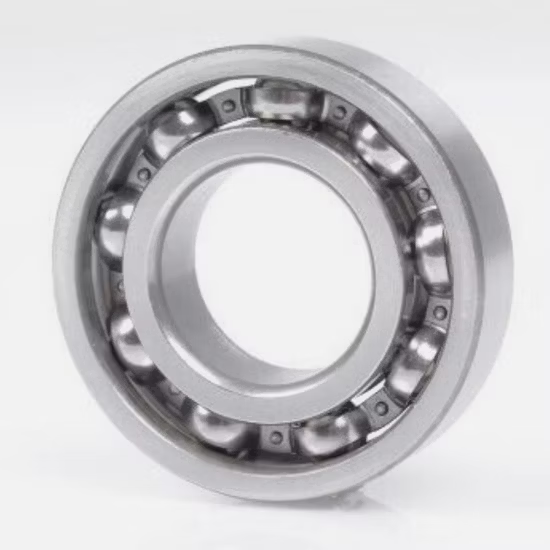
6215 Deep Groove Ball Bearing — engineered for printing press components and electric motors.
Multi-Brand Authorized Coverage — Fulfill mixed-brand requirements for your 6215 deep groove ball bearing orders through a single authorized supply channel without juggling multiple vendors.
| Parameter | Value |
|---|---|
| Designation | 6215 |
| Bearing Type | Deep Groove Ball Bearing |
| Bearing Style | Open, Rubber Seals (2RS), Iron Seals (ZZ) |
| Material | Chrome Steel |
| Quality Level | Z1V1, Z2V2, Z3V3, Z4V4 |
| Feature | Low Noise, High Speed, Long Service Life |
| Origin | Germany, Japan, Sweden, Malaysia, China |
| HS Code | 848210 |
Note: Catalog designations such as "Zz" or stacked precision strings like "P4p5p6" require manufacturer confirmation to map to standard 2Z/ZZ shields or discrete P4/P5/P6 classes.
| Industry | Typical Applications |
|---|---|
| Printing & Packaging | Printing press impression cylinders, high-speed folder-gluer rollers |
| Industrial Motors | AC/DC motor rotor shafts, cooling fan drive assemblies |
| Fluid Machinery | Centrifugal pump impeller shafts, industrial compressor rotors |
| Material Handling | Belt conveyor drive pulleys, bucket elevator head shafts |
Matching the base number is never enough when sourcing a 6215 deep groove ball bearing for precision machinery.
During my time supporting equipment maintenance across Southeast Asia, I reviewed numerous post-failure teardowns where the basic designation was correct, but the precision class was wrong. Sending a standard P0 grade instead of the required P6 for a printing press impression cylinder resulted in severe vibration and thermal seizure at high speeds. Such cross-reference errors cause unplanned downtime and catastrophic damage to adjacent machinery components .
Ensuring operational stability requires matching the exact internal geometry to the machine's thermal profile. We review every 6215 deep groove ball bearing order against the specific application parameters, verifying that the clearance class accommodates thermal expansion and the precision grade suppresses high-speed vibration, preventing the costly mismatches that routinely destroy printing press rollers.
Printing press cylinders and electric motor rotors generate substantial heat during continuous operation. If a standard CN clearance is installed where C3 is required for thermal expansion, the internal gap closes, leading to excessive friction and premature failure. Furthermore, selecting between 2RS rubber seals and ZZ iron shields involves balancing contamination protection against contact friction; rubber seals offer superior dust exclusion but generate more heat at high RPMs .
The 2RS variant utilizes double-sided contact rubber seals, providing excellent protection against paper dust and moisture in printing environments, though it limits maximum rotational speed due to lip friction. Conversely, the ZZ configuration employs non-contact iron shields, which retain grease effectively while minimizing frictional heat for high-speed motor applications. Precision classes dictate the running accuracy; upgrading from standard P0 to P6 or P4 significantly reduces radial runout, which is critical for maintaining print registration and eliminating chatter marks on the final product.
Installing a bearing with the wrong internal clearance or precision grade triggers a cascade of mechanical issues. According to ISO 281 life calculation frameworks, inadequate internal clearance drastically reduces the fatigue life of the rolling elements. In high-speed printing applications, this mismatch leads to premature cage failure, severe shaft vibration, and eventual thermal binding, resulting in extensive unplanned downtime and voided equipment warranties .
Our technical team scrutinizes the exact suffix requirements for your 6215 deep groove ball bearing orders, ensuring the clearance and cage materials align with your specific thermal and load conditions. We provide authorized multi-brand coverage, allowing you to consolidate SKF, FAG, or NSK requirements into a single shipment. Every batch includes strict traceability to the manufacturer, and our cross-reference process verifies internal design variations rather than just matching the base number, eliminating the guesswork that causes field failures.
To ensure optimal performance, provide our engineering team with your specific radial and axial loads, operating speeds, and thermal conditions for a comprehensive L10 life calculation. If you are replacing an existing component, share the OEM equipment number or the exact designation printed on the old bearing, including all clearance and precision suffixes, so we can execute a precise cross-reference verification.
Q: Why must clearance and precision suffixes be aligned during cross-referencing?
A: Matching only the base number ignores critical internal geometry. A standard clearance bearing installed in a high-temperature printing press will expand and seize, while a standard precision bearing will cause severe vibration. We verify the exact clearance, cage material, and precision class to ensure the replacement matches the original equipment's thermal and dynamic requirements.
Q: How do 2RS and ZZ seals differ for printing press applications?
A: The 2RS rubber seals provide superior protection against paper dust and moisture but generate higher friction at elevated speeds. The ZZ iron shields offer non-contact protection, minimizing frictional heat for high-speed rollers. Selection depends on balancing the contamination level of the press environment against the maximum rotational speed of the cylinder.
Q: How can I verify the authenticity of the bearings I receive?
A: Counterfeit bearings often feature soft inner rings and cloned QR codes that pass casual visual checks. We supply authorized stock with full batch traceability. You can verify the authenticity directly through the brand's official mobile app, and we provide dimensional inspection reports that confirm the actual running accuracy and material hardness before shipment.
Q: What information do you need to recommend the correct precision class?
A: To recommend the appropriate P4, P5, or P6 precision class, we need to know the application's maximum RPM, the acceptable level of radial runout, and the required noise or vibration limits. High-speed electric motors and precision printing cylinders typically demand tighter tolerances to prevent chatter and ensure smooth, stable operation.
Our 5-step process ensures every order is engineered, validated, and supported for optimal performance.
Technical needs assessment
Custom specifications
Free samples for $50k+
Pre-shipment inspection
On-site & predictive
Our certified engineers respond within 24 hours with detailed technical specifications, pricing, and lead time information.