01
Consultation
Technical needs assessment

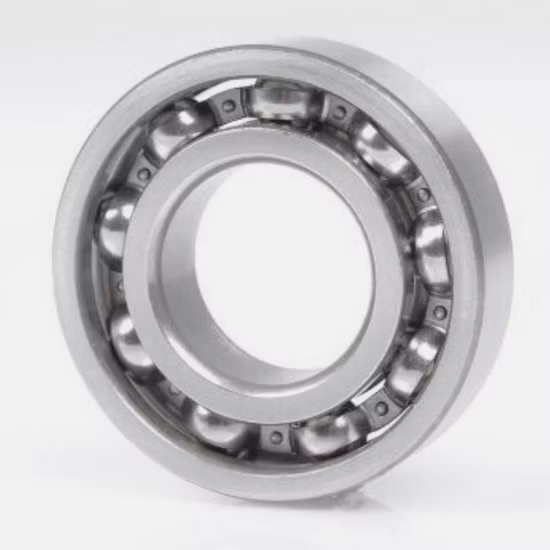

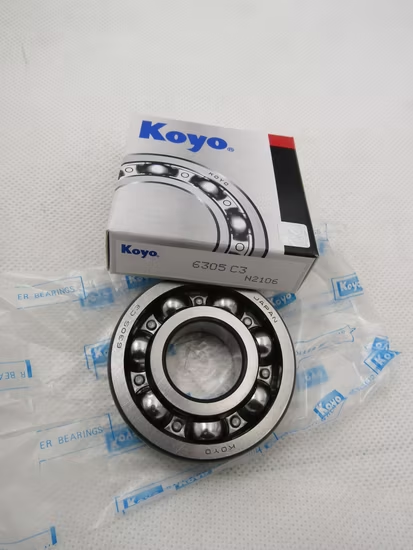


6102 Deep Groove Ball Bearing — available in open, rubber-sealed, and iron-shielded configurations to match specific contamination and friction requirements.
Unified Multi-Brand Sourcing — Consolidate your 6102 deep groove ball bearing requirements across major global manufacturers through a single authorized distribution channel with unified batch traceability.
| Parameter | Value |
|---|---|
| Designation | 6102 |
| Bearing Type | Deep Groove Ball Bearing |
| Seal or Shield Type | Open, Rubber Seals, Iron Seals |
| Noise and Vibration Level | Z1V1, Z2V2, Z3V3, Z4V4 |
| Origin | Germany, Japan, Sweden, Malaysia, China |
| HS Code | 848210 |
| Industry | Typical Applications |
|---|---|
| Electric Motors | Rotor shaft support in industrial AC/DC motors and servo drives |
| Gearboxes | High-speed input shafts and intermediate gear shafts |
| Pumps | Impeller shaft support in centrifugal and circulation pumps |
| Household Appliances | High-speed spindle assemblies in washing machines and power tools |
Acoustic smoothness directly correlates with the operational longevity of high-speed rotational equipment.
Procurement teams often focus solely on dimensional accuracy while overlooking internal surface finish and vibration grading. In high-speed electric motors, a base designation match is insufficient if the internal geometry generates excessive harmonic resonance. I have seen entire production lines halted because standard vibration grades were installed in precision servo applications, leading to accelerated cage wear and premature fatigue . Selecting the correct Z/V class for a 6102 deep groove ball bearing prevents these hidden acoustic failures.
Selecting the optimal sealing arrangement ensures the 6102 deep groove ball bearing survives its specific operational environment. Open variants suit clean, oil-lubricated gearboxes where heat dissipation is critical, while rubber seals provide maximum exclusion of fine particulate matter in agricultural or dusty settings. Iron shields offer a middle ground, blocking larger debris without the friction penalties of contact seals.
High-speed motor applications demand a careful balance between contamination exclusion and frictional heat generation. Contact rubber seals introduce drag that elevates operating temperatures, potentially degrading standard greases. Conversely, open designs require impeccable external housing seals to prevent lubricant starvation. Proper alignment during installation is equally vital, as even minor shaft misalignment amplifies vibration and accelerates raceway spalling under continuous radial loads .
The Z1V1 through Z4V4 classifications define the acoustic and kinematic smoothness of the bearing. Z represents axial vibration velocity, while V denotes radial vibration velocity. For standard industrial conveyors, Z1V1 is generally adequate. However, precision electric motors and household appliances require Z3V3 or Z4V4 grades to eliminate audible hum and prevent micro-vibrations from transferring to the stator. Upgrading the vibration grade ensures smoother rotation and significantly reduces the acoustic footprint of the final assembly.
Installing a standard grade component in a high-speed precision application inevitably leads to unplanned downtime. When vibration limits are exceeded, the resulting harmonic resonance accelerates lubricant breakdown and causes microscopic spalling on the raceways. This progressive degradation ultimately results in catastrophic seizure, voiding equipment warranties and causing severe collateral damage to adjacent shafts and housings .
We prevent cross-reference errors by verifying seal types and vibration grades, not just base numbers. Our inventory covers multiple global origins, allowing us to fulfill mixed-brand requirements from a single shipment. Every batch includes manufacturer traceability, ensuring you receive genuine components. We review application parameters to confirm that an open or sealed variant aligns with your specific friction and contamination constraints.
Share your specific radial and axial load profiles, operational speeds, and ambient temperature ranges so our engineering team can verify the optimal seal and vibration grade. Providing original equipment manufacturer part numbers allows us to execute precise cross-reference checks, ensuring the internal design matches your exact application requirements.
Q: How do rubber seals and iron shields affect friction in high-speed motors?
A: Rubber seals provide superior contamination exclusion but generate higher frictional heat due to lip contact. Iron shields maintain a small non-contact gap, reducing friction and allowing higher limiting speeds, though they offer less protection against fine dust or moisture ingress.
Q: What distinguishes Z1V1 from Z4V4 vibration grades in practical applications?
A: Z1V1 is suitable for general industrial machinery where acoustic noise is acceptable. Z4V4 represents the strictest manufacturing tolerances for surface finish and geometric accuracy, essential for precision electric motors and appliances requiring silent, vibration-free operation.
Q: How can I verify the authenticity of the received batch?
A: Each shipment includes batch traceability documentation. You can scan the QR codes on the packaging using the official mobile applications provided by the respective bearing manufacturers to instantly verify the production origin and authenticity.
Q: Why is cross-referencing more than just matching the base designation?
A: Matching only the base number ignores critical internal variations. A replacement must align in seal type, internal clearance, and vibration grade to prevent thermal binding, excessive noise, or premature cage failure in the specific operating environment.
Q: What mounting practices prevent damage to deep groove ball bearings?
A: Never transmit mounting forces through the rolling elements. Use induction heaters for the inner ring and ensure precise shaft alignment. Avoid hammering, which causes Brinell indentation on the raceways and initiates early fatigue failure.
Our 5-step process ensures every order is engineered, validated, and supported for optimal performance.
Technical needs assessment
Custom specifications
Free samples for $50k+
Pre-shipment inspection
On-site & predictive
Our certified engineers respond within 24 hours with detailed technical specifications, pricing, and lead time information.