01
Consultation
Technical needs assessment

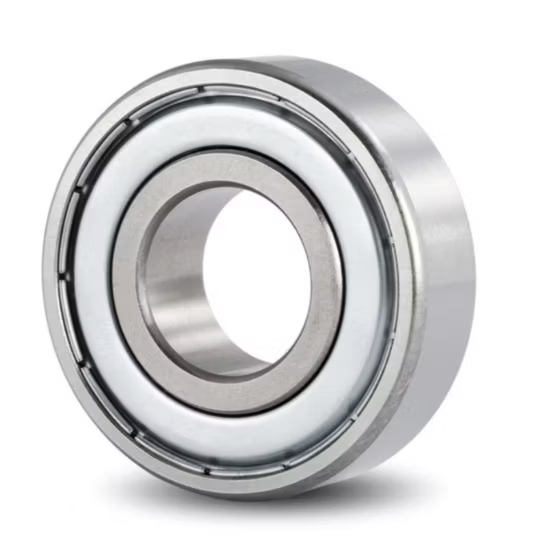
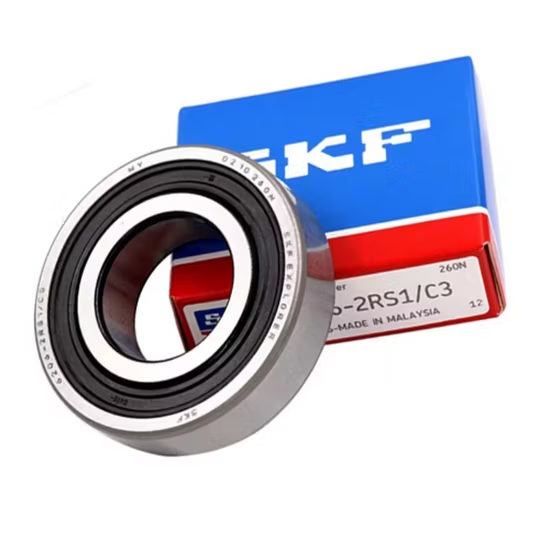
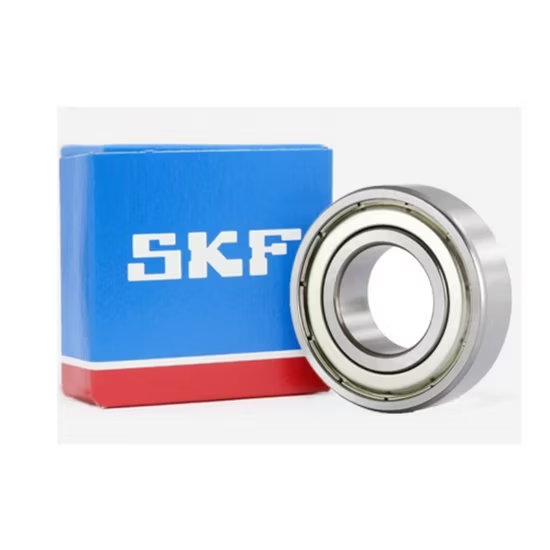
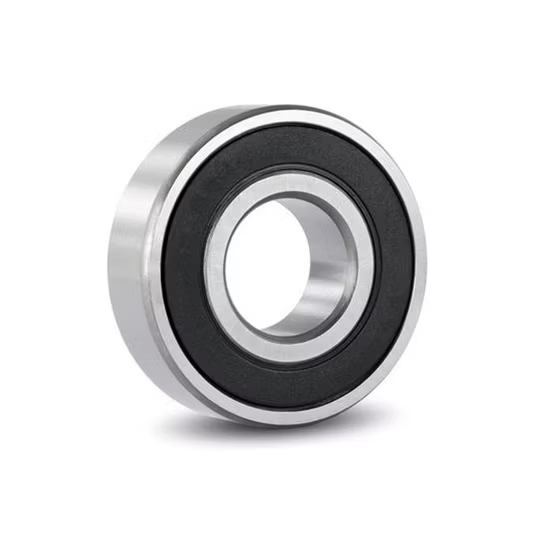


608zz Deep Groove Ball Bearing 8×22×7 mm — Manufactured from Gcr15 bearing steel, this deep groove structure delivers reliable contact fatigue strength and wear resistance for diverse rotary applications.
Traceable Batch Origins — Every 608zz deep groove ball bearing ships with manufacturer lot documentation for official QR verification.
| Parameter | Value |
|---|---|
| Designation | 608zz |
| Bearing Type | Deep Groove Ball Bearing |
| Bore Diameter (d) | 8 mm |
| Outside Diameter (D) | 22 mm |
| Width (B) | 7 mm |
| Material | Gcr15 bearing steel |
| Seal or Shield Type | ZZ, 2RS, Open |
| Origin | Shanghai |
Note: Suffixes such as zz and RS are unverified and require manufacturer catalog confirmation for exact internal design specifics.
| Industry | Typical Applications |
|---|---|
| Skateboards & Roller Skates | Wheel hubs and truck assemblies requiring impact resistance |
| Electric Motors | Micro motor shafts and cooling fan rotors |
| Material Handling | Conveyor guide rollers and light-duty pulley systems |
| Household Appliances | Small appliance spindles and internal drive mechanisms |
Matching the base designation is never enough for high-shock rotational applications.
Sourcing teams often approve purchases based solely on the 8x22x7mm footprint, overlooking critical internal variations. In demanding environments like skateboarding or high-speed micro-motors, installing a standard clearance variant where thermal expansion requires a C3 fit leads to rapid heat buildup. The internal components expand, clearance vanishes, and the assembly seizes mid-operation. We see this constantly when procurement relies on basic cross-referencing without verifying the seal type and internal geometry against the actual operating conditions .
Selecting the correct configuration goes far beyond basic dimensional checks. When evaluating a 608zz deep groove ball bearing for skateboards or roller skates, the primary focus must be on shock absorption and contamination exclusion. Our technical review process ensures that the selected seal type and internal clearance perfectly align with the dynamic radial loads and sudden axial impacts typical of street skating or aggressive roller derby, preventing premature raceway spalling.
Skateboard wheels and roller skate hubs endure repetitive shock loads from uneven terrain, combined with heavy exposure to street dust and moisture. Standard non-contact metal shields might keep large debris out, but fine particulate matter easily breaches the gap, contaminating the grease. Furthermore, the friction generated during high-speed descents raises internal temperatures significantly. If the internal clearance is not specified to accommodate this thermal expansion, the rolling elements will bind against the raceways, causing catastrophic lockups and severe safety hazards for the rider .
The choice between ZZ metal shields and 2RS rubber contact seals dictates the friction and protection balance. ZZ shields offer lower friction, making them suitable for high-speed micro-motors where heat generation must be minimized, but they provide limited defense against fine dust. Conversely, 2RS contact seals deliver superior contamination exclusion for skateboards, though they introduce slightly higher rotational friction. Equally critical is the internal clearance; while standard CN clearance works for household appliances, skate applications demand C3 clearance to prevent thermal binding when the Gcr15 steel components expand under friction-induced heat.
Ignoring the precise seal and clearance requirements leads to severe operational disruptions. A shielded bearing used in a dusty skate park will suffer from rapid grease degradation and raceway scoring, resulting in unplanned downtime and frequent wheel replacements. More dangerously, a standard clearance bearing seizing at high speed causes catastrophic equipment failure and potential rider injury. These premature failures void warranties and destroy brand reputation, highlighting the severe financial and safety risks of treating miniature bearings as simple commodities .
Our cross-reference protocol strictly aligns the base number, seal configuration, and internal clearance, eliminating the field failures caused by mismatched suffixes. We supply authorized inventory across all major international brands, allowing you to consolidate mixed-brand requirements into a single, fully documented shipment. Every batch includes traceable lot numbers, enabling your quality team to verify authenticity directly through official brand applications. We also provide application-based selection reviews, ensuring your high-shock skate or motor applications receive the exact C3 clearance and 2RS sealing required for operational safety.
To ensure optimal performance, please provide your specific radial and axial load profiles, operating speeds, and environmental exposure details. Supplying the exact OEM equipment numbers or existing part specifications allows our engineering team to perform a precise cross-reference check. This technical validation guarantees that the seal type and internal clearance perfectly match your application's unique demands.
Q: What is the practical difference between ZZ shields and 2RS seals for skateboards?
A: ZZ metal shields provide low-friction protection suitable for clean, high-speed environments like electric motors. For skateboards, 2RS rubber contact seals are strongly recommended because they physically block fine street dust and moisture from entering the bearing, significantly extending service life despite introducing a marginal increase in rotational friction.
Q: Why does the 608RS cross-reference require careful verification?
A: While 608RS indicates a single rubber seal, equipment designed for this configuration might suffer if a dual-sealed or shielded variant is substituted without checking axial space and friction limits. We verify the exact seal arrangement, internal clearance, and dimensional tolerances to ensure the replacement integrates flawlessly without causing thermal binding or physical interference.
Q: How can I verify the authenticity of the Gcr15 bearings received?
A: Every shipment includes batch traceability documentation and specific lot numbers. You can scan the provided QR codes using the manufacturer's official mobile application to instantly verify the production origin, material specifications, and authenticity, ensuring you have received genuine products rather than counterfeit alternatives with soft inner rings.
Q: When should I specify C3 clearance instead of standard CN?
A: Standard CN clearance is appropriate for general household appliances operating at room temperature. However, for skateboards, roller skates, or motors generating significant friction heat, C3 clearance is essential. This extra internal space accommodates the thermal expansion of the Gcr15 steel components, preventing the bearing from seizing under operational temperatures.
Q: Do 2RS sealed bearings require periodic relubrication?
A: No, 2RS and ZZ sealed variants are pre-lubricated for life at the factory. Attempting to pry off the rubber seals or metal shields to add grease usually damages the sealing lips or shields, compromising their ability to exclude contaminants. For applications requiring regular relubrication, the open-type configuration should be selected during the initial procurement phase.
Our 5-step process ensures every order is engineered, validated, and supported for optimal performance.
Technical needs assessment
Custom specifications
Free samples for $50k+
Pre-shipment inspection
On-site & predictive
Our certified engineers respond within 24 hours with detailed technical specifications, pricing, and lead time information.


