01
Consultation
Technical needs assessment


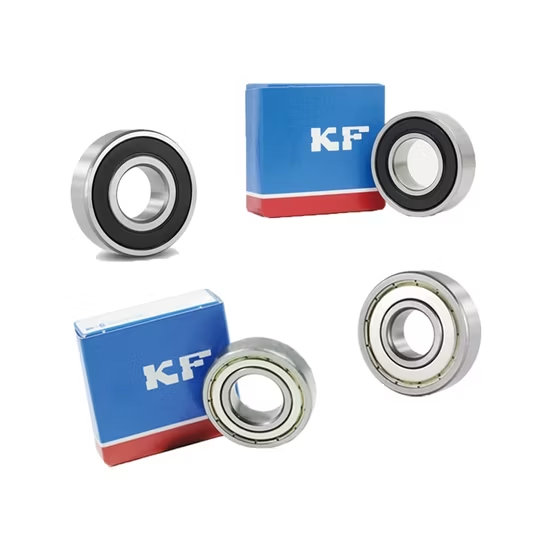
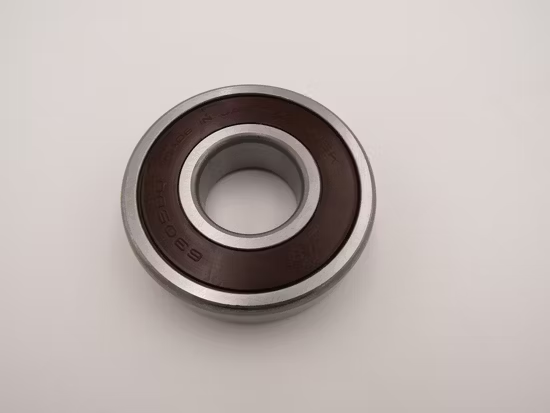


6002-2rz/VV/Zz/C3/P4/P5 Deep Groove Ball Bearing — machined from Gcr15 steel for continuous polyester-fiber machinery operation.
Multi-brand authorized coverage — source SKF, FAG, and NSK equivalents for your 6002-2rz/VV/Zz/C3/P4/P5 deep groove ball bearing needs in one consolidated shipment.
| Parameter | Value |
|---|---|
| Designation | 6002-2rz/VV/Zz/C3/P4/P5 |
| Bearing Type | Deep Groove Ball Bearing |
| Material | Gcr15 bearing steel |
| Seal or Shield Type | Zz / 2RS / Open variants |
| Clearance Class | C3 |
| Precision Class | P4 / P5 |
| Customization | Customized |
| Origin | Shanghai |
Note: The 2rz, VV, and Zz suffixes in the designation are unverified and require manufacturer catalog confirmation for exact seal or shield definitions.
| Industry | Typical Applications |
|---|---|
| Textile Manufacturing | Polyester-fiber machine high-speed rollers and tensioning pulleys |
| General Manufacturing | Electric motor spindles and precision pump shafts |
| Building Materials | Conveyor drive bearings and automated mixing equipment |
A 6002-2rz/VV/Zz/C3/P4/P5 deep groove ball bearing prevents thermal seizure where standard clearance fails.
In polyester-fiber plants, ambient heat and continuous roller friction push operating temperatures beyond normal limits. When procurement teams overlook the C3 clearance requirement and install standard CN variants, the internal clearance vanishes as the inner ring expands. I have seen this exact mismatch cause catastrophic cage failures and unplanned downtime on the factory floor. Selecting the correct thermal expansion allowance is not optional; it is the difference between continuous production and a halted line .
High-speed textile rollers demand exceptional rotational accuracy to prevent fiber tension fluctuations. The P4 and P5 precision classes in this 6002-2rz/VV/Zz/C3/P4/P5 deep groove ball bearing ensure tight dimensional tolerances, minimizing vibration at elevated RPMs. We routinely cross-reference OEM equipment numbers to verify that the specified precision class aligns perfectly with the spindle's dynamic requirements, preventing premature wear from microscopic runout.
Polyester-fiber environments generate significant heat and airborne particulate matter. The C3 internal clearance accommodates thermal expansion, preventing the rolling elements from binding under load. High rotational speeds require precision cages to maintain stability, while the chosen seal or shield configuration must balance contamination exclusion with friction heat generation. Selecting the right sealing interface ensures the lubricant remains intact without introducing excessive drag .
The base 6002 designation defines the standard deep groove geometry, but the suffixes dictate field survival. The C3 clearance provides the necessary thermal expansion room for hot textile environments. P4 and P5 precision grades guarantee the running accuracy required for high-speed spindles, reducing noise and vibration. The material options, including Gcr15 bearing steel, deliver the core fatigue strength needed for continuous radial loads, while the seal variants protect against textile dust ingress.
Ignoring suffix details leads to severe operational consequences. Installing a standard precision bearing in a high-speed spindle causes excessive vibration and rapid raceway degradation. Failing to specify C3 clearance in a hot environment results in thermal binding, destroying the bearing and potentially damaging the shaft. These failures trigger unplanned downtime, void equipment warranties, and escalate maintenance costs far beyond the initial component savings .
We address the critical pain points of modern procurement. Counterfeit bearings with soft inner rings are eliminated through our authorized multi-brand distribution network. Cross-reference errors are prevented by verifying clearance, cage, and precision suffixes simultaneously, not just the base number. Every 6002-2rz/VV/Zz/C3/P4/P5 deep groove ball bearing ships with full batch traceability, ensuring you receive genuine components that perform exactly as engineered.
Provide your radial and axial load profiles, operating speeds, and ambient temperature ranges so our engineering team can validate the L10 life calculation. If you are replacing an existing component, share the OEM equipment number for a comprehensive cross-reference check. Supplying these operational parameters ensures the selected configuration perfectly matches your specific polyester-fiber machinery requirements.
Q: Why is C3 clearance critical for polyester-fiber machine applications?
A: Textile machinery often operates at elevated temperatures where standard CN clearance would disappear due to thermal expansion of the inner ring. The C3 clearance provides the necessary internal room to accommodate this expansion, preventing thermal binding, excessive friction, and premature cage failure in continuous high-speed operations.
Q: How do P4 and P5 precision classes differ in running accuracy?
A: Both classes offer tighter tolerances than standard P0 bearings, but P4 provides superior dimensional and running accuracy. This tighter control minimizes vibration and noise at high rotational speeds, making P4 ideal for the most demanding precision spindles, while P5 serves slightly less critical high-speed applications effectively.
Q: What are the cross-reference pitfalls when matching seal types?
A: Matching only the base number while ignoring seal suffixes can lead to catastrophic failures. A non-contact shield might be specified for low friction, but if the environment requires a contact seal to block heavy textile dust, the substituted bearing will fail prematurely due to contamination ingress or excessive friction heat.
Q: How to verify Gcr15 material authenticity and avoid counterfeits?
A: Counterfeit bearings often use softer, substandard steel that passes casual visual checks but fails under load. Always demand batch traceability and use the manufacturer's official app to scan the QR code. Requesting a material test report confirms the chemical composition and proper heat treatment of the Gcr15 steel.
Q: What lubrication considerations apply to high-speed deep groove bearings?
A: High-speed applications require lubricants with appropriate base oil viscosity to maintain a protective film without generating excessive churning heat. Sealed bearings are lubricated for life and cannot be relubricated, making the initial factory fill critical, while open variants require strict adherence to relubrication intervals based on operational speeds.
Our 5-step process ensures every order is engineered, validated, and supported for optimal performance.
Technical needs assessment
Custom specifications
Free samples for $50k+
Pre-shipment inspection
On-site & predictive
Our certified engineers respond within 24 hours with detailed technical specifications, pricing, and lead time information.