01
Consultation
Technical needs assessment

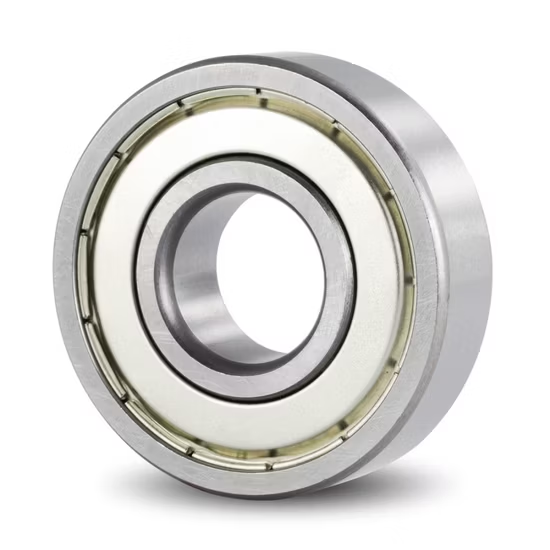
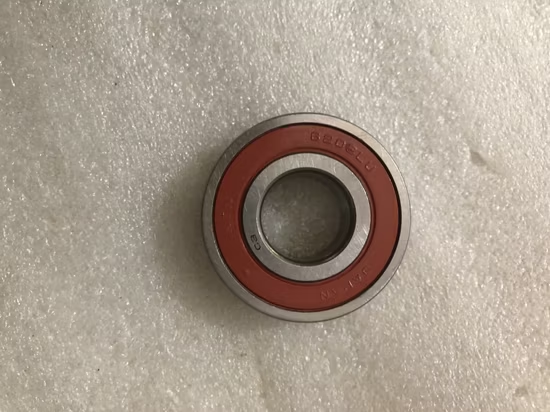
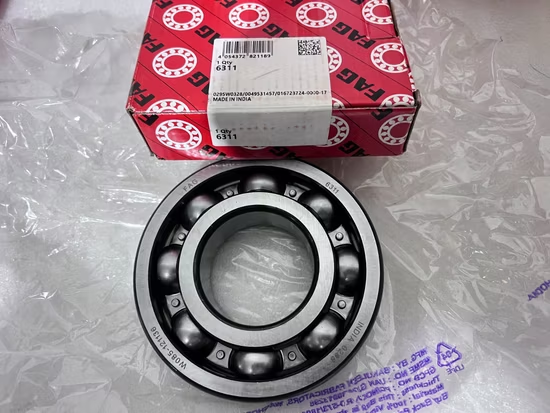
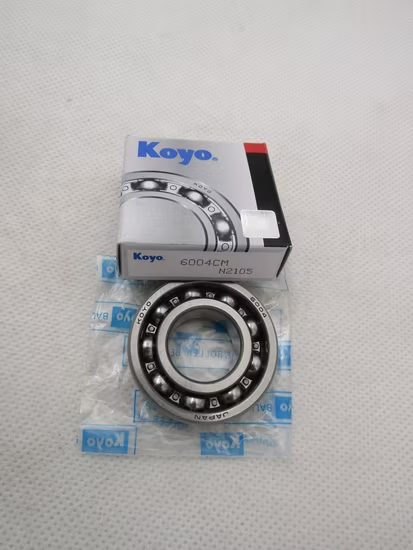


6000 Deep Groove Ball Bearing 10×26×8 mm P4/P5/P6 — engineered for automotive parts and industrial motors with strict dimensional accuracy.
Multi-brand authorized coverage — Source SKF, FAG, and NSK equivalents for your 6000 deep groove ball bearing requirements in a single consolidated shipment without juggling multiple vendors.
| Parameter | Value |
|---|---|
| Designation | 6000 |
| Bearing Type | Deep Groove Ball Bearing |
| Bore Diameter (d) | 10 mm |
| Outside Diameter (D) | 26 mm |
| Width (B) | 8 mm |
| Seal or Shield Type | Open, 2RS (Rubber Seals), 2Z (Steel Shields) |
| Precision Class | P4, P5, P6 |
| Vibration and Noise Level | Z1V1, Z2V2, Z3V3, Z4V4 |
| Origin | Germany, Japan, Sweden, Malaysia, China |
| Industry | Typical Applications |
|---|---|
| Automotive Manufacturing | Alternator pulleys, steering column joints, and transmission support shafts |
| Industrial Automation | Small servo motor rotors, precision conveyor guide rollers, and pump impeller shafts |
| Household Appliances | High-speed blender motor spindles and washing machine drum support bearings |
Base number matching is never enough when thermal expansion turns a standard clearance into a catastrophic seizure.
I have seen workshop teardowns where a P4 precision spindle locked up solid, emitting blue smoke simply because a standard clearance was forced into an application demanding thermal compensation. When procurement teams focus only on the basic 10x26x8mm dimensions, they overlook how internal geometry and cage materials dictate survival under continuous high-RPM operation . A cloned QR code might pass a casual visual check, but it cannot mask the soft inner ring material that deforms under precision radial loads.
Selecting the right 6000 deep groove ball bearing for automotive alternators or steering columns requires matching the precision class to the specific rotational speed. Our engineering review ensures that P4, P5, or P6 tolerances are correctly paired with your OEM equipment numbers, preventing the micro-vibrations that slowly degrade surrounding housing seats.
Small bore bearings in electric motors and pumps face intense thermal gradients and particulate ingress. The choice between 2RS rubber contact seals and 2Z non-contact steel shields dictates the balance between friction heat generation and dust exclusion . Furthermore, selecting the appropriate vibration grade, from Z1V1 up to Z4V4, is critical to prevent resonance fatigue in high-speed appliance spindles where acoustic noise is a primary failure indicator.
The 10 mm bore and 26 mm outer diameter define the physical envelope, but the suffixes determine operational reality. P4 precision guarantees the strict running accuracy required for machine tool spindles, while P6 suffices for general industrial gearboxes. The 2RS configuration provides robust contact sealing against moisture and fine dust, whereas the 2Z variant offers superior high-speed capability by eliminating seal lip friction. Vibration classifications like Z3V3 ensure the internal raceway geometry and ball grading are optimized to minimize acoustic emission during continuous rotation.
Substituting a bearing based solely on outer dimensions often leads to premature fatigue and unplanned downtime. When a cross-reference ignores the required precision suffix, the resulting misalignment accelerates cage wear and generates excessive heat . This catastrophic damage not only destroys the bearing but frequently scores the expensive precision shafts and housings it supports, voiding equipment warranties and halting production lines.
We reject模糊 matching that only aligns the base number. Every 6000 variant we supply is cross-referenced against clearance, cage material, and precision suffixes to prevent thermal binding in the field. Our batch traceability ensures you receive genuine components with verified metallurgical properties, eliminating the risk of soft inner rings that plague the aftermarket. We provide comprehensive application-based selection reviews, ensuring the seal type and vibration grade perfectly match your specific load and speed parameters.
To ensure accurate selection and L10 life verification, please share your specific radial and axial load profiles, operational speeds, and ambient temperature ranges. Providing the exact OEM equipment number allows our team to perform a rigorous cross-reference check, confirming that the clearance and seal suffixes perfectly match your original design intent.
Q: Why must clearance and precision suffixes align during cross-referencing?
A: Matching only the base 10x26x8mm dimensions ignores internal geometry. Installing a standard clearance in a high-speed P4 spindle causes thermal expansion to eliminate internal play, leading to severe overheating and seizure. We verify every suffix to ensure the replacement behaves identically to the original design under load.
Q: How do P4, P5, and P6 precision classes differ in actual operation?
A: P4 offers the tightest dimensional and running accuracy, essential for high-speed spindles where minimal vibration is critical. P5 provides intermediate precision for demanding electric motors, while P6 suits general gearboxes. Selecting the correct class prevents micro-vibrations that degrade housing seats and accelerate fatigue.
Q: When should I choose 2RS rubber seals over 2Z steel shields?
A: The 2RS rubber seals provide excellent contact protection against moisture and fine dust, ideal for contaminated environments. However, the contact lip generates friction heat. For extremely high-speed applications where heat dissipation is critical and contamination is low, the non-contact 2Z steel shields are the superior choice.
Q: How can I verify the authenticity of the supplied bearings?
A: Counterfeiters often clone QR codes that pass casual scans. We provide original manufacturer batch traceability and encourage verification through the official brand applications. Additionally, our material test reports and dimensional inspection documents confirm the physical properties match genuine specifications, exposing soft inner rings.
Q: What is the correct mounting approach for these small bore bearings?
A: Never apply mounting force through the rolling elements or the outer ring. Use a precision tubular drift to press exclusively on the 10 mm inner ring. For interference fits, induction heating is preferred over mechanical pressing to avoid damaging the precision raceways and compromising the specified Z-grade vibration limits.
Our 5-step process ensures every order is engineered, validated, and supported for optimal performance.
Technical needs assessment
Custom specifications
Free samples for $50k+
Pre-shipment inspection
On-site & predictive
Our certified engineers respond within 24 hours with detailed technical specifications, pricing, and lead time information.


