01
Consultation
Technical needs assessment


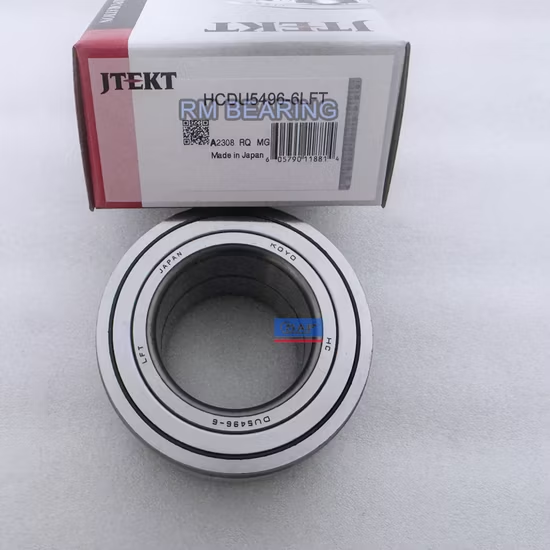
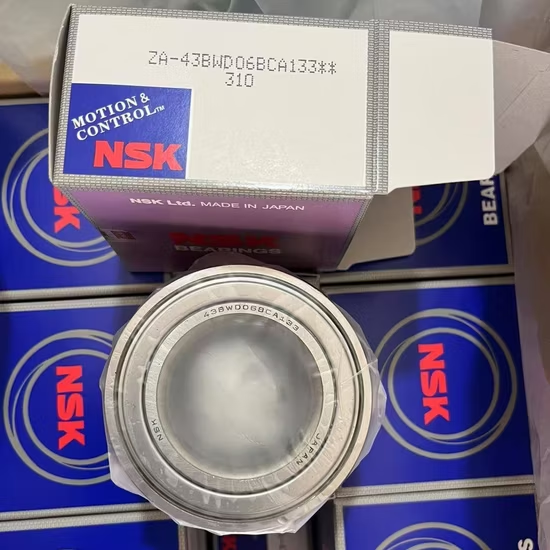
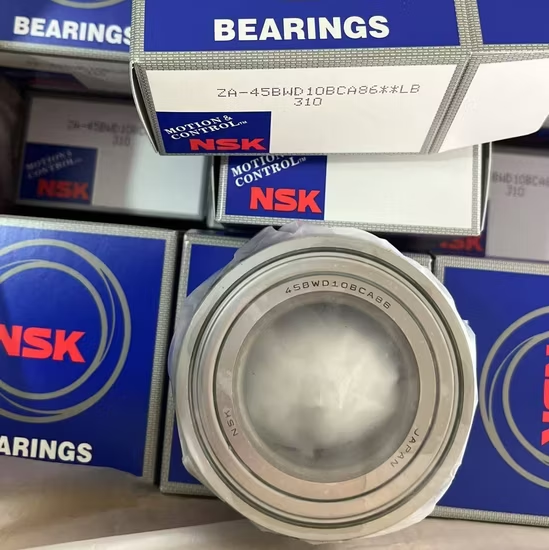
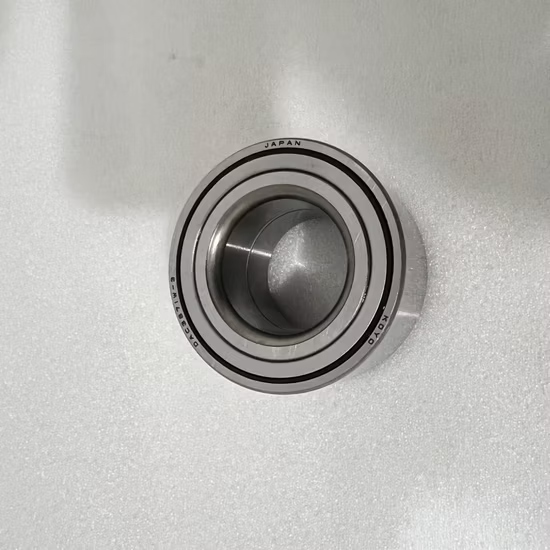
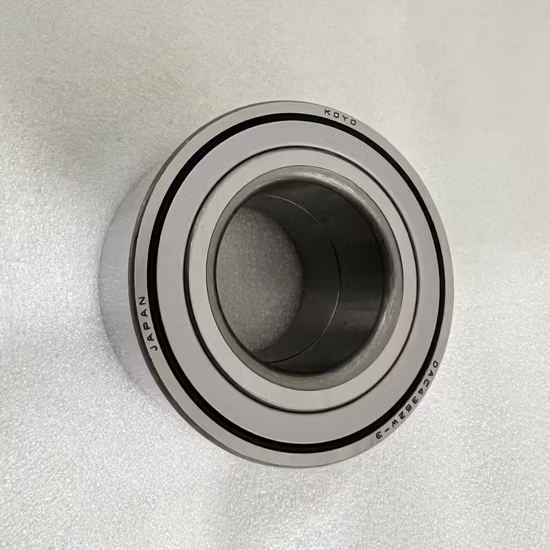
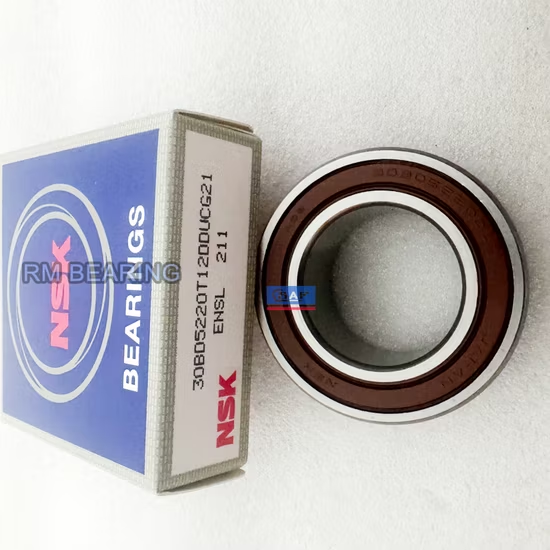
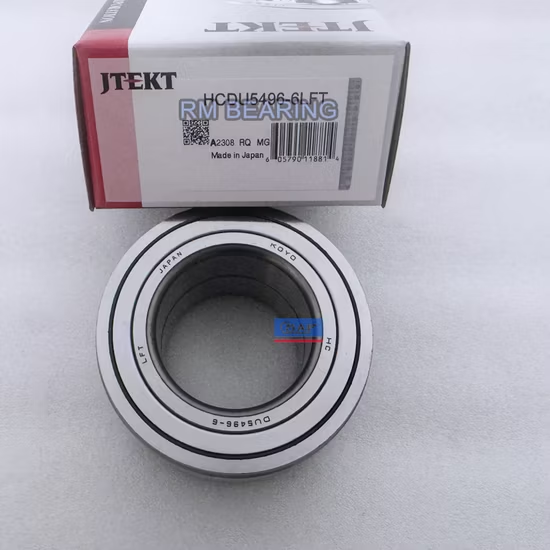
Automotive Wheel Hub Bearing with Integrated ABS Sensor and Chrome Steel — designed for vehicle chassis applications demanding reliable load support.
We provide complete manufacturer batch traceability for every unit to verify original production lots.
Unified Sourcing — consolidating mixed-brand hub unit requirements into a single traceable shipment eliminates multi-vendor coordination delays.
| Parameter | Value |
|---|---|
| Product Type | Wheel Hub Bearing |
| Material Options | Available in chrome steel or specialized alloy variants |
| Precision Class | P4 |
| Sensor Integration | With ABS |
| Row Configuration | Double Row |
| Seal Options | Nylon / Brass / Iron Seal |
| Certification | ISO9001 |
| Origin | Shanghai |
| Industry | Typical Applications |
|---|---|
| Automotive | Passenger vehicle disc wheel assemblies, steering knuckle mounting points |
| Heavy Machinery | Tractor front axle pivots, construction equipment wheel ends |
| Industrial | Rolling mill transport car wheel axles, low-speed material handling bogies |
Exact OEM cross-reference alignment requires verifying ABS ring tooth counts and seal lip geometries, not just the stamped digits.
Sourcing replacement hub units based solely on a basic number match often leads to premature field failures. We frequently see units installed where the outer diameter fits perfectly, but the integrated ABS sensor ring has a different pulse count, immediately triggering dashboard fault codes. Worse, when the seal configuration differs from the original equipment design, road grit and moisture bypass the barrier, destroying the raceways within months . As an experienced automotive wheel hub bearing supplier, we validate the complete assembly profile against the specific chassis requirements to prevent these costly mismatches.
Selecting the correct automotive wheel hub bearing supplier involves understanding how cornering forces and radial loads interact at the wheel end. Double-row configurations are engineered to handle the combined loading typical in passenger and light commercial vehicles, managing both the vehicle's static weight and the dynamic axial thrust generated during turning. Our technical review process ensures the internal geometry matches the specific suspension kinematics, preventing edge-loading that rapidly degrades the raceway.
Wheel ends operate in highly aggressive environments, constantly exposed to water ingress, brake dust, and road salt. The choice between nylon, brass, or iron seal variants dictates how well the unit excludes contaminants while managing frictional heat generation. Proper sealing is critical because once moisture breaches the internal cavity, the grease emulsifies and the chrome steel raceways suffer from surface corrosion and spalling . Selecting the appropriate seal material ensures the lubricant remains intact over the intended service interval.
The P4 tolerance class ensures tight dimensional and running accuracy, which is essential for minimizing vibration and maintaining consistent ABS sensor air gaps. While standard units utilize high-carbon chrome steel for optimal load capacity, alternative material options are available for specialized environments requiring enhanced corrosion resistance. The integrated ABS design means the magnetic encoder or toothed ring is factory-calibrated to the bearing's radial runout limits, guaranteeing reliable signal transmission to the vehicle's braking control module.
Installing a hub unit with mismatched internal clearance or incorrect ABS compatibility results in immediate operational disruptions and voided warranties. When the seal type fails to match the specific axle housing geometry, contamination leads to catastrophic structural damage rather than gradual wear. These unplanned downtime events and subsequent towing costs far exceed the initial procurement savings of an unverified component . Relying on precise application data prevents these cascading financial losses.
We address the common failure point where cross-referencing stops at the basic designation by validating the ABS configuration and exact seal type for every order. Our batch traceability protocols ensure every chrome steel hub unit can be tracked back to the manufacturer's production facilities, eliminating the risk of soft inner rings found in counterfeit batches. We provide comprehensive application-based selection reviews, analyzing the specific vehicle load and mounting parameters rather than just shipping a box with a matching label. This rigorous approach ensures our clients receive components that perform reliably in the field.
To ensure precise fitment, please provide the exact OEM equipment number, vehicle chassis code, or the specific installation dimensions. Supplying details regarding the required ABS sensor type and the operating environment allows our engineering team to confirm the correct seal and material configuration. This technical validation guarantees the recommended hub unit aligns perfectly with your maintenance and performance requirements.
Q: How do I determine the exact wheel hub bearing model from my OEM equipment parameters?
A: Provide the vehicle identification number, original equipment part number, or precise knuckle dimensions. Our engineering team cross-references these parameters against manufacturer catalogs, verifying not just the basic size, but also the specific ABS ring tooth count, seal lip design, and flange bolt patterns to ensure exact fitment and electronic compatibility.
Q: What are the common failure modes of automotive hub bearings and how can I prevent them?
A: Premature failures typically stem from seal degradation allowing moisture ingress, or incorrect installation torque causing internal clearance loss. Prevention requires selecting units with seals matched to the specific environmental exposure, utilizing proper induction heating for mounting, and strictly adhering to the manufacturer's axle nut torque specifications to maintain optimal double-row preload.
Q: How does material selection impact hub bearing performance in heavy vehicle applications?
A: Standard chrome steel provides the necessary hardness and load capacity for most passenger and commercial vehicles. However, for applications exposed to heavy road salt or frequent washdowns, alternative material variants offer substantially higher corrosion resistance. The choice depends on balancing the required dynamic load ratings against the specific environmental degradation factors present in the operating region.
Q: What certification and compliance requirements apply to automotive replacement hub parts?
A: Replacement units must meet stringent dimensional and material standards, typically verified through ISO9001 certification. Additionally, integrated ABS components must comply with specific electromagnetic compatibility and signal accuracy regulations to ensure the vehicle's anti-lock braking system functions correctly without triggering fault codes during dynamic operation.
Our 5-step process ensures every order is engineered, validated, and supported for optimal performance.
Technical needs assessment
Custom specifications
Free samples for $50k+
Pre-shipment inspection
On-site & predictive
Our certified engineers respond within 24 hours with detailed technical specifications, pricing, and lead time information.