01
Consultation
Technical needs assessment


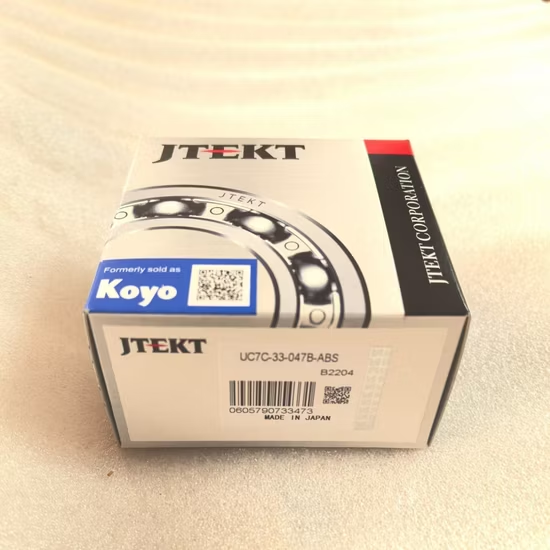
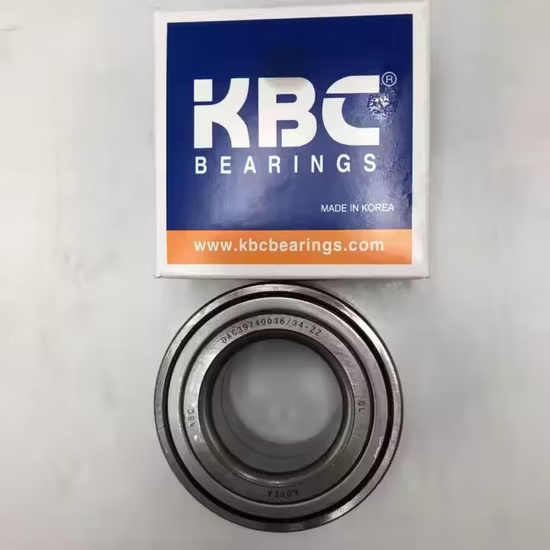
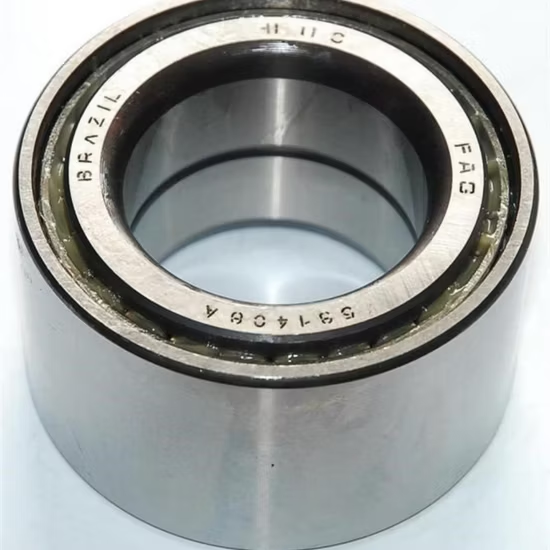
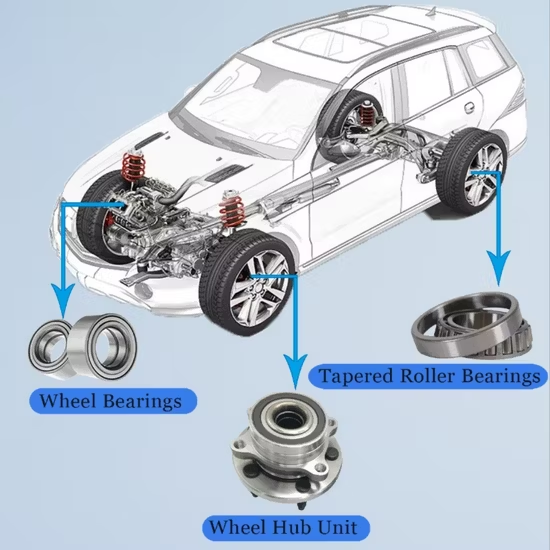
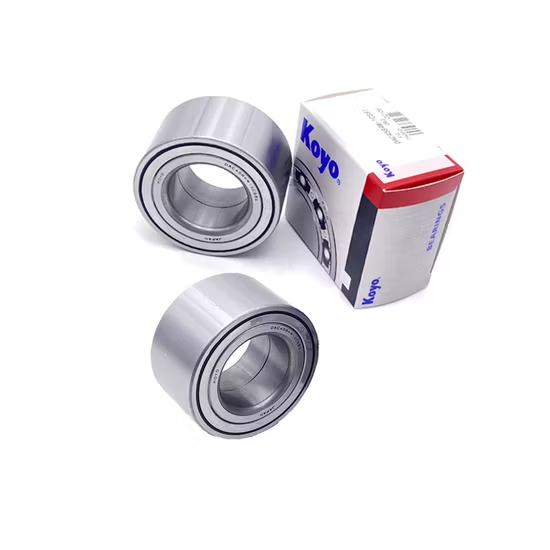
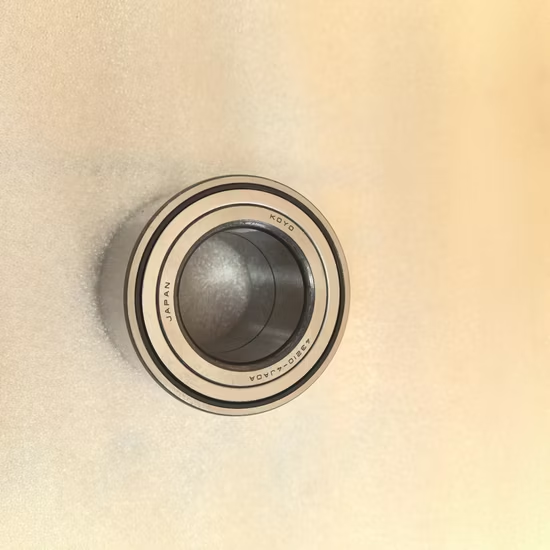
40bd6830 Wheel Hub Bearing P4 C0 — double row configuration with integrated ABS sensor ensures accurate speed signal transmission for automotive systems.
Multi-brand authorized coverage — sourcing mixed OEM and aftermarket wheel hub units in a single consolidated shipment eliminates multi-vendor coordination delays.
| Parameter | Value |
|---|---|
| Designation | 40bd6830 |
| Bearing Type | Wheel Hub |
| Number of Rows | Double Row |
| Material | Chrome Steel |
| Precision Class | P4 |
| Clearance Class | C0 |
| ABS Sensor | Integrated |
| Seal Type Options | Nylon / Brass / Iron |
| Certification | ISO9001 |
| Customization | Available |
Cross-reference designations Df-08A06L and 45bg07s5g remain unverified and require manufacturer catalog confirmation before substitution.
| Industry | Typical Applications |
|---|---|
| Automotive | Passenger vehicle front and rear wheel hub assemblies |
| Construction Machinery | Light-duty equipment steering knuckles and wheel ends |
| Agricultural Equipment | Tractor front axle hubs and steering pivot joints |
Matching the base designation without verifying ABS signal rings and internal seal geometries guarantees premature field failure.
Procurement engineers frequently approve 40bd6830 wheel hub bearing supplier quotes based solely on the base number, ignoring critical internal variations. When an assembly designed for a specific magnetic encoder receives a unit with a passive tone ring, the vehicle's anti-lock braking system immediately faults. Similarly, substituting an iron seal where a low-friction nylon seal was engineered causes excessive thermal buildup during sustained highway driving, eventually degrading the grease and destroying the raceways .
Selecting the correct hub assembly requires looking past the basic envelope dimensions to evaluate how the internal architecture manages dynamic cornering loads. A reliable 40bd6830 wheel hub bearing supplier provides exact cross-reference validation, ensuring the double row configuration and specific contact angles match the original equipment manufacturer's suspension geometry. This precise alignment prevents uneven load distribution across the rolling elements, which is a primary cause of premature brinelling and audible cabin noise during tight maneuvers.
Wheel ends endure a brutal combination of high-frequency radial impacts from road irregularities and severe axial thrust during cornering. Moisture intrusion and abrasive brake dust constantly threaten the internal lubrication, making the choice between nylon, brass, or iron seals critical for long-term survival. Furthermore, the thermal expansion of the chrome steel components under heavy braking necessitates a carefully engineered C0 clearance class to prevent the rolling elements from binding when the assembly reaches elevated operating temperatures .
The P4 precision class dictates exceptionally tight tolerances for dimensional and running accuracy, directly translating to smoother wheel rotation and minimized NVH (noise, vibration, and harshness) inside the cabin. This double row configuration inherently balances the complex combined loads encountered during steering and braking without requiring external preload adjustments during installation. Integrated ABS sensor compatibility ensures uninterrupted speed signal transmission to the vehicle's electronic stability control modules, while the available chrome steel construction provides the necessary core hardness to resist raceway spalling under cyclic fatigue.
Failing to verify the exact suffix string on a hub unit leads to catastrophic consequences far beyond a simple warranty return. Installing a unit with an incompatible ABS encoder forces the workshop to absorb the cost of a second replacement and damages their reputation with the vehicle owner. When internal clearances or seal types mismatch the application, the resulting thermal binding can seize the wheel end entirely, causing severe collateral damage to the steering knuckle and brake caliper .
Our technical review process dissects every cross-reference request to verify ABS encoder tooth counts and seal lip geometries, not just the outer dimensions. We provide batch traceability for every 40bd6830 unit shipped, allowing buyers to scan QR codes directly through official brand applications to confirm authenticity. By supplying comprehensive dimensional and running accuracy inspection reports, we prove P4 compliance before the product leaves our facility. Our application engineers also review the specific vehicle suspension parameters to ensure the selected double row configuration handles the expected axial thrust without premature cage failure.
To ensure absolute compatibility, please provide the specific vehicle identification number or the original equipment manufacturer's part number alongside your inquiry. Supplying details regarding the expected operating environment, such as exposure to heavy road salt or extreme ambient temperatures, allows our engineering team to recommend the optimal seal material. This technical data exchange guarantees the proposed hub assembly perfectly matches your application's dynamic load and ABS signal requirements.
Q: How do I ensure ABS sensor compatibility when cross-referencing wheel hub bearings?
A: Never rely solely on the base designation. You must verify the exact number of magnetic poles or tone ring teeth and the physical air gap specifications. Request the sensor signal compatibility certificate from your supplier to ensure the replacement unit communicates correctly with the vehicle's specific electronic stability control module before installation.
Q: What are the critical differences between nylon, brass, and iron seals in hub bearings?
A: Iron seals offer maximum physical protection against large debris but generate higher rotational friction. Nylon seals provide excellent low-friction performance and moisture resistance, ideal for high-speed highway driving. Brass seals balance durability and friction, often used in heavy-duty or off-road applications where structural rigidity is required to prevent seal lip deformation under severe axial loads.
Q: Why is P4 precision important for automotive wheel hub applications compared to standard grades?
A: P4 precision guarantees exceptionally tight dimensional and running accuracy, which minimizes vibration and noise transmitted to the vehicle cabin. This strict tolerance control ensures even load distribution across the double row of rolling elements, significantly extending the fatigue life of the raceways and preventing premature wear that typically plagues standard grade hub assemblies under dynamic cornering loads.
Q: How can I verify the authenticity and batch traceability of replacement auto bearings?
A: Demand a Certificate of Conformity that explicitly lists the production batch number and scan the provided QR code using the manufacturer's official mobile application. This direct digital verification confirms the metallurgical origin and manufacturing date, effectively filtering out cloned components that merely replicate the external packaging and basic visual characteristics of genuine hub units.
Q: What mounting procedures prevent damage to double row hub bearing internals?
A: Always apply pressing force exclusively to the outer ring when installing the hub into the steering knuckle. Pressing on the inner ring or flange transfers the installation load directly through the rolling elements, causing immediate brinelling on the P4 precision raceways. Use controlled induction heating for interference fits and avoid impact tools that can shatter the integrated ABS sensor housing.
Our 5-step process ensures every order is engineered, validated, and supported for optimal performance.
Technical needs assessment
Custom specifications
Free samples for $50k+
Pre-shipment inspection
On-site & predictive
Our certified engineers respond within 24 hours with detailed technical specifications, pricing, and lead time information.