01
Consultation
Technical needs assessment


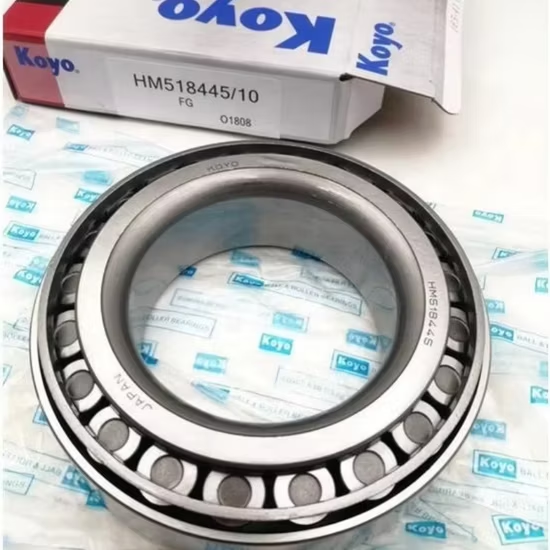
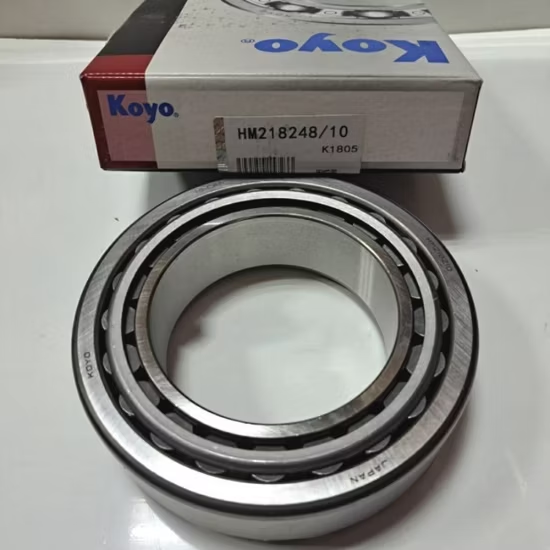
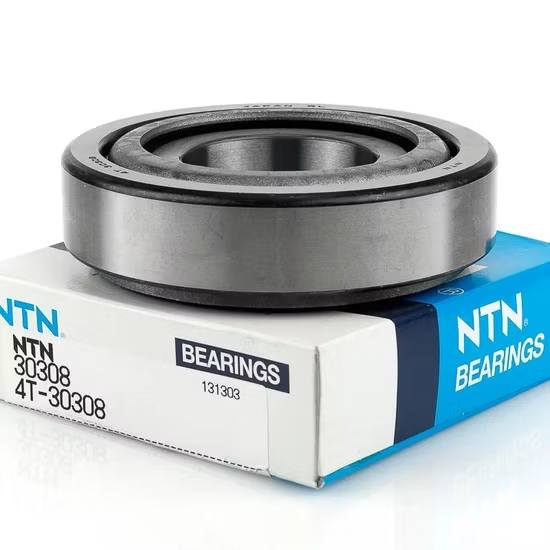


33208 Single Row Tapered Roller Bearing P4 — GCr15 high-carbon chromium bearing steel construction for automotive wheel hubs and industrial gearboxes.
Cross-reference alignment verified across cage material, precision class, and internal geometry for every shipment.
Full Batch Traceability — Every 33208 single row tapered roller bearing ships with manufacturer lot documentation and QR verification to eliminate counterfeit risks.
| Parameter | Value |
|---|---|
| Designation | 33208 |
| Product Type | Tapered Roller Bearing |
| Number of Rows | Single Row |
| Precision Class | P4 |
| Cage Material | Available in nylon, brass, or pressed steel variants |
| Material | GCr15 high-carbon chromium bearing steel |
| Origin | Sourced from Germany, Japan, Sweden, Malaysia, or China based on brand selection |
| HS Code | 8482500090 |
| Industry | Typical Applications |
|---|---|
| Automotive & Heavy Vehicles | Wheel hub assemblies, truck axle differentials, and steering knuckle supports |
| Industrial Power Transmission | Heavy-duty gear reducer shafts and torque multiplier input stages |
| General Manufacturing | Conveyor drive pulleys and material handling roller bearings |
Precision and internal geometry dictate survival, not just the stamped digits.
Matching the basic designation while overlooking cage material or precision class often leads to thermal binding or catastrophic cage fracture under operational stress . I have seen entire batches fail prematurely on truck axles simply because a standard clearance was installed where thermal expansion demanded a specific internal geometry. When sourcing a 33208 single row tapered roller bearing, assuming internal equivalence across different manufacturers is a critical error that translates directly into unplanned downtime and warranty disputes.
Tapered roller designs excel at managing combined radial and axial forces, but the internal contact angle must perfectly match the specific load ratio of your equipment. Our technical review process goes beyond basic catalog numbers, evaluating the exact operational thrust components to ensure the selected 33208 single row tapered roller bearing maintains optimal load distribution across the roller paths. This prevents edge loading and localized spalling that typically plague mismatched components in heavy vehicle axles.
High-speed differential applications generate substantial friction heat, which directly impacts internal clearance and lubricant film thickness. If the operating temperature rises significantly, standard clearances may close entirely, causing the rollers to skid and the cage to overheat. Selecting the appropriate cage material—whether nylon for reduced friction or brass for high-temperature stability—ensures the bearing maintains its structural integrity . Proper lubrication intervals and selecting the correct grease viscosity are equally vital to prevent metal-to-metal contact in contaminated environments.
The P4 precision class provides noticeably tighter dimensional and running accuracy tolerances compared to standard P0 grades, which is essential for minimizing vibration in high-speed gearboxes. The GCr15 material offers excellent wear resistance and contact fatigue life, forming the foundation for reliable performance. Furthermore, the availability of different cage options allows engineers to tailor the bearing to specific speed and vibration profiles; polyamide cages reduce weight and friction, while brass cages offer superior durability under heavy shock loads and elevated temperatures.
Substituting a bearing based solely on envelope dimensions without verifying the internal design often results in catastrophic damage to the surrounding housing and shaft. According to ISO 281 life calculation frameworks, even minor deviations in load distribution caused by incorrect internal geometry drastically reduce the calculated L10 life . This premature failure not only voids equipment warranties but also forces expensive emergency repairs and halts production lines, costing far more than the initial component price.
We maintain authorized distribution channels across all major international brands, allowing you to consolidate mixed-brand requirements into a single, fully traceable shipment. Our cross-reference protocol strictly aligns clearance, cage material, and precision suffixes, preventing the dangerous assumption that identical base numbers guarantee identical internal performance. Every batch is verified through official manufacturer apps to filter out sophisticated counterfeits with soft inner rings. Additionally, our application-based selection review analyzes your specific load, speed, and temperature parameters to confirm the chosen configuration is mechanically sound before the order is finalized.
To facilitate an accurate technical review and cross-reference verification, please provide the specific radial and axial load profiles, operating speeds, and expected thermal conditions of your application. Supplying the original OEM equipment number or the exact housing dimensions allows our engineering team to confirm the internal geometry and clearance requirements. This data ensures the proposed configuration is fully optimized for your machinery, preventing premature wear and maximizing operational uptime.
Q: Why must clearance and cage material align during a 33208 cross-reference?
A: Matching only the base designation ignores critical internal variations. Different manufacturers use distinct cage designs and internal geometries for the same basic number. If the clearance does not account for your specific thermal expansion, or if the cage material cannot withstand the operational vibration, the bearing will experience thermal binding or cage fracture, leading to rapid field failure.
Q: What does P4 precision mean for a single row tapered roller bearing?
A: P4 indicates a high-precision class with significantly tighter tolerances for dimensional accuracy and running precision compared to standard grades. This strict control minimizes vibration, reduces heat generation, and ensures smoother operation, which is particularly critical in high-speed industrial gearboxes and precision automotive hub assemblies where rotational stability is paramount.
Q: How do I choose between nylon, brass, or steel cages?
A: The choice depends on your specific operating environment. Nylon cages offer lower friction and weight, ideal for high-speed applications with moderate temperatures. Brass cages provide superior strength and durability under heavy shock loads and elevated temperatures. Pressed steel cages are cost-effective for standard load and speed conditions where extreme thermal or mechanical stress is not a primary concern.
Q: How can I verify the authenticity of the supplied bearings?
A: We provide full batch traceability and recommend using the official mobile applications provided by the respective bearing manufacturers. By scanning the QR code or entering the batch number on the physical packaging and the bearing itself, you can instantly verify the production origin and confirm the component is not a counterfeit with cloned markings or substandard metallurgy.
Q: What are the critical steps for mounting tapered roller bearings?
A: Proper mounting requires precise adjustment of the internal clearance or preload after installation. The inner ring should typically be mounted using controlled induction heating to expand it without damaging the raceway. Once seated, the axial position must be accurately set to ensure the rollers are correctly aligned with the cup, preventing edge loading and ensuring optimal load distribution across the contact surfaces.
Our 5-step process ensures every order is engineered, validated, and supported for optimal performance.
Technical needs assessment
Custom specifications
Free samples for $50k+
Pre-shipment inspection
On-site & predictive
Our certified engineers respond within 24 hours with detailed technical specifications, pricing, and lead time information.