01
Consultation
Technical needs assessment


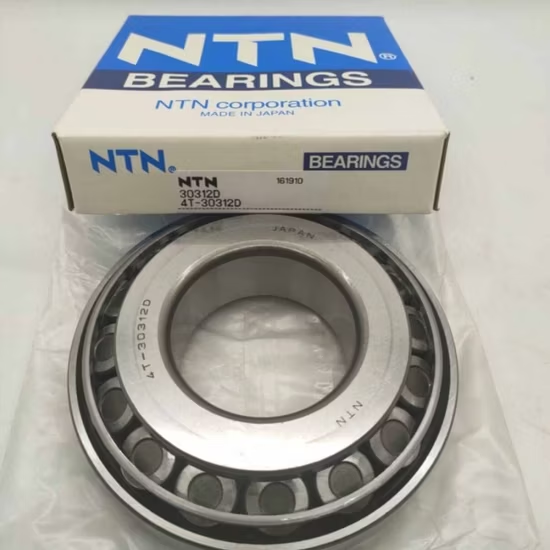
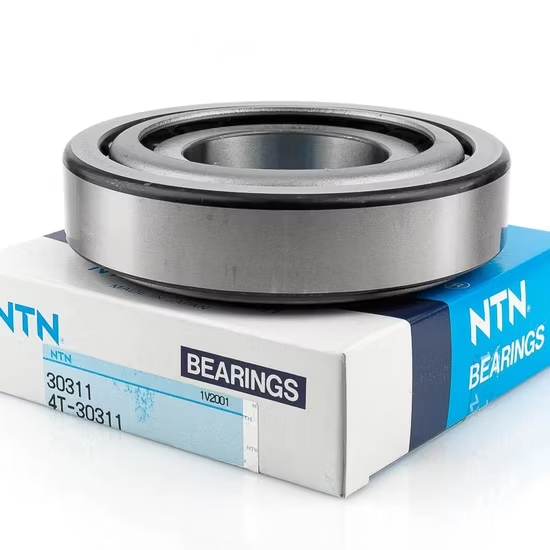



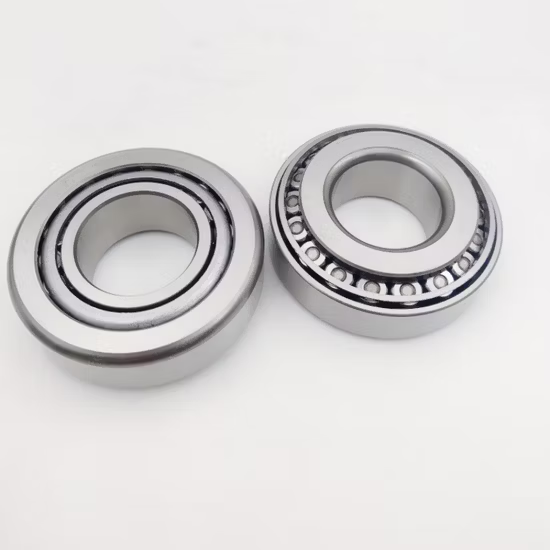
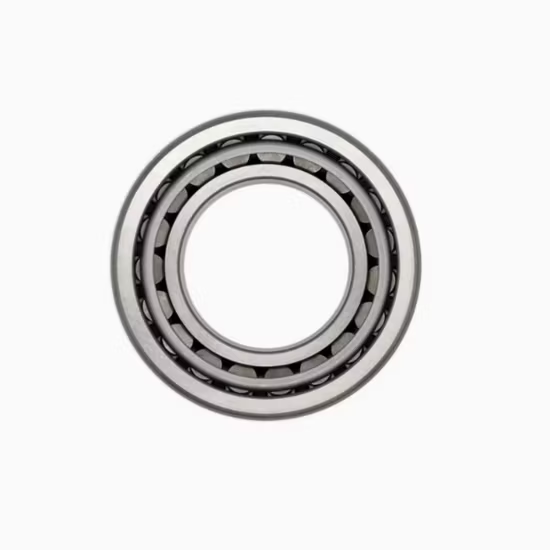
33010 Tapered Roller Bearing 50×80×24 mm — single row tapered roller bearing engineered to carry simultaneous radial and axial loads in industrial gearboxes, automotive wheel hubs, and heavy manufacturing equipment.
Multi-brand authorized coverage — Source your 33010 tapered roller bearing alongside mixed SKF, FAG, or NSK requirements in a single consolidated shipment without juggling multiple vendors.
| Parameter | Value |
|---|---|
| Designation | 33010 |
| Bearing Type | Tapered Roller Bearing |
| Bore Diameter (d) | 50 mm |
| Outside Diameter (D) | 80 mm |
| Width (T) | 24 mm |
| Number of Rows | Single Row |
| Precision Class | P4 |
| Material | GCr15 Bearing Steel |
| Origin | Germany / Japan / Sweden / Malaysia / China |
| Industry | Typical Applications |
|---|---|
| Industrial Gearboxes | Heavy-duty reduction gear shafts and pinion supports |
| Automotive Repair | Commercial vehicle wheel hubs and differential assemblies |
| Manufacturing Plants | Conveyor drive pulleys and material handling rollers |
| Building Material Shops | Mixer drum trunnions and crusher eccentric shafts |
Assuming a base number guarantees fitment is the fastest route to thermal seizure.
Early in my career transitioning from documentation to sales, I watched a shipment of mining spares bound for Chile fail completely. The 33010 tapered roller bearing basic designation matched the bill of materials perfectly, but the procurement team ignored the C3 clearance requirement for the high-temperature environment. The standard clearance units thermally expanded and locked up solid under load. That disaster taught me that treating a base number as a complete specification invites unplanned downtime .
Sourcing the correct 33010 tapered roller bearing requires looking past the 50x80x24mm envelope to evaluate the actual load vectors. Tapered rollers excel at managing combined radial and axial forces, but the contact angle must align with the specific thrust loads generated by helical gears or vehicle cornering. We review your application parameters to ensure the internal geometry matches the operational stress, preventing premature raceway spalling.
Gearbox and wheel hub environments subject components to intense friction and fluctuating thermal cycles. When operating temperatures rise, the inner ring expands faster than the housing, systematically reducing internal clearance. If standard clearance is installed where thermal expansion demands a C3 equivalent, the rollers will skew and generate excessive heat . Proper lubrication selection and understanding the thermal limits of the cage material are equally critical to surviving these harsh conditions.
While standard P0 grades suffice for general agricultural machinery, upgrading to P4 precision drastically tightens the dimensional and running accuracy tolerances. This enhanced geometric stability minimizes vibration and ensures uniform load distribution across every roller element. For high-speed gearboxes or precision spindle applications, this reduction in dynamic runout translates directly to smoother operation and noticeably extended service intervals, keeping the 50 mm bore and 80 mm outer diameter perfectly concentric under load.
Substituting bearings based solely on outer dimensions while ignoring internal design variations leads to catastrophic damage. A mismatched cage material might disintegrate under high-speed shear, while an incorrect precision class can cause harmonic resonance that destroys adjacent seals. Following ISO 15243 failure mode classifications, these installation errors often void equipment warranties and trigger secondary damage to shafts and housings .
We eliminate the guesswork by verifying cross-references against clearance, cage material, and precision suffixes, not just the base 33010 designation. Our authorized distribution network ensures every unit features batch traceability directly linked to the manufacturer's production facilities. We actively flag situations where standard CN clearance will fail in high-heat environments, recommending the correct thermal expansion allowances before the order is placed. This proactive engineering review prevents the exact type of field seizures I witnessed in the Latin American mining sector.
Share your specific radial and axial load profiles, operating speeds, and thermal conditions so our team can validate the L10 life calculations. If you are replacing an existing unit, provide the OEM equipment number or the exact suffix markings from the old part for a precise cross-reference check. This technical alignment ensures the selected bearing handles your specific combined loads without premature fatigue.
Q: How do I verify the authenticity of the 33010 units upon delivery?
A: Every shipment includes batch traceability documentation and QR codes that can be scanned using the manufacturer's official mobile application. This direct digital link confirms the production facility and date, effectively filtering out counterfeits with soft inner rings or cloned packaging that easily pass standard visual inspections in the warehouse.
Q: Why did my previous standard clearance bearings seize in a high-heat gearbox?
A: Standard clearance bearings often lack the thermal expansion allowance required for high-temperature gearboxes. As the inner ring heats up, it expands against the rollers, eliminating internal clearance and causing thermal binding. Evaluating the operating temperature allows us to supply units with the correct expanded clearance to prevent this catastrophic lock-up.
Q: What is the practical difference between P4 and standard P0 precision for this size?
A: P4 precision enforces significantly tighter tolerances on bore diameter, outer diameter, and running accuracy compared to standard P0 grades. For the 50x80x24mm dimensions, this means reduced vibration, lower operating temperatures, and highly uniform load distribution across the rollers, which is essential for high-speed industrial gearboxes and precision automotive hubs.
Q: How do I select the right cage material for my specific application?
A: Cage selection depends heavily on operating speed, temperature, and lubrication conditions. While steel cages handle high loads and temperatures well, polymer cages offer lower friction and better performance at higher speeds. Share your exact RPM and thermal data so we can match the cage material to your specific mechanical environment.
Our 5-step process ensures every order is engineered, validated, and supported for optimal performance.
Technical needs assessment
Custom specifications
Free samples for $50k+
Pre-shipment inspection
On-site & predictive
Our certified engineers respond within 24 hours with detailed technical specifications, pricing, and lead time information.