01
Consultation
Technical needs assessment

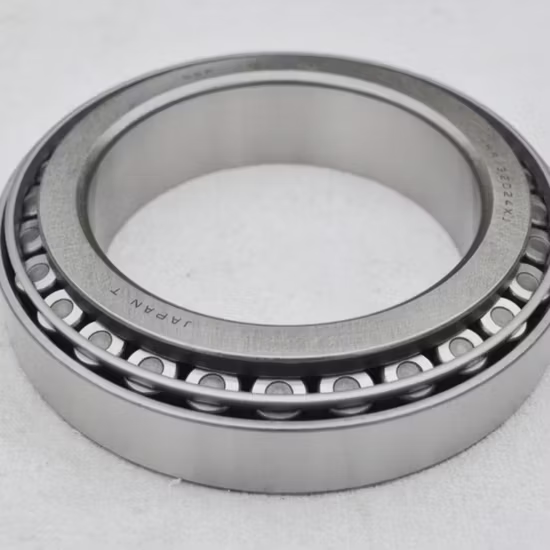

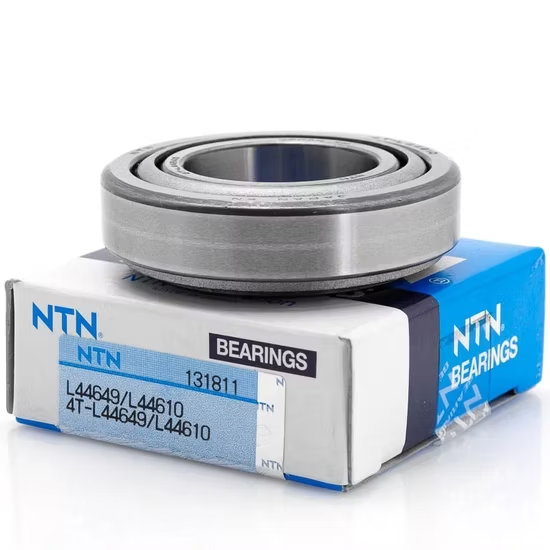
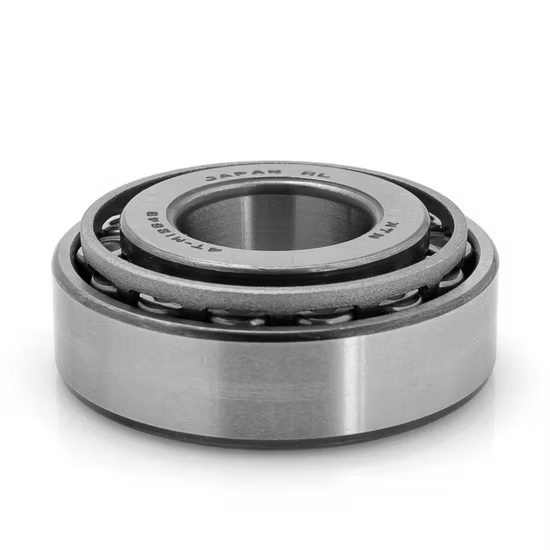
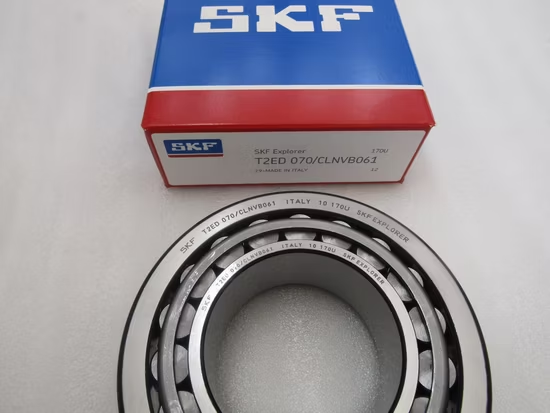
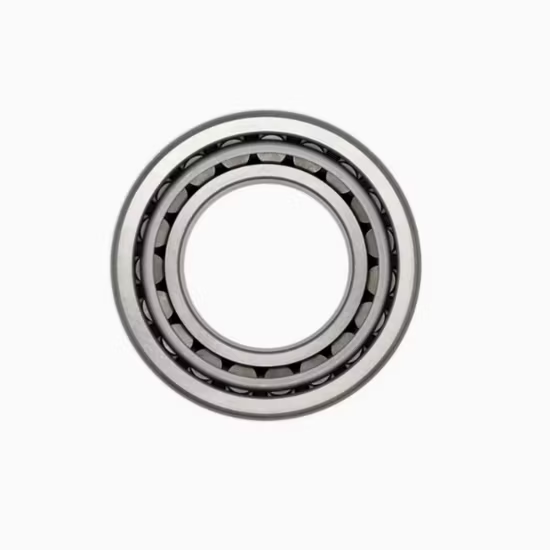
32213 Tapered Roller Bearing 65 mm Bore P5
Multi-brand authorized coverage — sourcing the 32213 tapered roller bearing P4 P5 GCr15 alongside mixed SKF, FAG, or NSK requirements in a single consolidated shipment eliminates multi-vendor coordination.
| Parameter | Value |
|---|---|
| Designation | 32213 |
| Bearing Type | Tapered Roller Bearing |
| Number of Rows | Single Row |
| Bore Diameter (d) | 65 mm |
| Precision Class | P5 / P4* |
| Cage Material Options | Nylon, Brass, or Iron |
| Material | GCr15 (Chrome Steel) |
| Origin | Shanghai |
*Precision class shows conflicting P5 and P4 values across supplier documentation; exact tolerance requires manufacturer catalog confirmation before finalizing the 32213 tapered roller bearing P4 P5 GCr15 order.
| Industry | Typical Applications |
|---|---|
| Automotive & Heavy Vehicles | Wheel hub assemblies, truck axle differentials, and transmission shafts |
| Industrial Power Transmission | Helical and bevel gear reducers, heavy-duty conveyor drive pulleys |
| Marine & Offshore | Propulsion shaft supports and marine drive reduction gears |
| Building Materials & Manufacturing | Rotary kiln support rollers and heavy material handling equipment |
Matching the base designation while ignoring precision and cage suffixes is a primary driver of thermal binding in heavy-duty gearboxes.
Procurement teams often approve cross-references based solely on the 32213 prefix, assuming dimensional interchangeability guarantees operational success. In reality, installing a standard precision unit where a P5 rating is required introduces excessive runout, generating localized heat that degrades lubrication. When cage material is also mismatched—such as using a nylon cage in an application demanding the thermal stability of brass—the component experiences rapid structural breakdown under combined radial and axial loads .
The single-row tapered design inherently handles combined loads by distributing forces along the roller raceway contact lines. For the 32213 tapered roller bearing P4 P5 GCr15, this geometry is critical in truck axles and industrial gearboxes where thrust loads fluctuate during direction changes. Our technical review process verifies that the selected precision class and cage material align with the specific load vectors and rotational speeds of your drivetrain, preventing the micro-slippage that accelerates raceway wear.
Heavy vehicle axles and marine drives subject bearings to significant temperature gradients during continuous operation. As the shaft and housing expand at different rates, the internal clearance of the bearing shifts. If the initial mounting preload does not account for this thermal growth, the rollers can skew, leading to edge loading and premature fatigue . Proper lubrication selection—whether oil bath or grease—must also match the cage material to ensure adequate film thickness at operating temperatures.
The "322" prefix identifies a medium-wide series tapered roller bearing, optimized for moderate to heavy radial loads paired with unidirectional axial thrust. The "13" dictates a 65 mm bore diameter. The precision class is where procurement errors frequently occur. A P5 rating ensures tighter dimensional and running accuracy, crucial for high-speed gear meshing, whereas a P4 rating offers even stricter tolerances for precision spindles. Cage material selection further dictates performance: brass cages withstand higher temperatures and heavy vibration, while engineered nylon cages reduce weight and operating noise in standard industrial applications.
Relying on basic dimensional interchangeability without verifying internal geometry and precision suffixes leads to catastrophic downstream consequences. A mismatched cage material can melt under unexpected thermal loads, while incorrect precision grades introduce vibration that damages adjacent seals and gears. These failures result in unplanned downtime, voided equipment warranties, and expensive secondary damage to the housing and shaft, far exceeding the initial cost difference of specifying the exact required variant .
Our procurement protocol prevents the common trap of accepting a base-number match that fails in the field. We verify that the cross-reference aligns across the base designation, precision class, and cage material simultaneously, ensuring the replacement handles the exact thermal and mechanical profile of the original equipment. Every batch of GCr15 chrome steel components undergoes strict dimensional inspection to confirm it meets the specified P5 or P4 tolerances before dispatch. Furthermore, our single-source authorization across major global brands allows us to fulfill mixed-brand requirements without compromising traceability or technical support.
To ensure the selected unit meets your operational demands, please provide the specific radial and axial load profiles, operating speeds, and continuous temperature ranges. Supplying the OEM equipment number or the exact dimensional constraints of the housing allows our engineering team to perform a precise cross-reference check and L10 life calculation. This technical review confirms whether the P5 or P4 precision class and the specific cage material option are optimal for your machinery.
Q: How do we resolve conflicting P4 and P5 precision ratings during cross-brand interchange?
A: Precision conflicts arise when supplier databases mix catalog data. We resolve this by pulling the exact manufacturer drawing for the requested brand. If your application requires the tighter runout of P4 for high-speed spindles, we source and verify that specific tolerance, ensuring the replacement matches the original equipment's dynamic requirements rather than defaulting to a standard P5 or P0 grade.
Q: What cross-reference precautions apply to tapered roller bearings regarding cage materials?
A: Base numbers often match while cage materials differ. A brass cage is essential for high-vibration or high-temperature gearboxes, whereas nylon suits quieter, moderate-load applications. We verify the cage suffix against your operating environment to prevent thermal degradation or cage fracture, ensuring the cross-referenced unit survives the specific mechanical stresses of your equipment.
Q: How should we select between nylon, brass, and iron cages for this designation?
A: The choice depends on speed and thermal conditions. Brass cages offer superior durability under heavy loads, high temperatures, and severe vibration. Nylon cages provide lower friction and quieter operation at moderate temperatures. Iron cages are typically used for cost-effective, standard-duty applications. We evaluate your specific RPM and heat generation to recommend the optimal material.
Q: What mounting practices are recommended to maintain precision in tapered roller bearings?
A: Proper mounting is critical for tapered designs. We recommend induction heating for the inner ring to expand the 65 mm bore without damaging the cage. The shaft locknut must be torqued to the manufacturer's specification to set the correct internal clearance. Incorrect preload leads to excessive heat or roller skidding, rapidly destroying the P5 precision raceways.
Q: How can we verify batch traceability for imported bearing shipments?
A: Every unit we supply includes a Certificate of Conformity and a specific batch or lot number. Buyers can scan the packaging QR code using the brand's official mobile application to verify authenticity. We also provide material test reports and dimensional inspection documents, ensuring full transparency from the manufacturer's production facility to your receiving dock.
Our 5-step process ensures every order is engineered, validated, and supported for optimal performance.
Technical needs assessment
Custom specifications
Free samples for $50k+
Pre-shipment inspection
On-site & predictive
Our certified engineers respond within 24 hours with detailed technical specifications, pricing, and lead time information.

