01
Consultation
Technical needs assessment

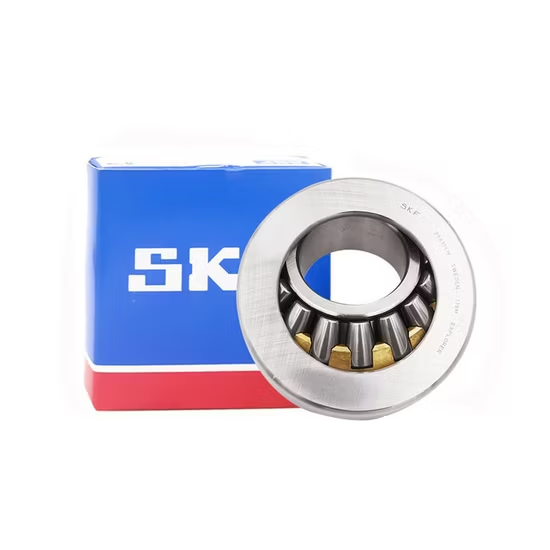
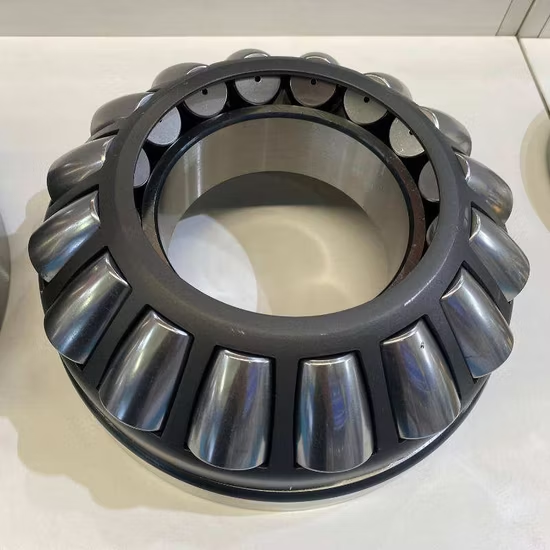
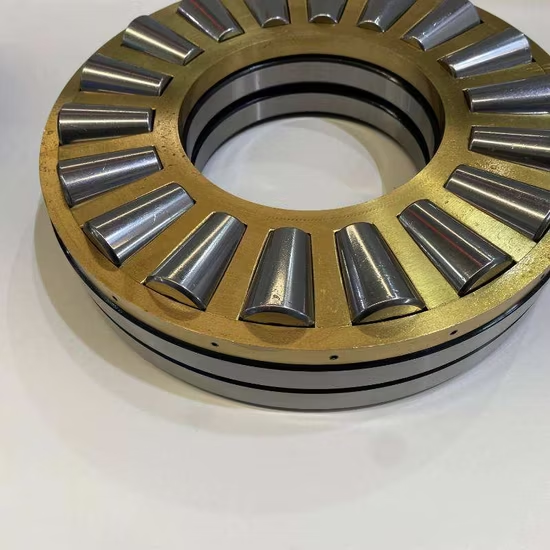
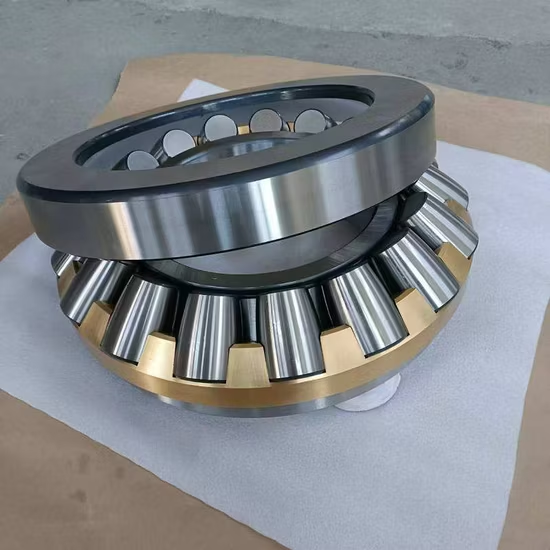

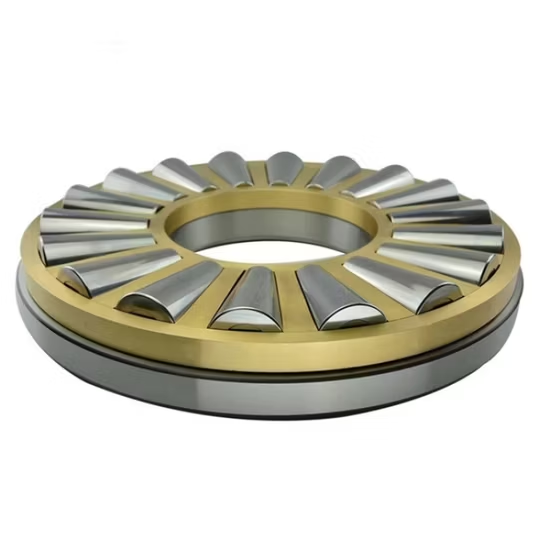
29428 Spherical Thrust Roller Bearing — spherical raceway design accommodates static shaft misalignment while sustaining heavy axial loads in mining, crushing, and industrial gearbox applications. Available in multiple vibration grades to suit diverse operational environments without compromising structural integrity under extreme stress.
Factory Batch Traceability — Every 29428 spherical thrust roller bearing ships with verifiable lot numbers linked directly to the manufacturer's original production records.
| Parameter | Value |
|---|---|
| Designation | 29428 |
| Bearing Type | Spherical Thrust Roller Bearing |
| Vibration Level | Z1V1 / Z2V2 / Z3V3 |
| Customization | Available |
| Origin | Germany / Japan / Sweden / Malaysia / China |
| HS Code | 8482500090 |
| Industry | Typical Applications |
|---|---|
| Mining and Crushing | Gyratory crusher main shaft thrust arrangements |
| Industrial Gearboxes | Extruder screw thrust support mechanisms |
| Steel and Metallurgy | Continuous casting machine oscillating tables |
| Material Handling | Heavy-duty bucket elevator drive shafts |
Matching the basic 29428 spherical thrust roller bearing designation without verifying internal geometry and clearance class leads to rapid thermal binding under extreme axial loads.
In heavy-duty Middle Eastern mining operations, I have seen entire crushing lines halt because a standard clearance variant was installed where thermal expansion demanded a wider internal gap. The base number matched perfectly on the purchase order, yet the internal design ignored the intense ambient heat and heavy shock loads, resulting in severe cage deformation and shaft seizure . Procurement teams often focus solely on the numeric identifier, overlooking the fact that different manufacturers utilize varying internal roller profiles and cage materials for the exact same base designation.
The defining characteristic of the 29428 spherical thrust roller bearing is its asymmetric raceway profile, which accommodates static shaft misalignment while transmitting massive unidirectional axial forces. This geometric flexibility is critical in vibrating screens and crusher assemblies where structural deflection is unavoidable during operation. By ensuring the cross-referenced replacement maintains the exact roller inclination angle, we prevent localized stress concentrations that typically accelerate fatigue spalling on the shaft washer.
Heavy industrial environments subject thrust arrangements to severe thermal gradients and abrasive particulate ingress. Elevated operating temperatures reduce lubricant viscosity and alter the internal operational clearance, making the initial clearance class selection absolutely critical to prevent thermal runaway. Furthermore, fine mineral dust penetrating the housing degrades the oil film thickness, demanding robust sealing solutions and rigorous filtration protocols to maintain adequate separation between the rolling elements and the raceways .
While the base designation lacks specific suffixes, the available vibration grades ranging from Z1V1 to Z3V3 dictate the permissible noise and vibration thresholds for precision gearboxes versus rough mining equipment. The internal cage design, typically machined brass for these heavy-duty applications, must be verified to ensure it can withstand the high inertial forces generated by the large asymmetrical rollers during rapid load fluctuations. Selecting the correct vibration class ensures the bearing operates smoothly without inducing destructive harmonic resonance into the surrounding machinery structure.
Installing a standard internal clearance variant in an application requiring thermal compensation inevitably leads to premature failure and unplanned downtime. The resulting catastrophic damage often extends beyond the bearing itself, scoring the shaft journal and destroying adjacent housing seals. Such secondary damage voids standard equipment warranties and forces extended production stoppages that far exceed the initial component cost .
Our cross-brand interchange process strictly aligns the internal roller profile and cage material, not just the base numeric identifier. We actively filter out counterfeit units featuring soft inner rings that fail under genuine heavy axial thrust. Every shipment includes comprehensive dimensional and running accuracy inspection reports verifying the specific tolerance class before dispatch. We provide dedicated application-based selection reviews covering load spectra, operating temperatures, and mounting constraints to guarantee the chosen variant survives the specific operational environment.
To ensure the selected variant perfectly matches your operational requirements, please provide the specific axial load magnitude, continuous operating speed, and expected thermal envelope. Sharing the original OEM equipment number allows our engineering team to perform a rigorous cross-reference review, verifying the exact internal geometry and cage design required. This technical validation guarantees the replacement component will deliver reliable service life under your specific heavy-duty conditions.
Q: How can I verify the authenticity of the received thrust bearing using official tools?
A: You can verify authenticity by scanning the QR code located on the packaging using the respective manufacturer's official mobile application. This digital check confirms the batch number, production facility, and original specifications, instantly identifying counterfeit units that might feature cloned labels but lack genuine internal metallurgical integrity.
Q: Why is it critical to match internal clearance alongside the base designation during replacement?
A: Matching only the base number ignores the thermal expansion characteristics of the specific application. If a standard clearance is installed in a high-temperature crusher environment, the internal gap closes during operation, causing extreme friction, thermal binding, and eventual cage failure. The clearance class must align with the operational heat profile.
Q: What are the most common failure modes for these components in mining applications?
A: In mining and crushing environments, the most frequent failure modes include severe cage deformation due to shock loads, raceway spalling caused by abrasive dust ingress, and thermal seizure resulting from inadequate lubrication or incorrect internal clearance selection under continuous heavy axial thrust .
Q: How does shaft misalignment influence the choice of this specific bearing type over cylindrical variants?
A: Shaft misalignment in heavy machinery causes edge loading on cylindrical thrust washers, leading to rapid localized fatigue. The spherical raceway design of this bearing type automatically compensates for static angular misalignment, distributing the axial load evenly across all rolling elements and significantly extending the operational service life in structurally flexible assemblies.
Q: What mounting practices are recommended for large thrust assemblies to prevent installation damage?
A: For large thrust assemblies, it is recommended to use controlled induction heating exclusively on the shaft washer to achieve the required interference fit. The housing washer should remain unheated to maintain its clearance fit, and the entire assembly must be carefully aligned to prevent crushing the brass cage or brinelling the raceways during the pressing operation.
Our 5-step process ensures every order is engineered, validated, and supported for optimal performance.
Technical needs assessment
Custom specifications
Free samples for $50k+
Pre-shipment inspection
On-site & predictive
Our certified engineers respond within 24 hours with detailed technical specifications, pricing, and lead time information.