01
Consultation
Technical needs assessment

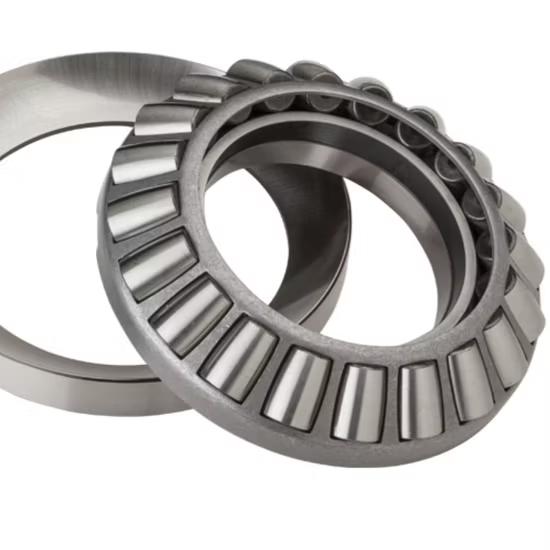
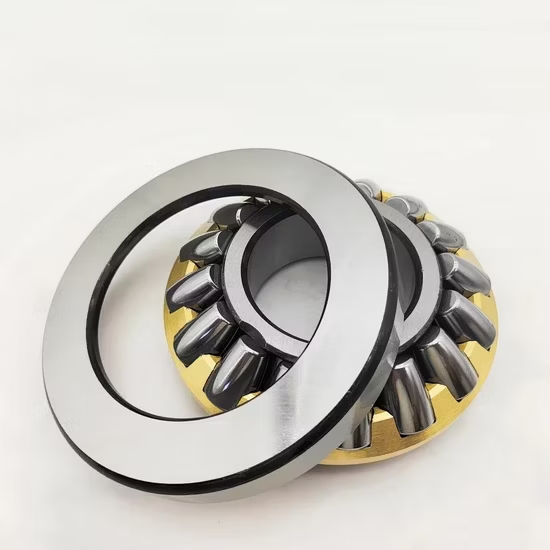

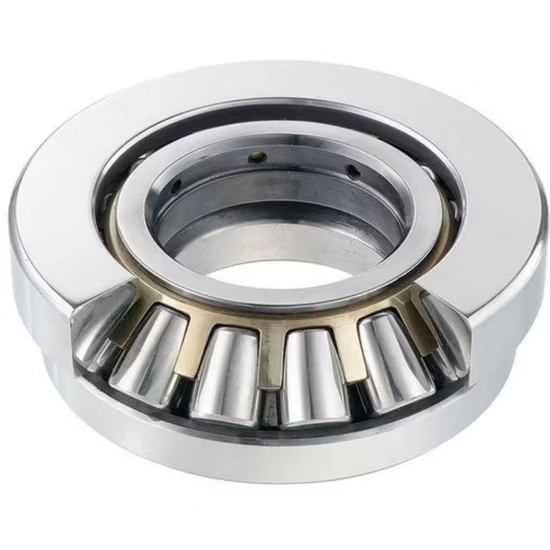
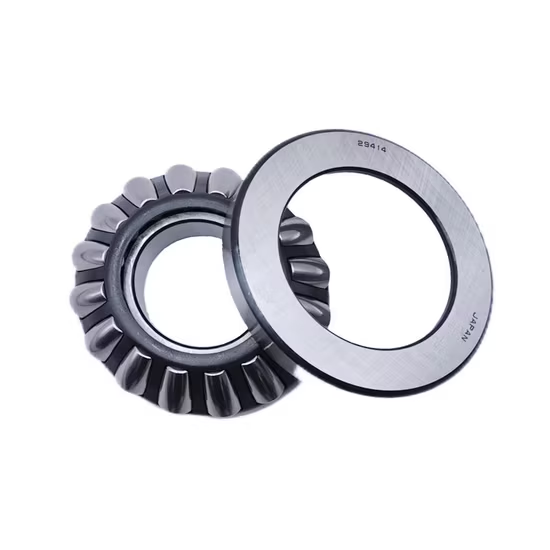
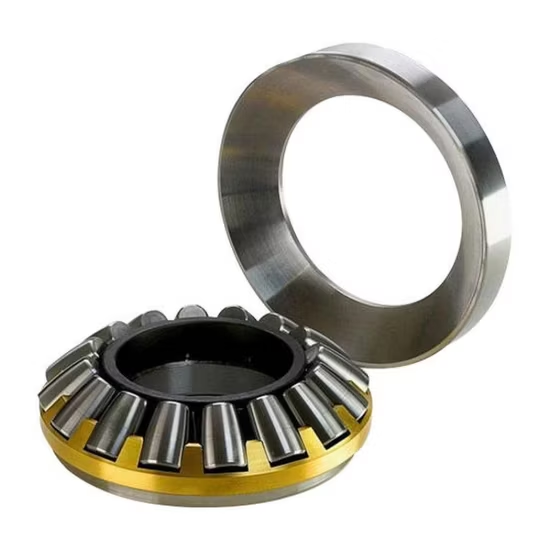
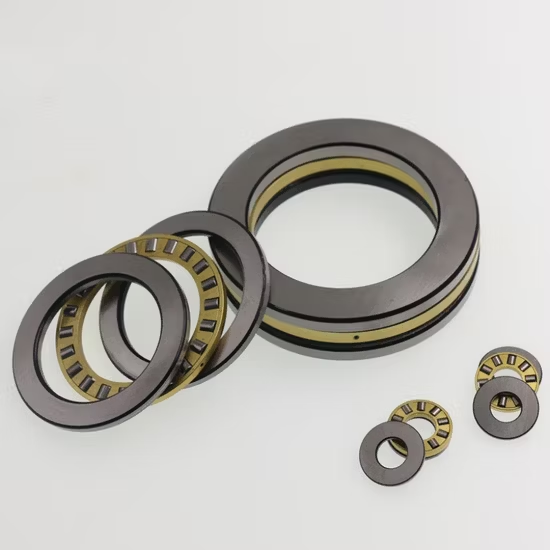
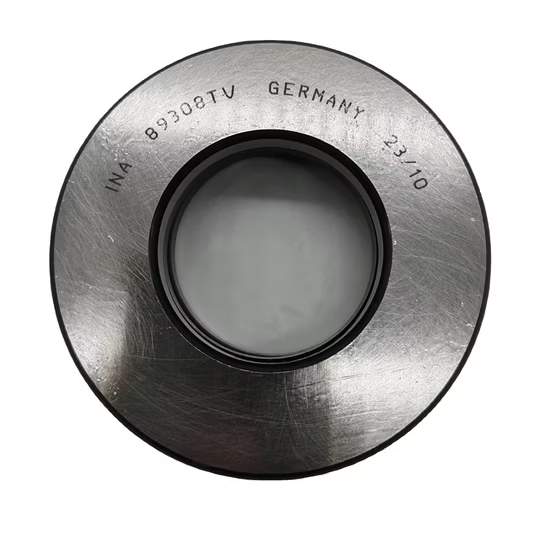
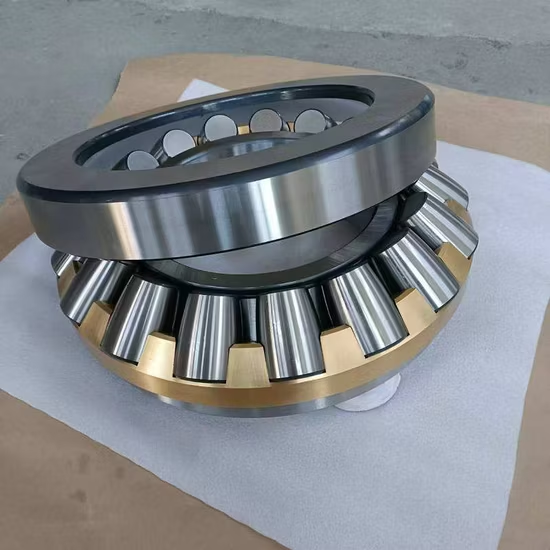
29236 Spherical Thrust Roller Bearing — engineered to handle heavy axial loads and accommodate misalignment in rigorous machinery environments.
Traceable Origin Verification — Every 29236 unit ships with batch documentation linking directly to the manufacturer's production records.
| Parameter | Value |
|---|---|
| Designation | 29236 |
| Bearing Type | Spherical Thrust Roller Bearing |
| Origin | Germany / Japan / Sweden / Malaysia / China (Options) |
| Cage Material | Machined brass or pressed steel (Depending on manufacturer variant) |
| Clearance Class | Standard or C3/C4 for thermal expansion (Must be verified per application) |
| Bore Type | Cylindrical |
| Alignment | Self-aligning capability to accommodate shaft deflection |
| Industry | Typical Applications |
|---|---|
| Mining and Crushing | Vibrating screens and heavy-duty crusher main shafts |
| Industrial Gearboxes | Extruder thrust collars and heavy-duty reducer vertical shafts |
| Hydroelectric Power | Turbine guide vane operating mechanisms and vertical shaft supports |
| Marine Drives | Propeller shaft thrust blocks and steering gear mechanisms |
Ordering a 29236 Spherical Thrust Roller Bearing by base number alone frequently leads to catastrophic field failures because internal design variations are ignored.
Procurement teams often assume that matching the base designation guarantees interchangeability. In reality, different manufacturers utilize distinct internal geometries, cage materials, and default clearance classes for the exact same base number. I have inspected failed units in cement grinding mills where a standard clearance bearing was installed in a high-temperature vertical shaft application, resulting in thermal binding and complete seizure within weeks. When cross-referencing this component, verifying the specific internal design variant and cage construction is mandatory to prevent unplanned downtime .
The primary function of this component is to manage massive axial forces while accommodating minor shaft misalignments. In heavy-duty gearboxes and extruder thrust collars, the asymmetric roller profile distributes stress evenly across the raceway. Sourcing the correct variant requires evaluating the specific load spectrum and operating temperature to ensure the selected internal geometry provides adequate fatigue resistance under continuous thrust pressure.
Vertical shaft installations in mining and hydroelectric environments introduce severe thermal gradients and particulate contamination. When equipment generates significant heat during continuous operation, standard internal clearance quickly dissipates, causing the rollers to bind against the raceways. Selecting an appropriate clearance class, such as C3 or C4, compensates for this thermal expansion. Furthermore, in environments laden with abrasive dust or moisture, the choice between an open design with external sealing or specific cage materials dictates the component's resistance to contaminant ingress and lubricant degradation .
The defining characteristic of this architecture is the spherically profiled housing washer raceway, which grants self-aligning capabilities. This feature is crucial in heavy machinery where structural deflections or installation errors would otherwise cause edge-loading on standard thrust washers. The cage design plays an equally critical role; machined brass cages offer superior structural integrity and vibration resistance in high-shock environments like vibrating screens, while pressed steel cages may suffice for smoother, continuous-duty applications. Because the base designation 29236 does not explicitly state these internal variables, technical buyers must cross-reference the OEM equipment manual to confirm whether a brass or steel cage, and which specific clearance class, was originally specified.
Substituting a 29236 Spherical Thrust Roller Bearing without verifying the exact cage material and clearance specifications inevitably leads to premature failure. If a steel cage is used in an application requiring the vibration damping of a brass cage, the cage pockets will rapidly wear, leading to roller skewing and raceway scoring. Similarly, ignoring thermal expansion requirements causes the bearing to operate with negative internal clearance, generating excessive friction and heat. These failure modes not only destroy the bearing but frequently cause severe secondary damage to the surrounding housing and shaft, resulting in extensive repair costs and prolonged production halts .
Sourcing this specific component requires more than just checking inventory levels; it demands rigorous technical validation. As an authorized multi-brand distributor, we ensure that every cross-reference matches not just the base number, but the exact internal design, cage material, and clearance required by your equipment. We eliminate the risk of counterfeit components by providing direct batch traceability to the manufacturer, allowing you to verify authenticity through official brand applications. Our technical team reviews your specific load, speed, and temperature parameters before dispatch to confirm the selected variant is optimal for your application. We also consolidate mixed-brand requirements into single shipments, simplifying procurement for complex maintenance schedules.
To ensure the supplied 29236 Spherical Thrust Roller Bearing perfectly matches your operational demands, please provide the specific axial and radial load profiles, operating speed, and continuous temperature range. Sharing the OEM equipment number or the complete designation from the existing nameplate allows our engineering team to perform an exact cross-reference, verifying the correct cage material and internal clearance. If the application involves unusual environmental factors such as heavy particulate contamination or corrosive elements, detailing these conditions enables us to recommend the most suitable sealing arrangements and material variants.
Q: How do I verify the authenticity of the received units?
A: Every unit includes batch traceability documentation and a unique QR code. You can scan this code using the manufacturer's official mobile application to instantly verify the origin, production date, and specific internal design parameters, ensuring the component is a genuine product and not a visually similar counterfeit.
Q: Why is cross-referencing just the base number insufficient?
A: The base number only defines the boundary dimensions. Different manufacturers utilize varying internal geometries, cage materials, and default clearances for the same base designation. Failing to align these internal parameters with your specific equipment requirements can lead to thermal binding or cage failure under heavy axial loads.
Q: What causes premature failure in high-vibration crushing applications?
A: In high-vibration environments, standard pressed steel cages may fracture due to fatigue, and incorrect clearance can cause roller skidding. Utilizing a variant with a heavy-duty machined brass cage and verifying the correct internal clearance for the operating temperature range significantly enhances structural integrity and operational lifespan.
Q: Do different origin options affect dimensional interchangeability?
A: While boundary dimensions strictly adhere to international standards ensuring physical fit, internal design nuances, cage construction, and metallurgical treatments may vary between manufacturing regions. We provide complete technical data sheets for the specific origin selected, allowing you to verify that the internal specifications match your application demands.
Our 5-step process ensures every order is engineered, validated, and supported for optimal performance.
Technical needs assessment
Custom specifications
Free samples for $50k+
Pre-shipment inspection
On-site & predictive
Our certified engineers respond within 24 hours with detailed technical specifications, pricing, and lead time information.