01
Consultation
Technical needs assessment
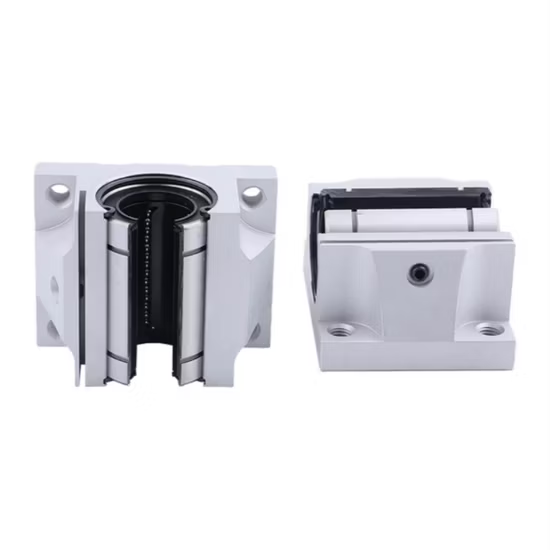
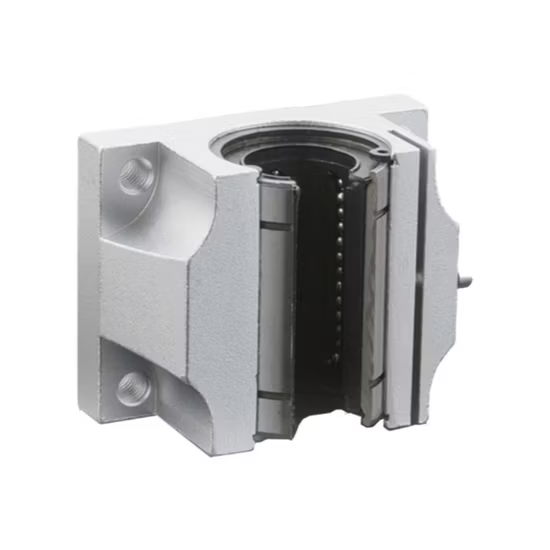
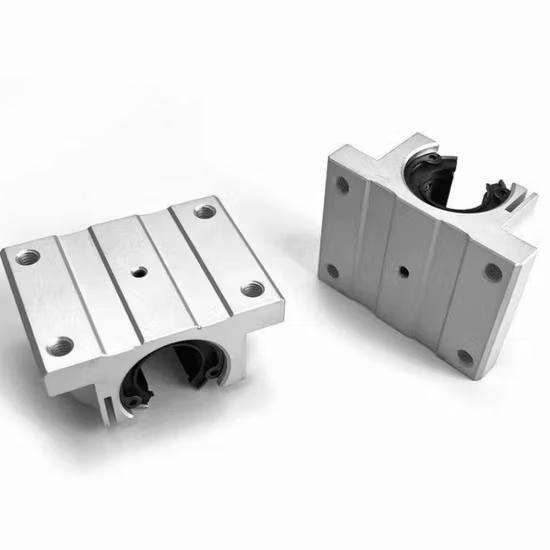
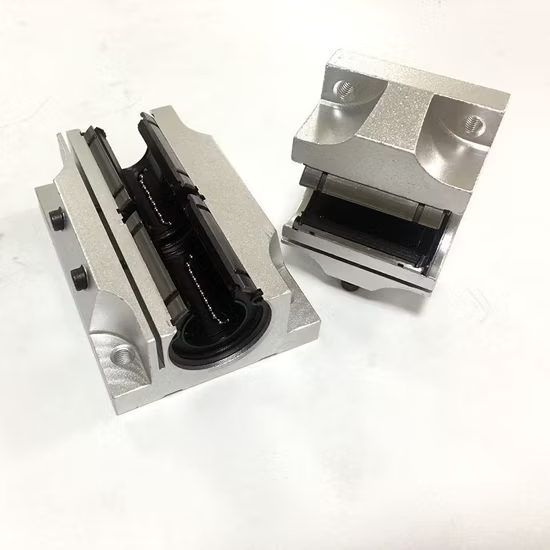
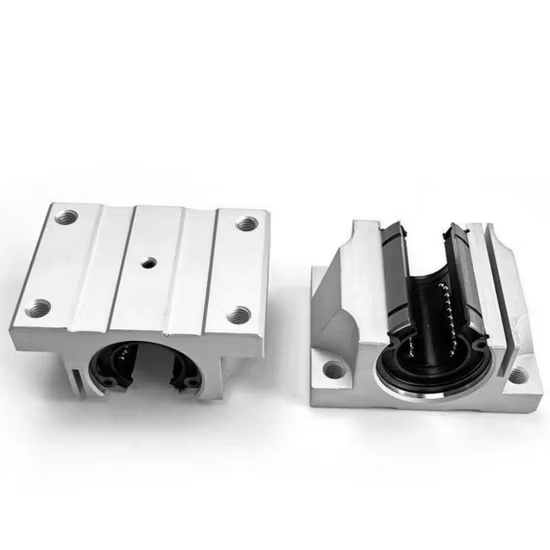
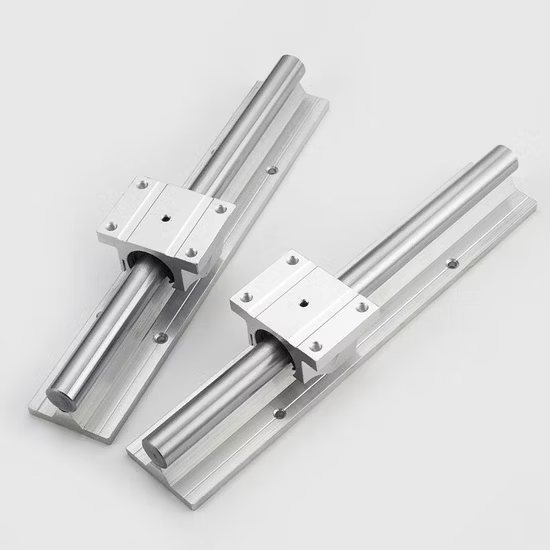
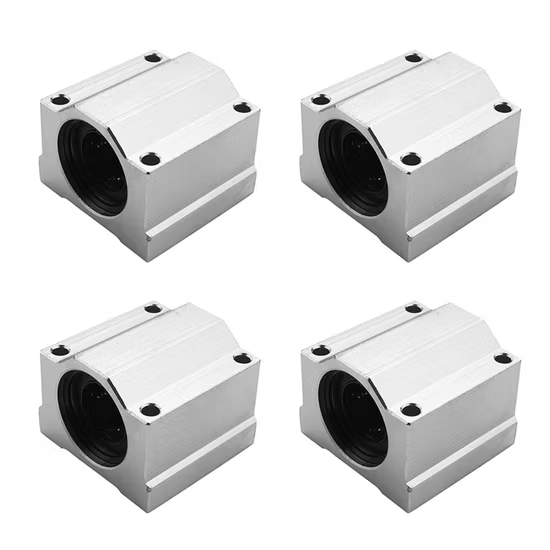
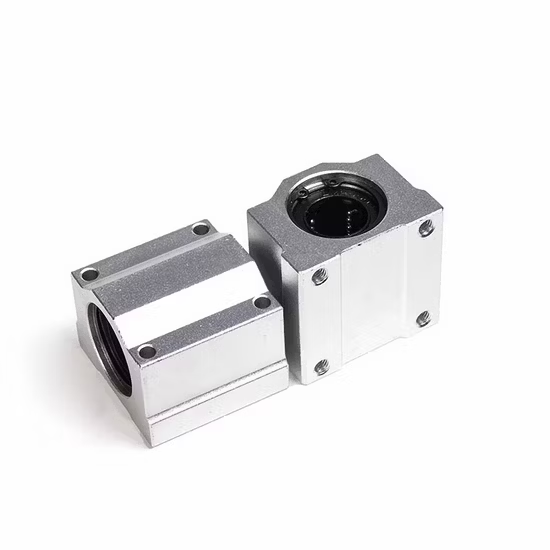
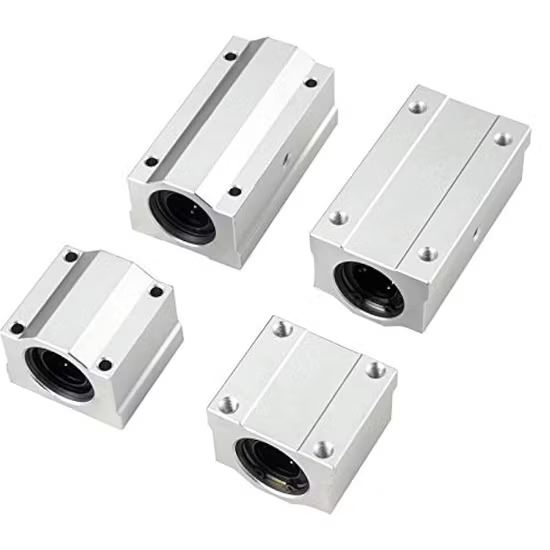
TBR16uu/TBR20luu Linear Shaft Bearing P0–P2 — engineered with a stainless steel hollow profile and polished surface for high-speed motion control in corrosive environments.
Full Batch Traceability — Every TBR16uu/TBR20luu linear shaft bearing slider ships with verifiable lot documentation directly from the manufacturer's production facilities.
| Parameter | Value |
|---|---|
| Designation | TBR16uu/TBR20luu |
| Bearing Type | Linear Shaft Bearing / Slider Bearing |
| Material Options | Available in stainless steel or alternative alloy variants |
| Profile Type | Hollow Profile |
| Surface Treatment | Polished |
| Precision Rating | P0, P6, P5, P4, P2 |
| Customization | Custom Length Available |
| Certification | CE, ISO 9001:2008, RoHS |
| Origin | Germany, Japan, Sweden, Malaysia, China |
Note: The TBR, uu, and luu suffixes are unverified and require manufacturer catalog confirmation for exact dimensional and sealing specifications.
| Industry | Typical Applications |
|---|---|
| Agricultural Machinery | Farm Motor drive shafts and steering linkages |
| Food Processing | Washdown conveyor guides and packaging actuators |
| Industrial Automation | High-speed pick-and-place rails and gantry systems |
Surface treatment integrity prevents catastrophic linear motion seizure in abrasive environments.
Sourcing decisions driven purely by base designation often overlook critical surface finishing details. I have seen numerous agricultural drive units fail because the chromium layer on the supporting shaft bearings was too thin, leading to rapid flaking under vibration. Once the substrate is exposed to dust and moisture, the resulting friction destroys the drive motor. Securing a TBR16uu/TBR20luu linear shaft bearing slider with verified, thickened surface treatment ensures the sliding interface survives the harsh realities of field operation.
Selecting the right TBR16uu/TBR20luu linear shaft bearing slider requires aligning material options with the specific operational environment. Stainless steel variants provide the high corrosion resistance necessary for food processing washdowns or humid farm settings, while alternative alloys might be specified for dry, high-speed automation. Our technical team reviews your specific load and exposure parameters to confirm the optimal material and polished surface treatment combination, ensuring smooth motion control without premature degradation.
Agricultural and automation environments subject linear motion components to a punishing mix of particulate contamination and dynamic radial loads. Dust ingress acts as a grinding paste, rapidly accelerating wear on the sliding interface if the seal variants are inadequate. High-speed operation generates friction heat, which can compromise structural rigidity if the hollow profile design lacks sufficient wall thickness. Furthermore, continuous exposure to moisture demands high corrosion resistance to prevent pitting on the polished surface, which would otherwise increase sliding friction and cause uneven motion.
The hollow profile design significantly reduces moving mass, allowing for higher acceleration in automation gantries while maintaining structural rigidity. Precision ratings ranging from P0 up to P2 dictate the dimensional tolerance of the sliding interface; a P2 class is essential for medical equipment or precision machine tools where micron-level deviation causes binding, whereas P0 or P6 suffices for general farm machinery. The polished surface treatment minimizes the coefficient of friction, directly supporting the high-speed, low-noise operation required in modern electronics manufacturing and packaging machinery.
Procuring linear bearings based solely on the base TBR number without verifying the uu or luu sealing suffixes leads to severe operational disruptions. Installing an open or lightly sealed variant in a dusty farm motor application guarantees rapid particulate ingress, resulting in unplanned downtime and catastrophic damage to the surrounding housing. According to failure analysis frameworks similar to ISO 15243, surface distress and abrasive wear account for a significant share of premature linear motion failures. Ignoring exact length and seal specifications voids equipment warranties and forces costly emergency replacements.
We eliminate the guesswork that causes field failures by validating every cross-reference against exact application requirements. While other suppliers might match the base TBR number, we verify that the custom length, hollow profile wall thickness, and specific uu/luu seal variants align perfectly with your OEM equipment. Our inventory includes fully traceable batches from authorized channels across Germany, Japan, and Sweden, ensuring you receive genuine components with verified high corrosion resistance. We provide comprehensive application-based selection reviews, confirming that the chosen precision class and material options will withstand your specific load and speed conditions.
To ensure optimal performance, please provide your equipment model, available installation space, and specific radial load requirements. Detailing the operational environment, including dust levels and washdown frequency, allows our engineering team to confirm the correct material options and seal variants. We will perform a comprehensive technical review to define the exact custom length and precision class required for your application.
Q: How do I verify the authenticity and batch traceability of these linear shaft bearings?
A: Every unit ships with a Certificate of Conformity and batch traceability documentation. You can verify the authenticity directly through the manufacturer's official app using the provided QR codes, ensuring the stainless steel material and precision ratings match your original specifications without relying on visual inspection alone.
Q: What cross-reference checks are critical beyond the base TBR designation?
A: Matching the base number is insufficient; you must verify the exact custom length, hollow profile dimensions, and the specific uu or luu seal variants. Overlooking these suffixes often results in installing components with inadequate dust protection or incorrect clearance, leading to rapid friction buildup and premature seizure in demanding applications.
Q: How do I select the right material and surface treatment for farm motors?
A: Agricultural environments demand high corrosion resistance and robust sealing against abrasive dust. We recommend stainless steel variants with a verified, thickened polished surface treatment to prevent flaking. Our team reviews your specific exposure conditions to ensure the selected material options will withstand moisture and particulate ingress without degrading.
Q: What causes premature failure in high-speed automation slider bearings?
A: Premature failures typically stem from particulate contamination acting as a grinding paste, or thermal binding caused by mismatched precision classes. Ensuring the correct uu/luu seal variants are installed and verifying that the hollow profile maintains structural rigidity at high speeds are critical steps to prevent unplanned downtime and surface distress.
Q: How do I determine the correct custom length and hollow profile specifications?
A: Provide your equipment model, installation space constraints, and dynamic load parameters to our technical team. We will calculate the required wall thickness for the hollow profile to maintain rigidity and define the exact custom length and precision class needed to achieve smooth, low-noise motion control in your specific system.
Our 5-step process ensures every order is engineered, validated, and supported for optimal performance.
Technical needs assessment
Custom specifications
Free samples for $50k+
Pre-shipment inspection
On-site & predictive
Our certified engineers respond within 24 hours with detailed technical specifications, pricing, and lead time information.