01
Consultation
Technical needs assessment

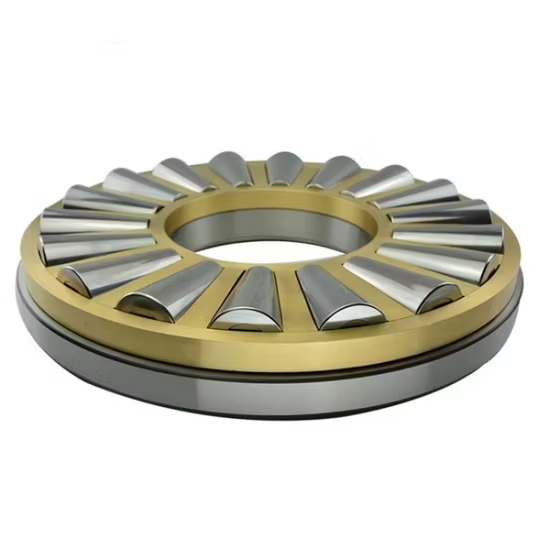
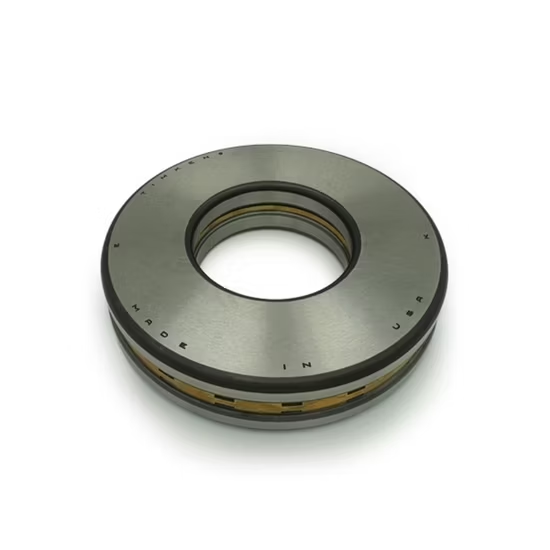


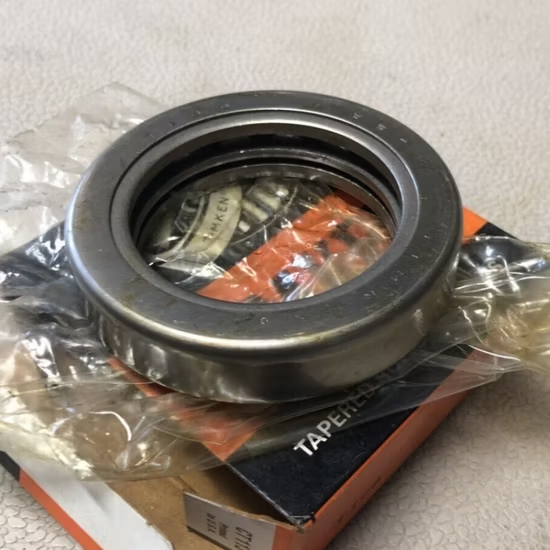
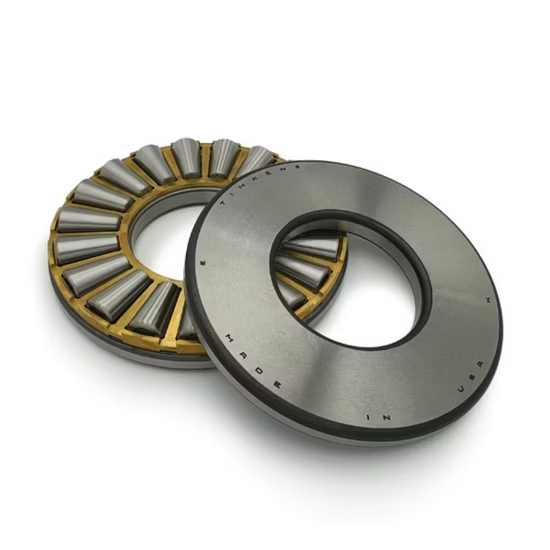
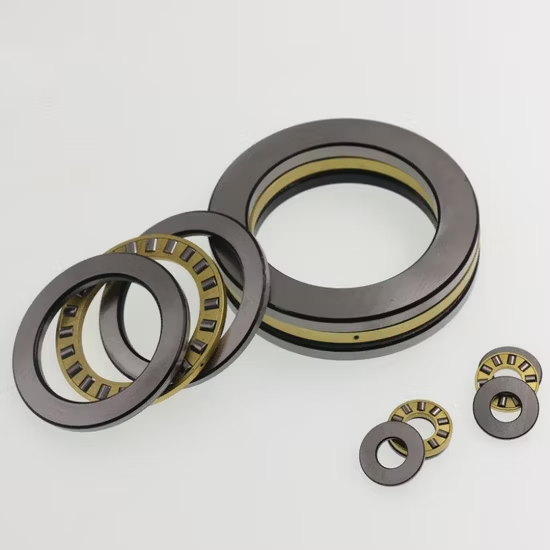
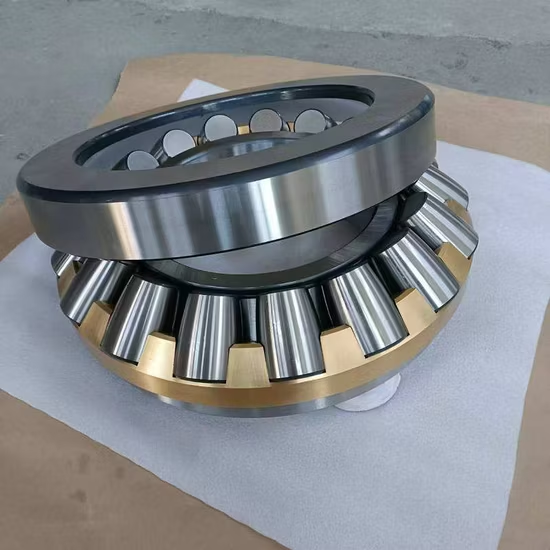
T126 904A1 Thrust Tapered Roller Bearing — engineered for clutch release mechanisms in automotive and heavy vehicle transmissions, handling combined axial and radial loads under continuous engagement cycles.
Official App QR Verification — Each T126 904A1 unit includes a scannable code linking directly to the manufacturer's database for instant authenticity confirmation.
| Parameter | Value |
|---|---|
| Designation | T126 904A1 |
| Product Type | Thrust Tapered Roller Bearing |
| Vibration Grade Options | Z1V1, Z2V2, Z3V3 |
| Origin Options | Germany, Japan, Sweden, Malaysia, China |
| HS Code | 8482500090 |
Note: The specific suffix meanings for T126 and 904A1 remain unverified in standard quick-reference tables and require direct manufacturer catalog confirmation.
| Industry | Typical Applications |
|---|---|
| Automotive and Heavy Vehicle Repair | Clutch release mechanisms, manual transmission throw-out assemblies |
| Industrial Gearboxes | Heavy-duty thrust support positions, vertical shaft axial load management |
| Material Handling Equipment | Steering pivot positions, lift mechanism axial guidance |
Internal geometry mismatches cause catastrophic thermal binding long before normal wear limits are reached.
In heavy-duty transmission environments, a T126 904A1 thrust tapered roller bearing operates under extreme axial loads and rapid engagement cycles. When procurement teams rely solely on base designations during cross-referencing, they frequently overlook critical internal design variations. This leads to the installation of units with incorrect cage materials or clearance classes. Under the intense heat generated during clutch disengagement, an incompatible cage will soften, deform, and ultimately fracture, resulting in severe transmission damage and unplanned vehicle downtime .
Selecting the correct T126 904A1 thrust tapered roller bearing requires a thorough evaluation of the specific clutch release mechanism's operational profile. Our engineering team reviews the axial load profile, engagement frequency, and thermal dissipation characteristics of your transmission housing. By aligning the internal geometry and vibration grade with the actual operational demands, we ensure the bearing maintains structural integrity throughout its intended service interval, preventing premature cage fatigue.
Clutch release environments subject bearings to severe axial shock loads combined with rapid temperature fluctuations. The friction generated during engagement cycles elevates local temperatures significantly, demanding a cage material that retains its structural rigidity beyond the thermal limits of standard polymers. Furthermore, the presence of metallic wear particles from the friction plate necessitates robust internal clearances to prevent abrasive contamination from causing raceway scoring . Inadequate lubrication flow in these confined spaces further accelerates surface degradation if the bearing's internal design does not facilitate optimal grease distribution.
While the base designation identifies the dimensional envelope, the available vibration grades—Z1V1, Z2V2, and Z3V3—dictate the operational smoothness and noise thresholds. For precision automotive transmissions, a Z3V3 grade minimizes high-frequency harmonics that can transfer through the shift linkage. The multi-origin sourcing flexibility allows procurement teams to balance lead times and budget requirements without compromising the fundamental thrust tapered roller bearing architecture. Selecting the appropriate origin ensures compliance with regional content regulations while maintaining the strict dimensional tolerances required for seamless clutch actuation.
Procuring a replacement based purely on the basic number often results in the installation of a unit with a cage material entirely unsuited for high-temperature clutch environments. We have documented cases where such mismatches led to cage fragmentation under thermal stress, causing the rollers to skew and lock the transmission input shaft. This type of catastrophic failure voids equipment warranties and triggers massive secondary damage to the bell housing and gearbox internals . The financial impact of a single missed internal design parameter far exceeds the initial cost savings of an unverified substitute.
Sourcing this specific clutch release bearing through our authorized network guarantees that every cross-reference aligns on internal design, cage material, and contact geometry, not just the outer dimensions. We verify the exact thrust profile required for your heavy-duty application, eliminating the risk of installing a unit with inadequate axial load capacity. Our batch traceability protocols ensure that the metallurgical properties of the rollers and raceways match the original equipment specifications. Furthermore, we provide application-based selection reviews that account for the unique thermal and mechanical shocks inherent in manual transmission systems.
To ensure the selected unit perfectly matches your transmission requirements, please provide the specific axial load profiles, peak engagement temperatures, and operational cycle frequencies. Supplying the original equipment manufacturer part numbers or detailed housing drawings allows our technical team to perform a comprehensive cross-reference verification. This data enables us to confirm the exact internal geometry and cage material required, delivering a fully validated solution that prevents premature thermal binding and mechanical failure.
Q: How can I verify the authenticity of the T126 904A1 using official brand apps?
A: Each unit features a unique, laser-etched QR code on the packaging or outer retainer. By scanning this code with the manufacturer's official mobile application, you can instantly verify the production batch, original factory, and dimensional specifications, effectively ruling out counterfeits with cloned visual markers.
Q: What cross-reference parameters matter most for this clutch release bearing?
A: Beyond the basic dimensional envelope, it is critical to verify the internal cage material, specific thrust angle, and axial clearance class. Matching only the base number often results in installing a unit that cannot withstand the high thermal loads of clutch engagement, leading to rapid cage degradation.
Q: How do I choose between Z1V1 and Z3V3 vibration grades?
A: The Z3V3 grade offers superior rotational smoothness and significantly reduced acoustic emissions, making it ideal for modern, precision automotive transmissions. The Z1V1 grade is generally sufficient for heavy-duty industrial gearboxes or agricultural machinery where extreme noise reduction is not a primary operational requirement.
Q: Why is batch traceability crucial for heavy vehicle repair applications?
A: Batch traceability ensures that the specific metallurgical treatments applied to the rollers and raceways are documented and verifiable. In the event of a premature failure, this data allows engineers to determine if the root cause was a material defect or an application mismatch, protecting your repair facility from unwarranted liability.
Our 5-step process ensures every order is engineered, validated, and supported for optimal performance.
Technical needs assessment
Custom specifications
Free samples for $50k+
Pre-shipment inspection
On-site & predictive
Our certified engineers respond within 24 hours with detailed technical specifications, pricing, and lead time information.