01
Consultation
Technical needs assessment


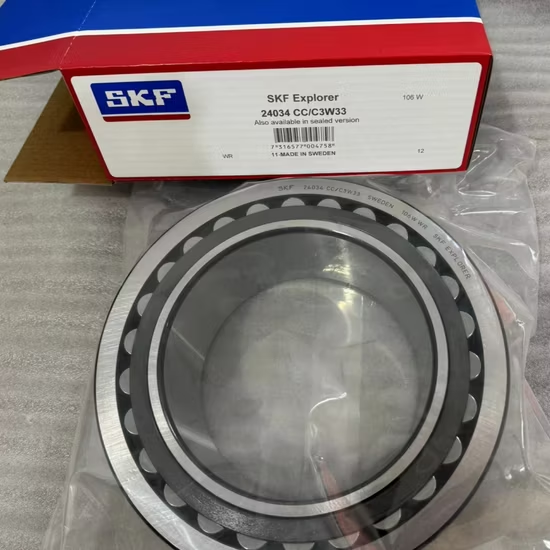
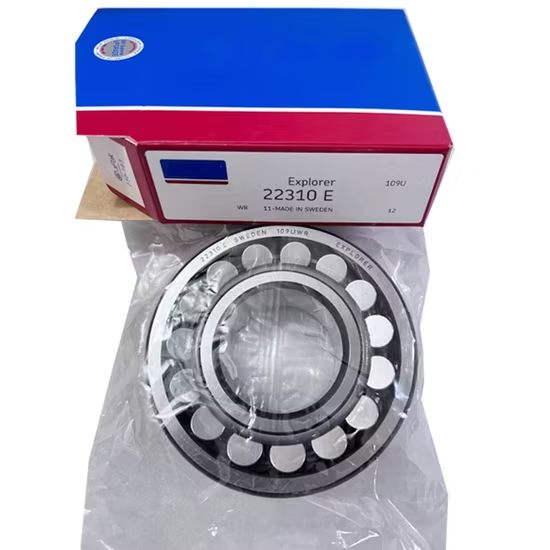


SKF 22326cc Spherical Roller Bearing — designed for heavy-duty vibrating screens and industrial gearboxes.
Authorized Multi-Brand Sourcing — Securing the exact 22326cc configuration across mixed SKF, FAG, and NSK orders without juggling multiple regional distributors.
| Parameter | Value |
|---|---|
| Designation | 22326cc |
| Product Type | Spherical Roller Bearing |
| Bore Type | Cylindrical / Tapered (1:12 with K suffix) |
| Cage Material | Machined Brass (MB) / Pressed Steel (CC) |
| Lubrication Features | Outer Ring Groove and Holes (W33) |
| Origin | Germany / Japan / Sweden / Malaysia / China |
| HS Code | 8482500090 |
Note: Suffix variants including Ccja, Va406, and 2CS5 require manufacturer catalog confirmation prior to final cross-referencing.
| Industry | Typical Applications |
|---|---|
| Mining and Crushing | Jaw crusher toggle plates and vibrating screen exciter mechanisms |
| Steel and Metallurgy | Continuous caster roll segments and rolling mill gear drives |
| Pulp and Paper | Paper machine dryer cylinder journals and press section rolls |
| Industrial Power Transmission | Heavy-duty gearbox低速 shafts and bucket elevator drive pulleys |
Matching the base designation while ignoring cage material and clearance suffixes is the primary catalyst for thermal binding in heavy machinery.
I still remember the distinct smell of burnt lubricant in a Dubai mining site after a catastrophic seizure. The maintenance crew had installed a standard clearance variant instead of the required C3 or C4 equivalent, completely overlooking the thermal expansion demands of the vibrating screen exciter. When dealing with a S Kf 22326cc spherical roller bearing in high-impact environments, assuming internal design equivalence based solely on the 22326 prefix leads to premature cage fracture . The operational reality of crushing equipment demands strict alignment of every suffix to survive the brutal radial loads and constant vibration.
Selecting the correct variant of the S Kf 22326cc spherical roller bearing requires looking past the basic size dimensions and focusing on the internal geometry. Our engineering review process cross-references the exact cage type and lubrication features against your specific equipment OEM requirements. We ensure that the supplied units possess the precise suffix combination needed to handle the specific shock loads and misalignment typical in mineral processing and heavy material handling applications.
Vibrating screens and crushers subject rolling elements to severe combined loads and continuous high-frequency impacts. Under these conditions, standard internal clearances quickly disappear as the inner ring expands from friction heat, leading to dangerous preload and eventual seizure. Proper lubrication routing becomes critical; without adequate oil flow to the most heavily loaded zones, the friction generated by sliding contact accelerates wear exponentially. Furthermore, the ingress of fine abrasive dust common in mining operations rapidly degrades lubricant film thickness, demanding robust sealing solutions or frequent re-lubrication intervals to maintain operational reliability .
The internal configuration dictates survival in heavy industry. The MB suffix indicates a machined brass cage guided on the inner ring, offering superior resistance to the high-frequency vibrations and shock loads that easily fracture standard pressed steel cages. When paired with the W33 feature, the outer ring lubrication groove and holes ensure that fresh grease reaches the rolling elements directly, flushing out contaminants in dusty environments. For installations requiring tight interference fits on tapered shafts, the K suffix denotes a 1:12 tapered bore, allowing precise radial internal clearance reduction during mounting via lock nuts or hydraulic sleeves. Meanwhile, the cc designation in this specific context relates to axial clearance pairing parameters, ensuring stable operation when thermal gradients shift the shaft alignment dynamically.
Installing a unit with an incorrect cage material or internal clearance rarely results in a simple, predictable wear-out. Instead, it triggers unplanned downtime that halts entire production lines, turning a minor component replacement into a massive logistical bottleneck. A misaligned cage can suffer fatigue cracking under vibration, sending brass debris through the gear train and causing catastrophic secondary damage to the housing and shaft. According to failure analysis frameworks like ISO 15243, these premature failures void equipment warranties and inflate maintenance budgets far beyond the initial procurement savings .
We eliminate the risk of receiving "close enough" substitutes by enforcing a strict three-point alignment check: base number, clearance class, and cage material. While other suppliers might ship a standard steel-cage variant when a brass-cage MB is specified, our authorization across major brands guarantees the exact 22326cc configuration you requested. We provide comprehensive cross-referencing that accounts for internal design nuances, preventing the thermal binding issues that plague poorly specified replacements. Our mixed-brand order consolidation means your purchasing team manages a single point of contact for complex MRO inventories, backed by full batch traceability for every unit shipped.
To guarantee the optimal configuration for your specific machinery, please provide the detailed operational parameters, including radial and axial load profiles, operating speeds, and ambient temperature ranges. Sharing the exact OEM equipment serial numbers or existing housing dimensions allows our technical team to perform a comprehensive cross-reference review and L10 life calculation. This data ensures we supply a S Kf 22326cc spherical roller bearing that perfectly matches your environmental and mechanical demands, eliminating guesswork and preventing premature field failures.
Q: Why is it critical to align the cage material suffix during cross-referencing?
A: Substituting a pressed steel cage for a machined brass MB variant in high-vibration equipment like vibrating screens drastically increases the risk of cage fracture. The brass construction absorbs shock loads and resists fatigue far better under severe oscillating conditions, preventing catastrophic internal failures and protecting the surrounding gearbox or exciter mechanism from secondary debris damage.
Q: How does the W33 suffix improve performance in dusty mining environments?
A: The W33 designation provides an annular groove and lubrication holes in the outer ring. This allows fresh g*aring, effectively flushing out abrasive dust particles that infiltrate the seals. This continuous purging action maintains lubricant film integrity and significantly extends the operational lifespan in highly contaminated material handling applications.
Q: What is the correct procedure for mounting the K tapered bore variant?
A: Mounting a 1:12 tapered bore requires precise control over the drive-up distance along the tapered shaft or sleeve. Technicians must measure the reduction in radial internal clearance during tightening to ensure it reaches the optimal operating gap. Over-tightening eliminates the clearance entirely, causing immediate thermal binding, while under-tightening allows excessive shaft deflection and roller skidding.
Q: How can we verify the authenticity of the supplied units?
A: Every unit is supplied with batch traceability documentation and features a scannable code that links directly to the manufacturer's official verification application. This digital handshake confirms the metallurgical origin and production batch, effectively filtering out sophisticated counterfeits that utilize soft inner rings and cloned visual markers to deceive standard visual inspections.
Q: What causes thermal binding in correctly sized units?
A: Thermal binding typically occurs when the internal clearance class is mismatched to the operating temperature. If a standard clearance is used in an application generating high friction heat, the inner ring expands faster than the outer ring, eliminating the operational gap. This creates extreme preload, spiking operating temperatures further until the bearing seizes completely, often destroying the shaft in the process.
Our 5-step process ensures every order is engineered, validated, and supported for optimal performance.
Technical needs assessment
Custom specifications
Free samples for $50k+
Pre-shipment inspection
On-site & predictive
Our certified engineers respond within 24 hours with detailed technical specifications, pricing, and lead time information.


