01
Consultation
Technical needs assessment



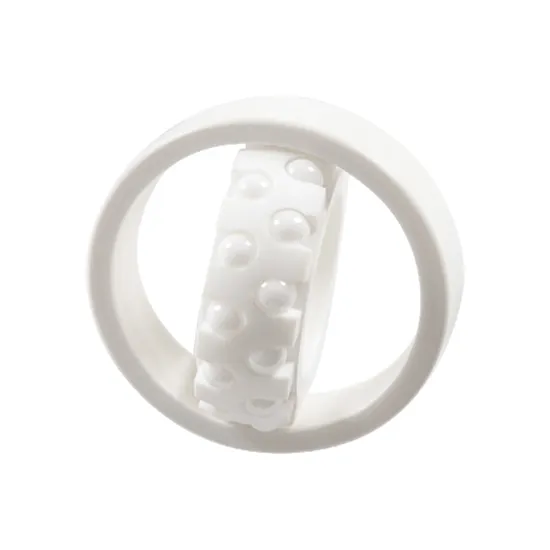
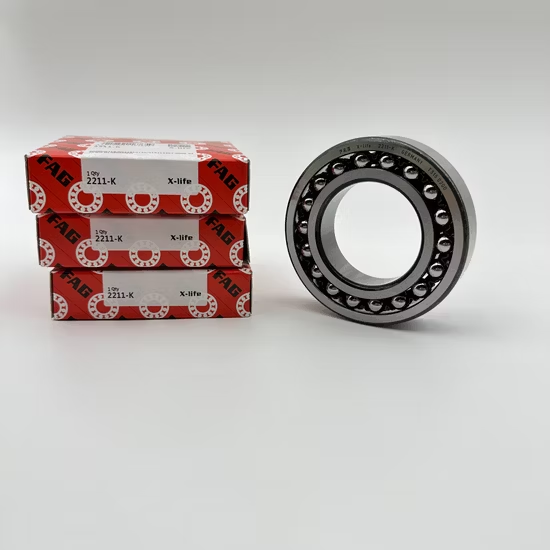
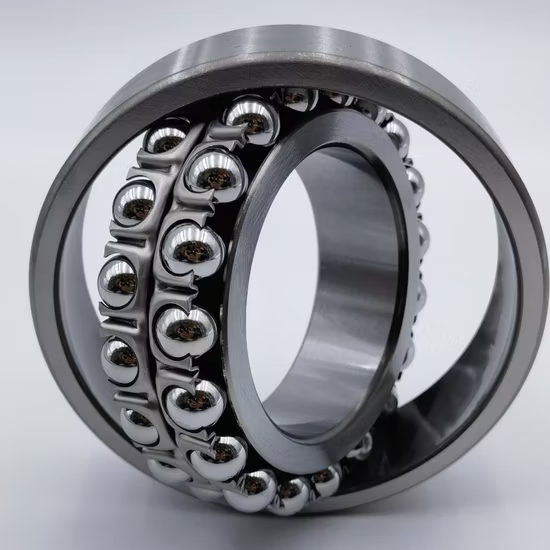
1204 1205 1204 1206 2204 2205 2206 2306 2307 2208 Self-Aligning Full Ceramic Ball Bearings — these series accommodate shaft misalignment while offering full ceramic material options for extreme temperature and non-magnetic environments.
Multi-Origin Traceability — every self-aligning batch ships with verifiable lot documentation linking directly to the manufacturer's production records.
| Parameter | Value |
|---|---|
| Designation | 1204 1205 1204 1206 2204 2205 2206 2306 2307 2208 |
| Product Type | Self-Aligning Full Ceramic Ball Bearing |
| Bearing Style | Open, Rubber Seals, Iron Seals |
| Feature | Low Noise, High Speed, Long Service Life |
| Origin | Germany, Japan, Sweden, Malaysia, China |
| HS Code | 848210 |
| Customization | Available |
| Industry | Typical Applications |
|---|---|
| Electric Motors | Rotor shaft supports subject to minor housing misalignment |
| Industrial Gearboxes | Intermediate shafts requiring compensation for thermal expansion |
| Agricultural Machinery | Conveyor drive rollers operating in high-dust environments |
When sourcing a reliable self-aligning ball bearing full ceramic 1204 2204 2306 series supplier, procurement teams often overlook how ambient heat alters internal clearances. In high-temperature, high-dust environments typical of Middle Eastern crushing and processing plants, standard clearance bearings frequently bind. A batch of 2205 bearings once failed rapidly in a rock crusher because standard CN clearance was installed instead of C3, leading to thermal expansion and severe cage seizure. Selecting the correct internal geometry prevents these catastrophic shutdowns .
The choice between open, rubber-sealed, and iron-sealed configurations dictates survival in abrasive settings. Open variants require robust external housing seals, while rubber seals provide superior dust exclusion at the cost of higher friction. Iron shields offer a middle ground for high-speed electric motor shafts where particulate ingress is moderate but rotational speed demands minimal drag.
Self-aligning ball bearings accommodate shaft deflections and housing misalignment, but they are highly sensitive to axial overloading. In gearboxes and agricultural conveyors, combined loads with heavy shock components can brinell the raceways. Elevated ambient temperatures thin standard lubricants, necessitating high-temperature greases and wider internal clearances to prevent the rolling elements from skidding or generating excessive friction heat .
The 12xx and 22xx series feature narrower cross-sections suited for lighter radial loads and higher speeds, commonly found in electric motors and textile machinery. The 23xx series, including the 2306 and 2307, offers wider outer rings and higher load capacities for heavier industrial gearboxes. Full ceramic material options are available for applications demanding electrical insulation or resistance to corrosive washdowns, while standard bearing steel variants serve general mechanical drives.
Installing a standard clearance bearing in a high-heat application inevitably leads to unplanned downtime. As the inner ring expands faster than the outer ring, the internal clearance vanishes, generating immense friction. Per ISO 15243 failure mode classifications, this manifests as severe smearing, cage disintegration, and eventual shaft scoring. Replacing the bearing is trivial compared to the cost of repairing a scored shaft or replacing a seized motor rotor .
We do not just match base numbers; we verify the exact clearance, seal type, and material required for your specific operating envelope. A 2307 bearing ordered for a hot conveyor requires different internal geometry than one used in a climate-controlled packaging line. Our cross-reference expertise ensures that every replacement matches the OEM's thermal and load design intent. Furthermore, our multi-origin supply chain allows us to source identical specifications from Germany, Japan, or Sweden, balancing your budget and lead-time requirements without compromising batch traceability.
To ensure optimal performance, provide our engineering team with your specific radial and axial loads, operating speeds, and ambient temperature ranges. Sharing the OEM equipment number allows us to perform a precise cross-reference check, verifying that the selected clearance and sealing configuration match the original design parameters. This technical review guarantees that the replacement integrates flawlessly into your existing machinery.
Q: How do I verify the authenticity of multi-origin self-aligning bearings?
A: Every shipment includes batch traceability documentation and a Certificate of Conformity. Buyers can scan the packaging QR codes using the manufacturer's official mobile application. This digital verification confirms the production facility, material grade, and exact manufacturing date, effectively ruling out counterfeit products with soft inner rings or cloned labels.
Q: Why must clearance class be matched alongside the base designation?
A: Base numbers like 2205 or 2307 only define the physical dimensions. If a high-temperature application requires C3 clearance but receives standard CN, thermal expansion will eliminate the internal gap, causing rapid heat buildup and seizure. Matching the clearance ensures the bearing can accommodate the specific thermal growth of your equipment's shaft and housing.
Q: What are the application boundaries for full ceramic versus steel options?
A: Standard bearing steel handles high mechanical loads and shock effectively in general gearboxes and motors. Full ceramic variants are specified for environments requiring complete electrical insulation, extreme corrosion resistance, or operation where standard lubricants fail. Selecting between them depends entirely on the presence of stray currents, chemical washdowns, or extreme thermal limits.
Q: How do I choose between open, rubber sealed, and iron sealed styles?
A: Open bearings rely on the housing's external seals and are best for high-speed, clean environments. Rubber seals provide maximum protection against dust and moisture but generate higher friction, limiting top speeds. Iron shields offer moderate contamination protection with minimal friction, making them ideal for high-speed electric motor shafts where particulate ingress is relatively low.
Our 5-step process ensures every order is engineered, validated, and supported for optimal performance.
Technical needs assessment
Custom specifications
Free samples for $50k+
Pre-shipment inspection
On-site & predictive
Our certified engineers respond within 24 hours with detailed technical specifications, pricing, and lead time information.