01
Consultation
Technical needs assessment

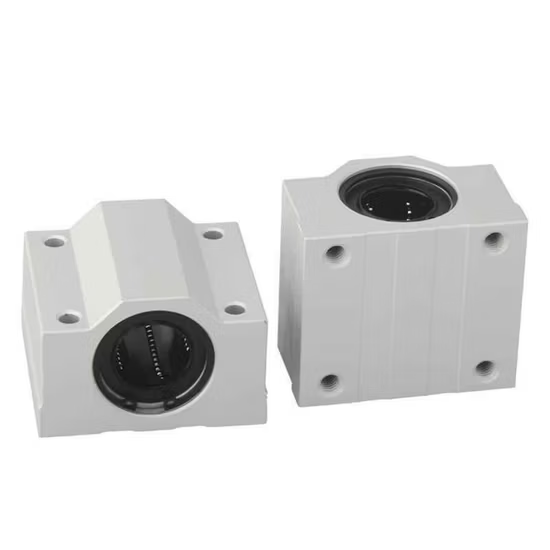
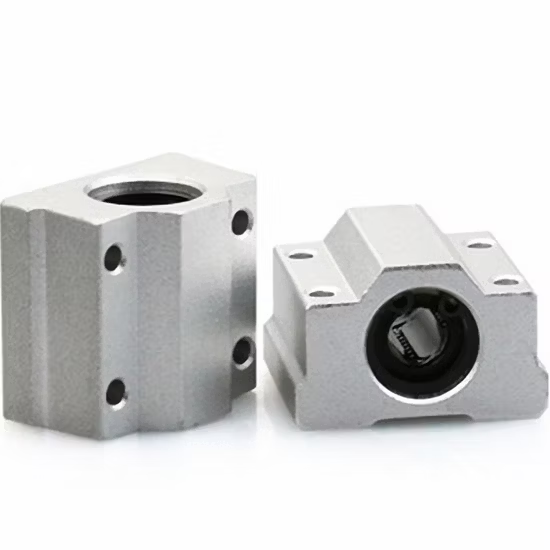


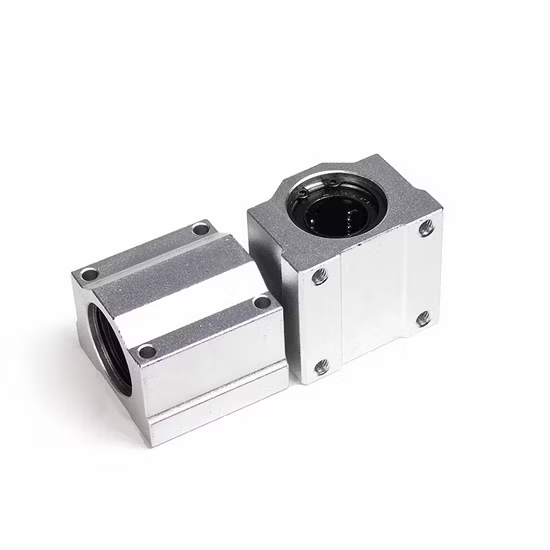
SC50UU SC60UU SC80UU Linear Bearing Slide Block — Stainless steel construction with polished surface delivers high corrosion resistance for food processing, medical equipment, and industrial automation environments.
Verified Via Official Apps — Scan the QR code on each SC50UU SC60UU SC80UU package to confirm authenticity directly through the manufacturer application.
| Parameter | Value |
|---|---|
| Designation | SC50UU SC60UU SC80UU |
| Bearing Type | Linear Bearing / Linear Slide Unit |
| Material | Stainless steel variants available |
| Profile Type | Hollow Profile |
| Surface Treatment | Polished |
| Precision Class | P0, P6, P5, P4, P2 options |
| Seal Type | Integrated seals (UU) |
| Certification | CE, CS, EPA, ISO 9001:2000, ISO 9001:2008, RoHS |
| Customization | Custom length configurations available |
| Origin | Germany, Japan, Sweden, Malaysia, China options |
| Industry | Typical Applications |
|---|---|
| Industrial Automation | High-speed pick-and-place robots and CNC router gantries |
| Food Processing | Washdown environments for conveyor guide rails and sorting equipment |
| Medical Equipment | Precision linear motion in imaging tables and laboratory automation |
| Electronics Manufacturing | Cleanroom compatible slide mechanisms for semiconductor handling |
Material selection dictates survival in wet environments, not just load capacity.
Procurement teams often specify standard carbon steel slide blocks for automated washdown lines, only to face catastrophic rail pitting within months. When surface rust forms inside the recirculation zone, it acts as an abrasive paste that destroys the rolling elements long before nominal fatigue life is reached . Specifying a SC50UU SC60UU SC80UU stainless steel linear bearing prevents this premature degradation by eliminating the oxidation pathway entirely, ensuring smooth travel even under high-pressure chemical cleaning.
Selecting the right SC50UU SC60UU SC80UU stainless steel linear bearing involves balancing corrosion resistance with the specific dynamic loads of the automation equipment. While standard bearing steel offers high hardness, it fails rapidly in food processing or marine environments. Our engineering review ensures the selected stainless variant provides adequate load ratings without compromising the structural integrity of the hollow profile block, aligning the material properties directly with the operational demands of the machinery.
High-pressure washdowns introduce severe challenges for linear motion systems, where water and aggressive detergents easily penetrate standard seal gaps. The integrated seals on these units must maintain a tight contact lip to block moisture ingress without generating excessive friction that limits high-speed traversal. Furthermore, the polished surface treatment prevents chemical residues from adhering to the block exterior, while the hollow profile design reduces the overall moving mass, allowing the drive motors to accelerate and decelerate rapidly without overheating .
The UU designation indicates integrated seals designed to retain lubrication and exclude particulate contamination, a critical feature for maintenance-free operation in sealed housings. However, because this is an unverified suffix requiring manufacturer catalog confirmation, cross-referencing must account for specific seal lip geometries that vary between brands. Beyond sealing, selecting the appropriate precision class from P0 up to P2 ensures the slide block meets the strict parallelism and straightness tolerances required for optical inspection machines, where even microscopic deviation causes focusing errors.
Installing standard steel blocks in corrosive environments inevitably leads to unplanned downtime as rusted carriages seize on the guide rails. This sudden failure not only halts production but can cause catastrophic damage to the drive screws and servo motors when the system forces movement against the seized block. According to ISO 15243 frameworks, corrosion-induced surface distress drastically accelerates spalling, voiding equipment warranties and forcing complete rail replacements rather than simple component swaps .
We eliminate cross-reference errors by verifying that the base designation, seal type, and precision class align perfectly with your OEM requirements. Sourcing a SC50UU SC60UU SC80UU stainless steel linear bearing often involves navigating complex suffix variations; our team ensures the internal recirculation design matches the specific load profile of your application. By providing full batch traceability and application-based selection review, we prevent the thermal binding and premature seal wear that occur when generic substitutes are installed in precision automation equipment.
To ensure optimal performance and exact fitment, please provide the specific radial and axial loads, maximum traversal speeds, and operating temperature ranges for your automation equipment. Supplying the OEM equipment number or existing rail dimensions allows our technical team to perform a comprehensive cross-reference review and L10 life calculation. This detailed parameter sharing guarantees the selected configuration meets your precise motion control requirements without unforeseen integration issues.
Q: How do I verify the authenticity of the linear bearings upon delivery?
A: Every unit features a unique QR code that can be scanned using the manufacturer official application. This digital verification confirms the batch origin, material grade, and production date, ensuring you receive genuine components with full traceability rather than cloned visual replicas that fail under operational stress.
Q: What precautions are necessary when cross-referencing the UU suffix?
A: The UU suffix denotes integrated seals, but internal lip designs and friction characteristics vary significantly between manufacturers. A direct base-number match might overlook these differences, leading to excessive drag or inadequate sealing. We verify the exact seal geometry against your application requirements to prevent premature wear or thermal binding.
Q: How do I select the correct precision rating for my automation equipment?
A: Precision classes range from standard P0 up to ultra-precise P2, dictating the allowable dimensional and running tolerances. High-accuracy applications like optical inspection or semiconductor handling require P4 or P2 ratings to maintain strict parallelism, whereas general packaging machinery typically operates efficiently with P6 or P0 grades to optimize procurement costs.
Q: Why choose stainless steel variants over standard bearing steel for these blocks?
A: Stainless steel options provide substantially higher corrosion resistance, making them essential for food processing washdowns or humid environments where standard steel would rapidly pit and seize. The polished surface treatment further prevents chemical adhesion, ensuring smooth linear motion and extended service life in aggressive operational settings without frequent maintenance interventions.
Our 5-step process ensures every order is engineered, validated, and supported for optimal performance.
Technical needs assessment
Custom specifications
Free samples for $50k+
Pre-shipment inspection
On-site & predictive
Our certified engineers respond within 24 hours with detailed technical specifications, pricing, and lead time information.
![SHF8 Aluminum Alloy Slide Bearing for CNC Router 3D Printer Parts [WARN] draft identifier mismatch](https://skfiso.com/wp-content/uploads/2026/09/shf8-aluminum-alloy-slide-bearing-for-cnc-router-3d-printer-parts-warn-draft-identifier-mismatch-fee101.avif)
