01
Consultation
Technical needs assessment


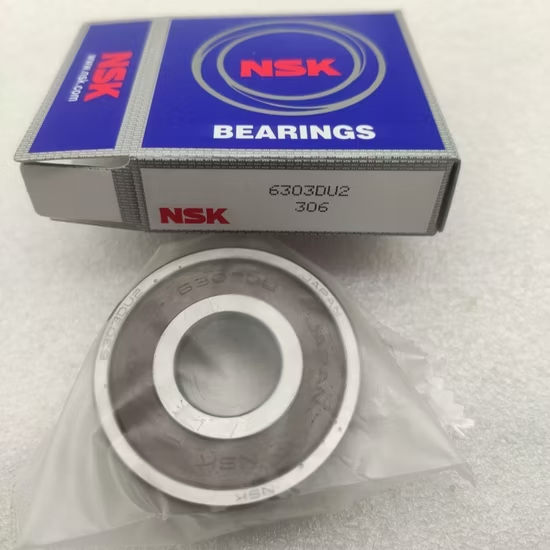
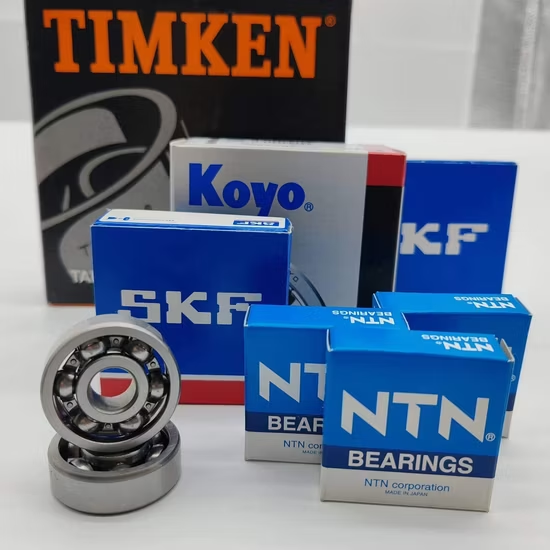
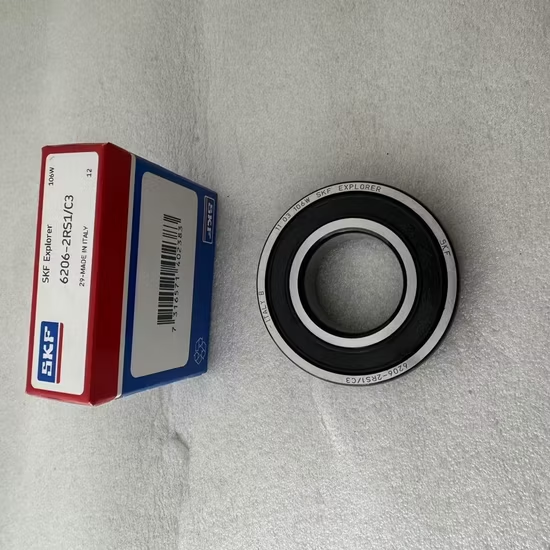
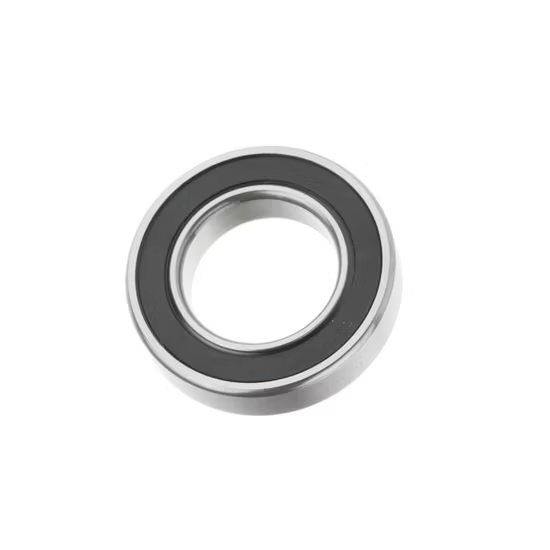
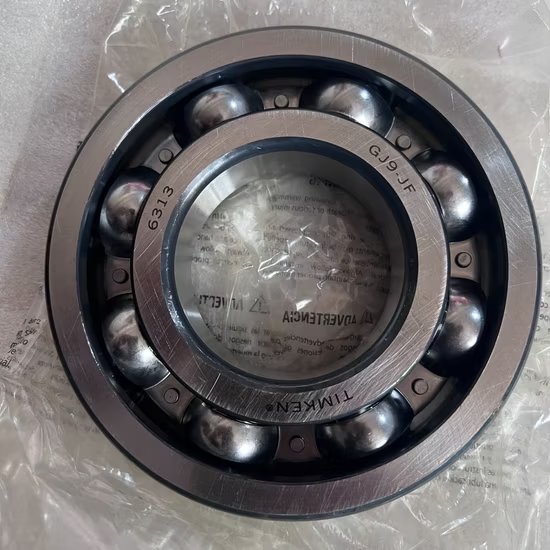
S6004zz/S6005zz/S6006zz/S6007zz/S6008zz/S6009zz Stainless Steel Deep Groove Ball Bearings — double shielded (zz) configuration prevents contamination at moderate speeds, while stainless steel (S) construction ensures reliable corrosion resistance.
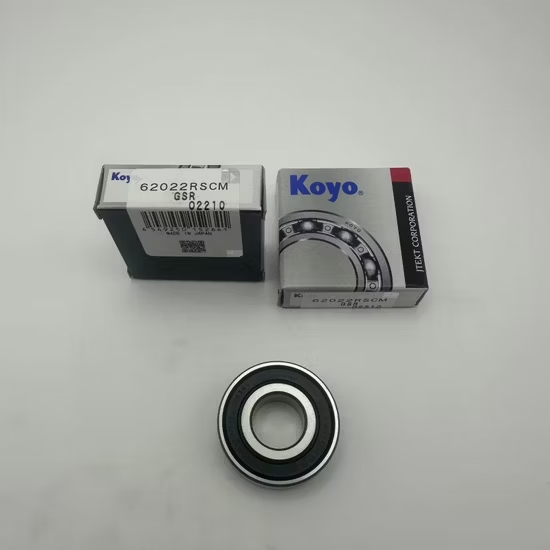
Full Brand Authorization — sourcing mixed SKF, NSK, and NTN batches for your washdown lines from a single verified distributor eliminates conflicting lead times.
| Parameter | Value |
|---|---|
| Designation | S6004zz/S6005zz/S6006zz/S6007zz/S6008zz/S6009zz |
| Product Type | Stainless Steel Deep Groove Ball Bearing |
| Bearing Style Options | Open, Rubber Seals, Iron Seals |
| Material | Stainless Steel |
| Quality / Noise Level | Z1V1, Z2V2, Z3V3, Z4V4 |
| HS Code | 848210 |
| Industry | Typical Applications |
|---|---|
| Food & Beverage Processing | Conveyor drive rollers in washdown zones, bottling line star wheels |
| Chemical Processing | Pump shaft supports exposed to corrosive splashes and high humidity |
| Marine & Offshore | Deck machinery pulleys and winch guides in salt spray environments |
| Packaging Machinery | Sealing jaws and forming tubes requiring frequent caustic cleaning |
Standard bearing steel rusts from the inside out long before the outer ring shows visible pitting.
In high-humidity or caustic washdown environments, micro-condensation bypasses standard seals and attacks the raceways of carbon steel bearings. I transitioned from aftermarket support to sales after investigating a catastrophic motor burnout at a Chilean copper mine; the root cause was a seized standard bearing that should have been specified for corrosion resistance. Relying on basic designations without verifying the exact material and shield configuration leads to premature thermal binding. Procurement teams often face severe unplanned downtime because the replacement part matched the base number but lacked the necessary stainless steel construction .
Specifying the correct S6004zz-S6009zz stainless steel deep groove ball bearing requires aligning the shield type with the specific washdown protocol. While the double iron shield configuration effectively blocks coarse particulate matter and heavy water spray, high-pressure chemical jets might necessitate evaluating alternative sealing options from the available range. We review your exact cleaning cycles to ensure the selected variant prevents moisture ingress without introducing excessive friction.
High-pressure cleaning introduces severe thermal shock and chemical exposure that rapidly degrades standard lubricants. The iron shields on these units create a non-contact labyrinth that minimizes friction heat but requires careful consideration of the internal grease fill to prevent washout. When operating near chemical processing pumps, the combination of radial loads and corrosive ambient moisture demands strict adherence to the manufacturer's relubrication intervals or the selection of maintenance-free sealed variants .
The "S" prefix strictly denotes the martensitic stainless steel construction essential for resisting oxidation in marine and food-grade settings. The "zz" suffix confirms the presence of double iron shields, which provide a critical physical barrier against dust and water splash without the friction penalties of rubber contact seals. Understanding these specific suffixes ensures the internal clearance and shield geometry perfectly match the thermal expansion characteristics of your equipment's shaft and housing.
Installing a carbon steel equivalent in a washdown zone guarantees rapid raceway degradation and catastrophic seizure under load. Even when the base dimensions match, omitting the stainless steel material specification or misinterpreting the shield type voids equipment warranties and triggers massive secondary damage to adjacent motor windings. These cross-reference errors consistently result in severe production halts that far exceed the initial component savings.
Mixed-brand requirements for S6004zz/S6005zz/S6006zz/S6007zz/S6008zz/S6009zz are fulfilled through our authorized channels, eliminating the risk of soft inner rings found in cloned products. We enforce strict cross-reference alignment on the "zz" shield suffix and internal clearance, preventing the thermal binding caused by incorrect base-number substitutions. Every shipment includes comprehensive application-based selection reviews to verify that the stainless steel grade and noise levels suit your specific processing machinery.
Provide your specific radial and axial load profiles, operating speeds, and exact washdown chemical concentrations so our engineering team can validate the L10 life and select the optimal internal clearance. Sharing the OEM equipment numbers allows us to perform a rigorous cross-reference check, ensuring the replacement S6004zz-S6009zz stainless steel deep groove ball bearing perfectly matches the original factory specifications.
Q: How does the load capacity of stainless steel compare to standard bearing steel?
A: Stainless steel variants generally exhibit a lower dynamic load rating than standard high-carbon chromium steel due to differences in material hardness and fatigue limits. Engineers must apply appropriate derating factors during the L10 life calculation to account for this reduced capacity, especially in heavily loaded conveyor drive applications.
Q: Why is it critical to verify the "zz" suffix during cross-referencing?
A: The "zz" suffix specifies double iron shields, which offer low-friction protection against dust and water splash. Substituting a rubber-sealed "2RS" variant increases friction and heat generation, while an open bearing allows immediate contamination ingress, both leading to rapid failure in washdown environments.
Q: How can I verify the stainless steel material authenticity upon delivery?
A: You can scan the QR codes on the packaging using the manufacturer's official application to trace the batch origin. Additionally, we provide a material test report with every shipment that independently verifies the specific stainless steel alloy composition used in the rings and rolling elements.
Q: What are the selection boundaries between iron shields (zz) and rubber seals (2RS)?
A: Iron shields are ideal for high-speed applications where minimizing friction and heat generation is critical, offering excellent protection against coarse contaminants. Rubber seals provide superior exclusion of fine dust and liquid moisture but introduce higher friction, making them better suited for lower-speed, high-contamination washdown zones.
Q: How do the Z1V1 to Z4V4 noise levels impact food processing equipment?
A: Higher grades like Z3V3 and Z4V4 indicate tighter manufacturing tolerances and superior surface finishes, resulting in significantly smoother and quieter operation. This reduced vibration is crucial for high-speed packaging machinery and medical devices where operational stability and minimal acoustic emissions are strictly required.
Our 5-step process ensures every order is engineered, validated, and supported for optimal performance.
Technical needs assessment
Custom specifications
Free samples for $50k+
Pre-shipment inspection
On-site & predictive
Our certified engineers respond within 24 hours with detailed technical specifications, pricing, and lead time information.