01
Consultation
Technical needs assessment

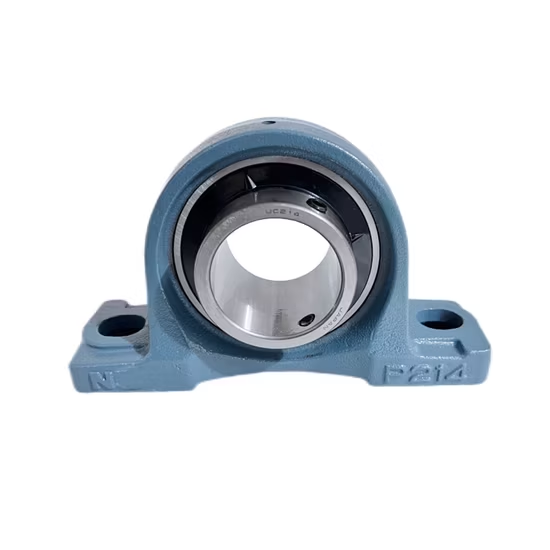
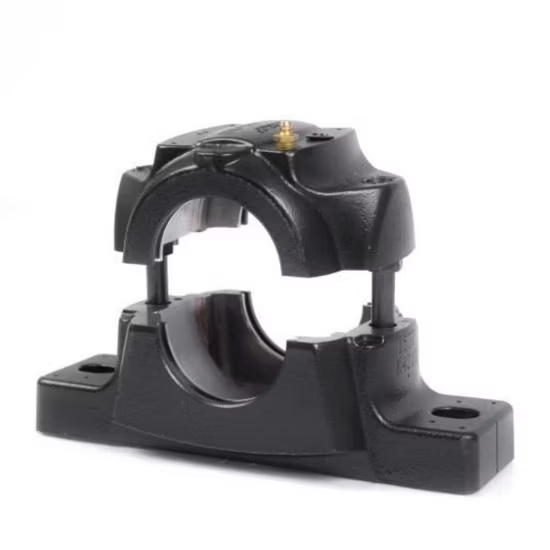
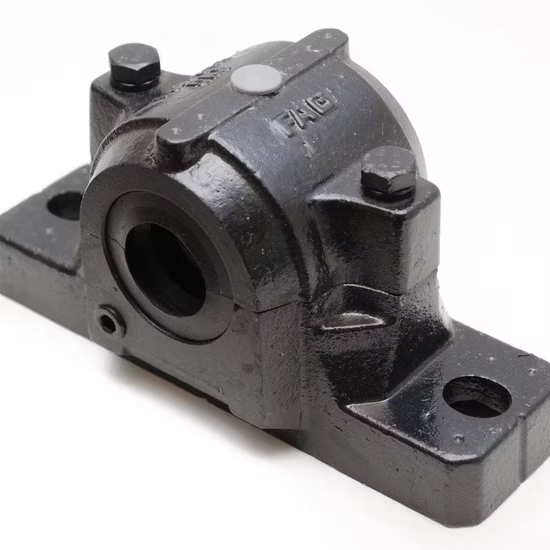
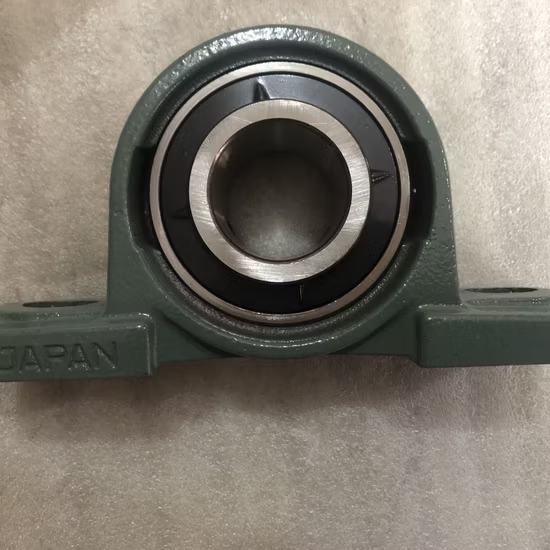

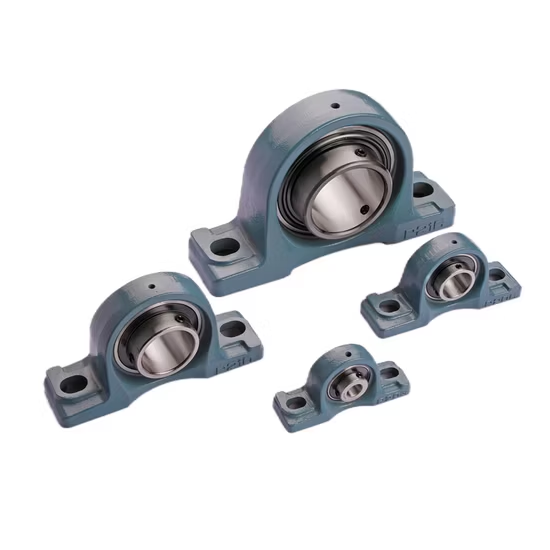
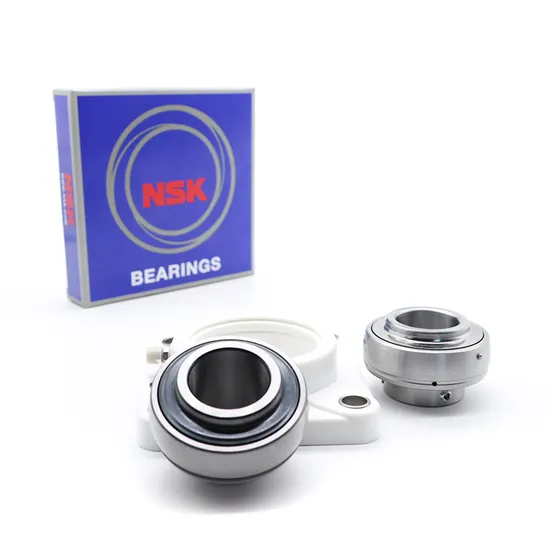
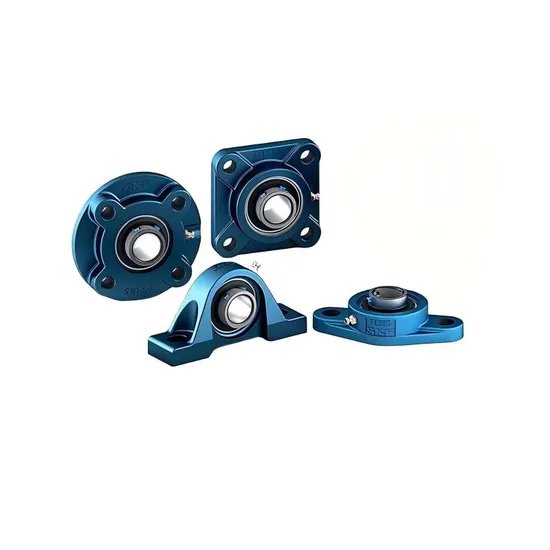
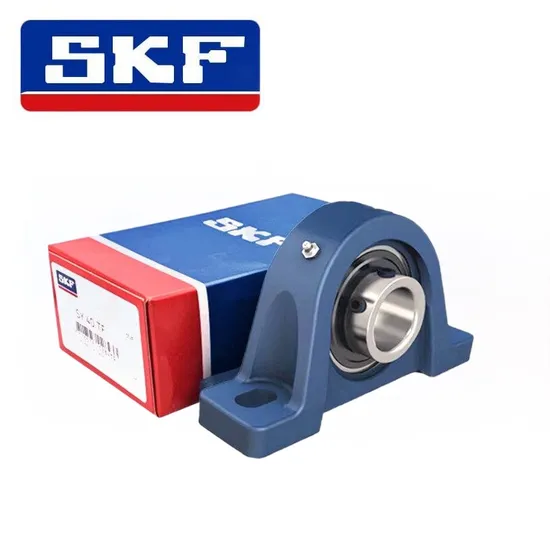
Pillow Block Bearing Plummer Block Housing — cast iron construction designed for material handling and conveyor applications.
Full Brand Authorized Coverage — one consolidated shipment handles mixed-brand requirements for SNL505-607 series housings without juggling multiple vendors.
| Parameter | Value |
|---|---|
| Product Type | Pillow Block Bearing / Plummer Block Housing |
| Material | Cast Iron |
| Bearing Block Model | P |
| Rows Number | Single |
| Raceway | Deep Groove Raceway |
| Feature Options | Corrosion Resistant, High Temperature, High Speed |
| Origin | Germany, Japan, Sweden, Malaysia, China |
| Certification | Certificate of Conformity, Batch Traceability |
| Industry | Typical Applications |
|---|---|
| Material Handling | Belt conveyor drive and tail pulley shafts |
| Agricultural Machinery | Combine harvester rotor drive assemblies |
| General MRO | Industrial exhaust fan and blower shaft supports |
Matching the housing base number while ignoring internal clearance and seal suffixes guarantees thermal binding under heavy radial loads.
In the field, I have seen countless belt conveyor pulleys lock up because the installed pillow block bearing plummer block housing supplier provided a unit where the base designation matched, but the internal clearance was standard CN instead of the required C3. When the shaft expands under continuous operational heat, the rolling elements bind against the raceway. This is a frequent oversight when cross-referencing across brands without verifying the exact thermal expansion requirements of the specific application .
Selecting the right pillow block bearing plummer block housing supplier means looking beyond the catalog number to evaluate how the housing accommodates real-world shaft deflection. For long conveyor spans, the cast iron split housing must allow the internal spherical bearing to self-align, compensating for minor mounting errors and shaft bending under heavy material loads. Our technical review ensures the housing footprint and base rigidity match the specific bending moments of your equipment.
Material handling and agricultural environments subject these units to severe contamination and temperature fluctuations. Fine abrasive dust easily penetrates inadequate seals, grinding away the internal raceway, while high ambient temperatures degrade standard greases. Choosing between contact and non-contact seal variants depends entirely on the balance between friction heat generation and the level of particulate exclusion required by the specific operating environment .
The cast iron construction provides the necessary damping capacity to absorb vibration from uneven pulley loads. Depending on the exact operating environment, these housings are available in variants optimized for corrosion resistance or high-temperature stability. The selection between standard gray cast iron and specialized alloys depends on the presence of chemical washdowns or extreme thermal cycling, ensuring the housing body does not crack or degrade before the internal bearing reaches its calculated fatigue life.
Substituting a housing based solely on physical dimensions often leads to catastrophic misalignment and premature bearing failure. When the internal spherical seat machining tolerances do not match the OEM specification, the bearing outer ring cannot self-align, transferring edge loads directly to the rolling elements. This results in unplanned downtime and extensive collateral damage to the shaft and pulley assemblies, voiding equipment warranties and inflating maintenance budgets .
We do not just ship boxes; we verify the cross-reference down to the seal and clearance suffix. While many distributors swap brands based on the housing base number, we check the internal bearing clearance and seal type against your OEM equipment requirements. Our batch traceability ensures every cast iron housing and insert is linked to the manufacturer's production facilities, eliminating the risk of soft inner rings and cloned components that plague the secondary market.
To ensure the selected plummer block housing perfectly matches your application, please provide the specific equipment model, operating shaft speed, and expected radial and axial loads. Detailing the environmental exposure, such as extreme dust or washdown conditions, allows our engineering team to determine the exact internal bearing designation, clearance class, and seal configuration required for your specific operational parameters.
Q: How do we determine the exact internal bearing designation for a specific housing?
A: The housing model only defines the outer physical dimensions and shaft diameter range. To determine the exact internal bearing, we need your operational data, including radial and axial loads, rotational speed, and operating temperatures. Our engineering team uses these parameters to calculate the required dynamic load rating and select the precise internal clearance and seal suffix for your application.
Q: Why do base-matching cross-references often fail in high-temperature conveyor applications?
A: A base number match only confirms physical interchangeability, ignoring internal engineering. In high-heat environments, a standard clearance bearing will thermally expand and bind inside the housing. Cross-referencing must explicitly verify that the internal bearing features a C3 or C4 clearance suffix and high-temperature grease to accommodate the specific thermal expansion of the conveyor shaft.
Q: What are the common failure modes of cast iron housings in agricultural machinery?
A: In agricultural environments, the primary failure mode is not structural fracture but internal contamination. Fine, abrasive crop dust bypasses degraded or incorrect seals, acting as a lapping compound inside the bearing raceway. This causes rapid wear and premature seizure, highlighting the critical need to specify the correct contact or labyrinth seal variant for the specific dust concentration.
Q: How should we handle OEM part obsolescence when sourcing replacement plummer blocks?
A: When an original equipment manufacturer discontinues a specific pillow block assembly, we perform a compliant cross-brand interchange. We do not merely match the housing footprint; we analyze the original internal bearing's load capacity, cage material, and sealing arrangement, sourcing an authorized equivalent from our covered brands that meets or exceeds the original mechanical and dimensional specifications.
Our 5-step process ensures every order is engineered, validated, and supported for optimal performance.
Technical needs assessment
Custom specifications
Free samples for $50k+
Pre-shipment inspection
On-site & predictive
Our certified engineers respond within 24 hours with detailed technical specifications, pricing, and lead time information.