01
Consultation
Technical needs assessment


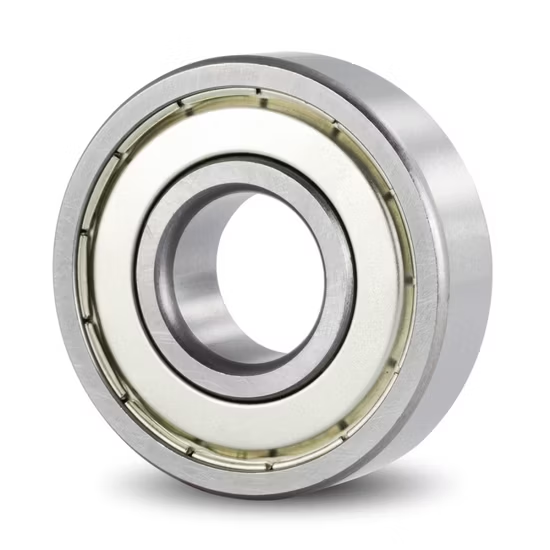
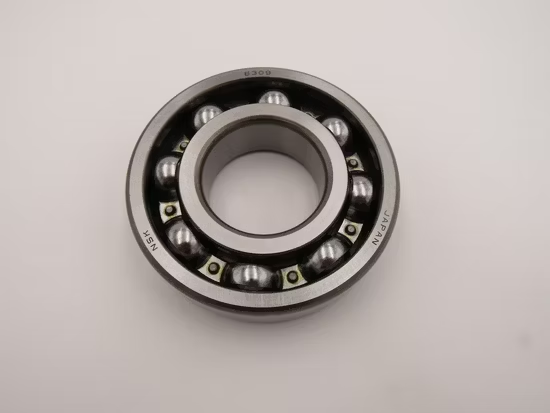
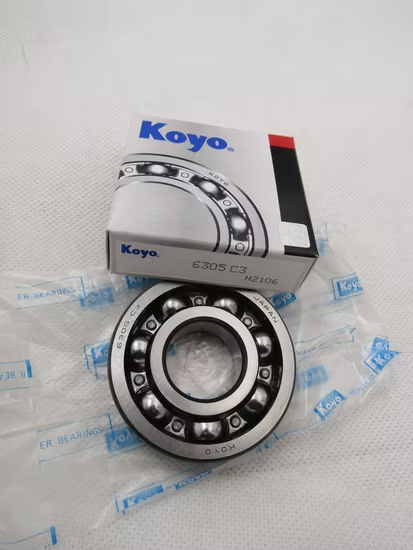


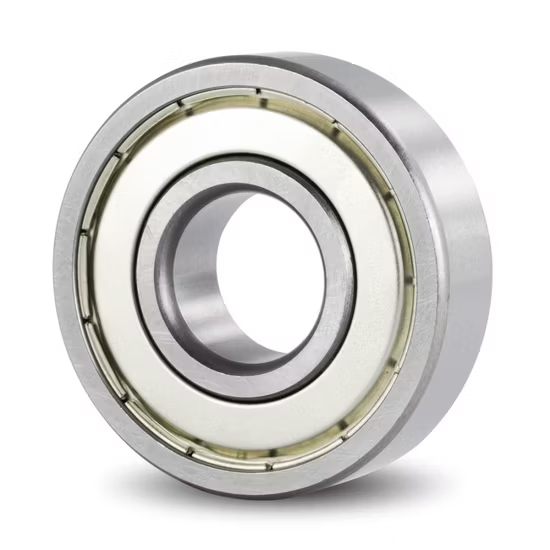
6000 6001 6002 6003 6004 6005 P4p5p6 Deep Groove Ball Bearing — P4, P5 and P6 precision classes guarantee strict running accuracy for printing presses.
Cross-Reference Three-Way Alignment — verifying base number, clearance, and precision suffix prevents thermal binding in high-speed printing presses.
| Parameter | Value |
|---|---|
| Designation | 6000 6001 6002 6003 6004 6005 P4p5p6 |
| Bearing Type | Deep Groove Ball Bearing |
| Bearing Style | Open, Rubber Seals, Iron Seals |
| Quality Level | Z1V1, Z2V2, Z3V3, Z4V4 |
| Feature | Low Noise, High Speed, Long Service Life |
| Material | Chrome Steel |
| Precision Class | P4, p5, p6 |
| Customization | Available |
| Service | OEM |
| Origin | Germany, Japan, Sweden, Malaysia, China |
| HS Code | 848210 |
| Industry | Typical Applications |
|---|---|
| Printing Machinery | Printing Press Parts, Impression Cylinder Bearings, Ink Roller Shafts |
| Electric Motors | High-Speed Motor Spindles, Precision Servo Motors |
| Industrial Gearboxes | High-Speed Gear Shafts, Precision Reduction Gears |
| Pumps & Conveyors | Vacuum Pump Rotors, Precision Conveyor Drive Shafts |
Ignoring the P4p5p6 tolerance class turns a simple replacement into a registration disaster.
Sourcing the NTN NACHI NSK Koyo Timken 6000 6001 6002 6003 6004 6005 P4p5p6 deep groove ball bearing requires more than matching the base number. Early in my career transitioning from factory procurement to distribution in the Pearl River Delta, I witnessed a multi-color printing press suffer severe registration drift. The root cause was a mixed batch of P0 grade 6005 bearings installed where P4 was specified. The microscopic runout at high speeds compounded across the impression cylinders, ruining thousands of sheets before the maintenance team traced the vibration back to the bearing housing . This deep groove ball bearing series demands strict adherence to precision suffixes to maintain the tight tolerances required in modern printing equipment.
Selecting the correct NTN NACHI NSK Koyo Timken 6000 6001 6002 6003 6004 6005 P4p5p6 deep groove ball bearing involves aligning the precision class with the specific shaft location. Our technical review process ensures that cross-referencing between brands accounts for the exact precision suffix, preventing the installation of standard tolerance parts in high-precision spindles.
Printing press impression cylinders operate at high rotational speeds, generating significant friction heat that alters internal clearance. If a standard clearance bearing is installed where thermal expansion requires a specific internal geometry, the rolling elements can bind, leading to catastrophic cage failure. Furthermore, the Z1V1 to Z4V4 quality levels dictate the vibration and noise profile; installing a lower noise-grade bearing in a sensitive printing environment can introduce micro-vibrations that manifest as banding on the printed substrate . Proper seal selection—balancing the friction of rubber seals against the contamination protection they offer—is equally critical in ink-heavy environments.
The P4, p5, and p6 suffixes define the dimensional and running accuracy of these deep groove ball bearings. P4 represents the highest precision in this range, essential for the main impression cylinders where minimal radial runout is non-negotiable for color registration. The p5 and p6 classes serve secondary shafts and drive mechanisms where slight tolerances are acceptable but standard P0 grades would still induce excessive vibration. The availability of open, rubber-sealed, and iron-sealed styles allows maintenance teams to match the sealing friction to the shaft speed, while the Z1V1 through Z4V4 grading ensures the dynamic vibration characteristics align with the press's sensitivity requirements.
Failing to verify the precision and clearance suffixes during procurement leads to unplanned downtime that far exceeds the cost of the component itself. When a standard bearing is forced into a high-speed printing application, the resulting thermal binding can score the shaft and damage the housing, requiring extensive machining repairs. According to ISO 281 frameworks, operating a bearing outside its intended precision and clearance parameters drastically reduces its calculated L10 life, turning a predictable maintenance interval into an emergency breakdown .
We do not just ship boxes; we verify the exact suffix combination for your specific application. When cross-referencing a 6005 P4 requirement across different authorized brands, we ensure the internal geometry and running accuracy match, rather than just supplying a base-number equivalent. Our batch traceability guarantees that the P4p5p6 precision claims are backed by manufacturer data, eliminating the risk of receiving counterfeit parts with soft inner rings that fail under press loads. Every shipment includes documentation that validates the exact quality level, ensuring your maintenance team installs the correct component every time.
To ensure the selected bearing meets your exact operational demands, please provide the specific shaft location, radial and axial load profiles, and operating speeds. Sharing the OEM equipment number or the existing bearing's full designation, including all clearance and precision suffixes, allows our engineering team to perform a precise cross-reference and L10 life verification. This technical review ensures the replacement NTN NACHI NSK Koyo Timken 6000 6001 6002 6003 6004 6005 P4p5p6 deep groove ball bearing perfectly matches your printing press requirements.
Q: Why must the precision suffix be matched during cross-referencing?
A: Matching only the base number ignores critical running accuracy tolerances. In printing presses, installing a standard tolerance bearing where a P4 is required introduces microscopic runout. This causes registration drift and vibration at high speeds, leading to defective prints and premature bearing failure due to uneven load distribution across the rolling elements.
Q: How do P4, p5, and p6 precision classes differ in printing applications?
A: P4 offers the tightest dimensional and running accuracy, essential for main impression cylinders where color registration is critical. The p5 and p6 classes provide slightly wider tolerances suitable for secondary drive shafts and ink rollers. Selecting the correct class ensures optimal performance without over-specifying for non-critical shaft locations.
Q: What is the selection boundary between rubber and iron seals at high speeds?
A: Rubber seals provide excellent protection against ink and paper dust but generate higher friction heat, limiting maximum operational speeds. Iron shields offer lower friction and are better suited for high-speed shafts where heat generation is a primary concern, provided the environment is relatively clean or external sealing is adequate.
Q: How do Z1V1 to Z4V4 quality levels affect press performance?
A: These codes indicate the vibration and noise limits of the bearing. Higher grades like Z3V3 or Z4V4 exhibit significantly lower dynamic vibration. In sensitive printing equipment, minimizing this vibration is crucial to prevent micro-banding on the printed substrate and to ensure smooth operation of high-speed impression cylinders.
Q: How can we verify the authenticity of the supplied precision bearings?
A: Every bearing we supply features batch traceability and QR codes that can be scanned using the official mobile applications of the respective brands. This direct verification confirms the manufacturing origin and precision class, protecting your equipment from counterfeit parts that often feature soft inner rings and cloned packaging.
Our 5-step process ensures every order is engineered, validated, and supported for optimal performance.
Technical needs assessment
Custom specifications
Free samples for $50k+
Pre-shipment inspection
On-site & predictive
Our certified engineers respond within 24 hours with detailed technical specifications, pricing, and lead time information.