01
Consultation
Technical needs assessment


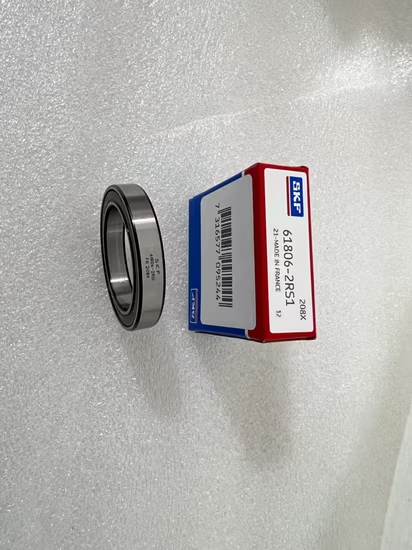
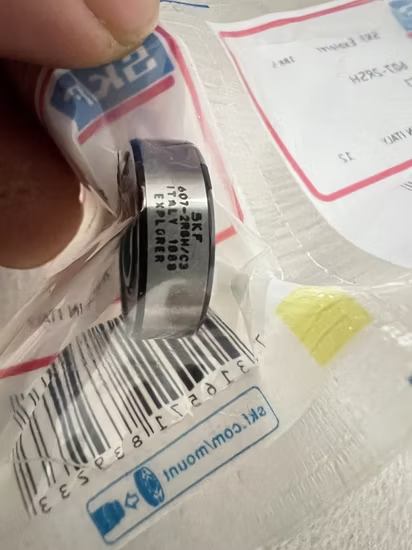
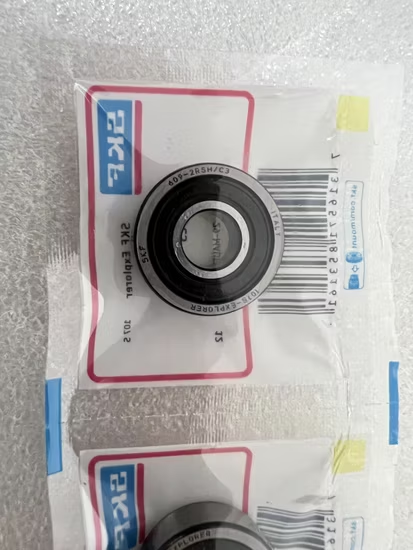
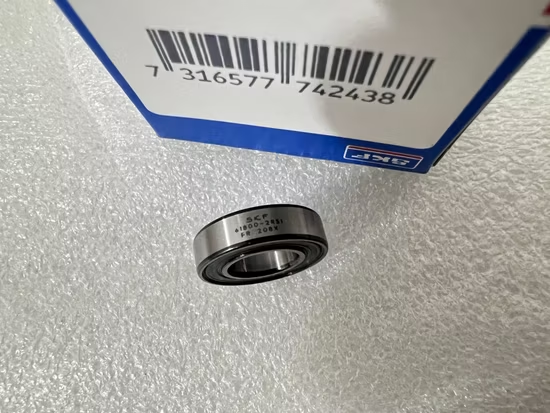
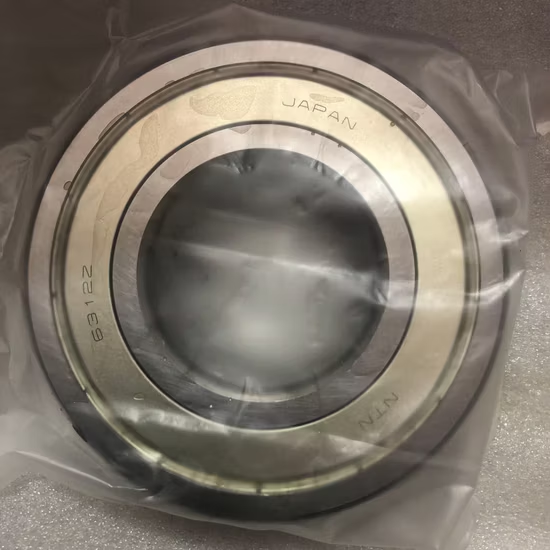
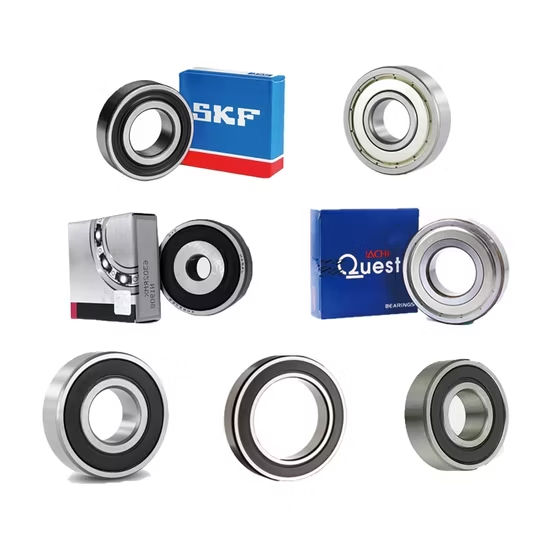
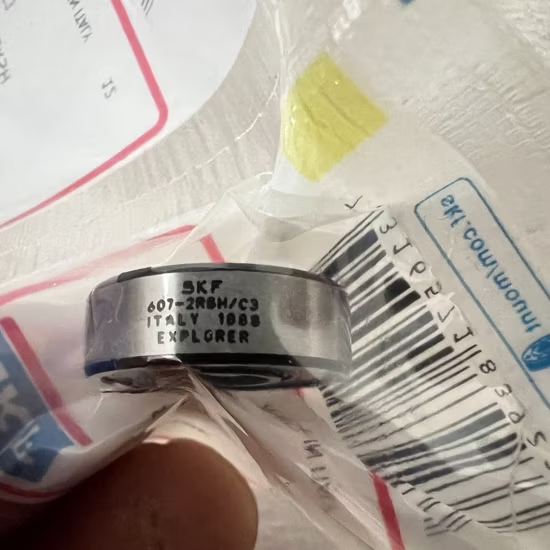
NSK NTN Koyo NACHI 61900/61901/61902/61903/61904/61905/61906/61907 Stainless Steel Deep Groove Ball Bearing — thin-section design for compact installations in corrosive environments.
Cross-reference alignment covers seal variant, material specification, and quality grade — not just the base number — with full dimensional and running accuracy inspection reports included.
Cross-reference triple alignment — matching base numbers, 2RS/ZZ seals, and stainless steel material prevents rapid corrosion and thermal binding in thin-section applications.
| Parameter | Value |
|---|---|
| Designation | 61900/61901/61902/61903/61904/61905/61906/61907 |
| Bearing Type | Deep Groove Ball Bearing |
| Material | Stainless Steel |
| Seal or Shield Type | Open, 2RS (Rubber Seals), ZZ (Iron Seals) |
| Quality Level | Z1V1, Z2V2, Z3V3, Z4V4 |
| Origin | Germany, Japan, Sweden, Malaysia, China |
| HS Code | 848210 |
| Industry | Typical Applications |
|---|---|
| Electric Motors | Rotor shaft supports requiring low-noise Z3V3 or Z4V4 grades |
| Pumps & Fluid Handling | Impeller shafts exposed to moisture and mild chemical splash |
| Food & Beverage Processing | Conveyor guide rollers requiring washdown-resistant stainless steel |
| General MRO | Compact gearbox input shafts and instrument panel mechanisms |
A standard carbon steel thin-section bearing will seize long before its fatigue limit is reached if deployed in a humid or washdown environment.
Sourcing the correct NSK NTN Koyo NACHI 61900 series stainless steel deep groove ball bearing requires looking past the basic dimension number. I have seen numerous pump and motor assemblies in Latin America fail within weeks because procurement matched the bore and OD but ignored the material and seal suffix. When a standard steel 61904 is installed in a damp conveyor zone, micro-pitting accelerates rapidly. The cage degrades, and the shaft locks up. Upgrading to stainless steel variants with precise 2RS or ZZ sealing stops this cascade, provided the cross-reference accounts for the exact internal clearance and seal friction .
The 619 series is engineered for applications where radial space is strictly limited but reliable rotation is mandatory. Sourcing a genuine NSK NTN Koyo NACHI 61900 series stainless steel deep groove ball bearing ensures the thin outer and inner rings maintain their geometric stability under load. Our technical review checks that the selected seal type does not introduce excessive drag in high-speed micro-motors, preserving the efficiency of the compact drive system.
Operating in corrosive or high-moisture environments demands stainless steel construction, but the seal choice dictates the thermal profile. Contact rubber seals (2RS) provide excellent exclusion of water and particulates during washdowns, yet they generate continuous friction heat. Non-contact iron shields (ZZ) offer lower friction and higher speed capability but allow fine moisture ingress over time. Selecting the wrong seal for the specific RPM and contamination level leads to either thermal expansion binding or internal raceway corrosion .
The distinction between 2RS and ZZ is critical for thin-section bearings, as the seal lip design directly impacts the limited internal volume. Rubber seals maintain contact with the inner ring land, ensuring tight protection at the cost of a lower limiting speed. Steel shields rely on tight radial clearances to block debris without physical contact, making them ideal for high-speed electric motors. Furthermore, specifying Z3V3 or Z4V4 quality levels guarantees that the internal surface finish and rolling element sphericity are optimized to minimize electromagnetic noise and vibration in sensitive appliance or medical motor applications.
Substituting an open or ZZ-shielded bearing where a 2RS seal was specified allows moisture to penetrate the raceway, leading to catastrophic rust* forcing a high-friction 2RS seal into a high-RPM application causes localized overheating, degrading the lubricant and accelerating cage wear. These mismatches result in unplanned downtime, voided equipment warranties, and secondary damage to adjacent shaft components, far exceeding the initial savings of an incorrect cross-reference .
We do not just match the base 61900-61907 numbers; we verify the exact seal suffix and material grade to prevent field failures. Our batch traceability links every stainless steel thin-section bearing back to the manufacturer's production facilities, eliminating the risk of soft inner rings found in counterfeits. We cross-reference NSK, NTN, Koyo, and NACHI catalogs to ensure the selected variant meets the precise Z-level vibration requirements of your electric motors. Every shipment includes dimensional and running accuracy reports, confirming the thin rings have not been deformed during transit.
To finalize the exact variant from the 61900-61907 range, provide the radial and axial load profiles, operating RPM, and ambient temperature of your application. Supplying the OEM equipment part number allows our engineering team to execute a precise cross-reference check, ensuring the seal type and clearance match the original design intent. We will then recommend the optimal stainless steel configuration and quality level to maximize service life in your specific environment.
Q: How do I verify the authenticity of the stainless steel 619 series bearings?
A: We supply full batch traceability documentation and a Certificate of Conformity for every order. You can verify the authenticity directly by scanning the QR codes on the packaging using the official NSK, NTN, Koyo, or NACHI mobile applications. This confirms the material grade and seal specifications match the manufacturer's original production records, eliminating the risk of counterfeit parts.
Q: Why must the cross-reference include seal types and not just the base number?
A: Matching only the base 61900-61907 number ignores critical operational differences. A ZZ shielded bearing will fail rapidly in a wet washdown environment where a 2RS rubber seal is required, while a 2RS seal may overheat in a high-speed application designed for ZZ shields. Our cross-reference aligns the base dimension, material, and exact seal suffix to ensure equipment compatibility.
Q: What is the operational difference between 2RS and ZZ in thin-section bearings?
A: The 2RS suffix indicates double-sided contact rubber seals, which provide superior protection against moisture and dust but generate higher friction and limit maximum speed. The ZZ suffix denotes non-contact steel shields, offering lower friction and higher speed limits but less protection against liquid ingress. The choice depends entirely on the contamination level and RPM of your specific application.
Q: How do Z1V1 to Z4V4 quality levels affect electric motor performance?
A: These designations classify the noise and vibration characteristics of the bearing. Z1V1 represents standard commercial quality, while Z4V4 indicates ultra-precision finishing and strict tolerances. For sensitive electric motors and household appliances, specifying Z3V3 or Z4V4 ensures smooth, quiet operation by minimizing electromagnetic noise and preventing resonance issues within the motor housing.
Q: What are the best practices for mounting stainless steel thin-section bearings?
A: Because the 619 series features thin inner and outer rings, they are highly susceptible to deformation. Avoid applying mounting forces through the rolling elements, and never use carbon steel tools that can embed particles and cause surface rust. For sealed 2RS variants, control the heating temperature strictly during installation to prevent melting or distorting the rubber contact lips.
Our 5-step process ensures every order is engineered, validated, and supported for optimal performance.
Technical needs assessment
Custom specifications
Free samples for $50k+
Pre-shipment inspection
On-site & predictive
Our certified engineers respond within 24 hours with detailed technical specifications, pricing, and lead time information.