01
Consultation
Technical needs assessment


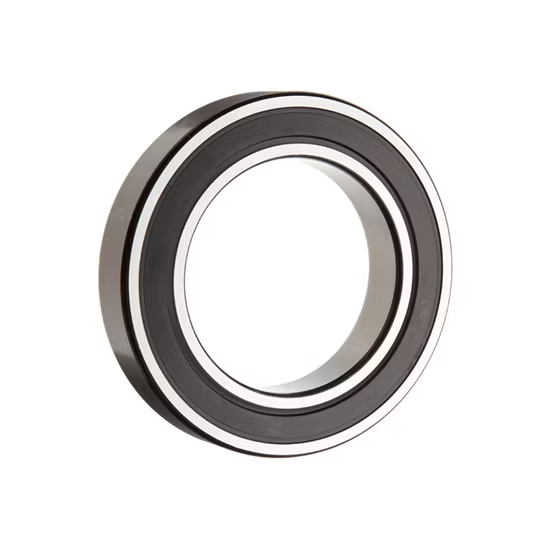


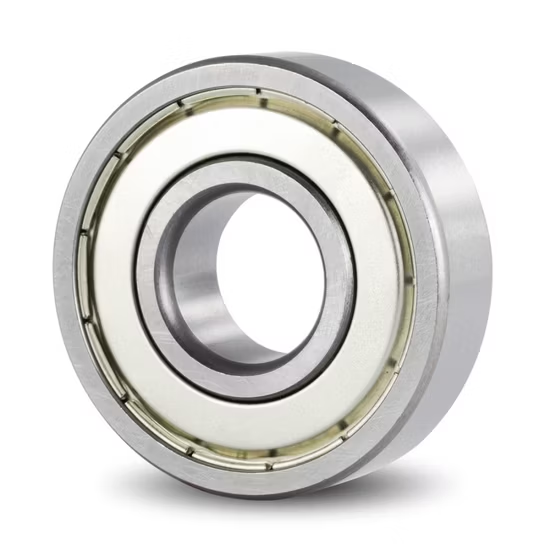
NACHI NTN NSK Koyo 6806 6807 6808 6809 6810 Deep Groove Ball Bearing series delivers low-friction performance for electric motors and robotics.
Factory Lot Traceability — Every shipment of the 6806 through 6810 series includes original manufacturer lot records to guarantee complete supply chain transparency.
| Parameter | Value |
|---|---|
| Designation | 6806 6807 6808 6809 6810 |
| Bearing Type | Deep Groove Ball Bearing |
| Seal or Shield Type | Open, Rubber Seals, Iron Seals |
| Noise and Vibration Level | Z1V1, Z2V2, Z3V3, Z4V4 |
| Origin | Germany, Japan, Sweden, Malaysia, China |
| HS Code | 848210 |
| Industry | Typical Applications |
|---|---|
| Electric Motors | Small rotor shafts and cooling fan assemblies |
| Precision Instruments | Optical scanner gimbals and laboratory centrifuge spindles |
| Robotics | Joint actuators and lightweight articulated arm pivots |
Matching the Z/V grade to the specific acoustic environment prevents resonance-induced cage fatigue.
Procurement teams often focus entirely on basic dimensional interchangeability while ignoring the noise and vibration classifications required for sensitive equipment. When a standard Z1V1 component is installed in a precision instrument demanding Z3V3 quietness, the resulting micro-vibrations accelerate lubricant degradation and trigger premature wear . Sourcing a genuine NACHI NTN NSK Koyo 6806 6807 6808 6809 6810 deep groove ball bearing requires verifying that the acoustic signature aligns with the operational threshold of the host machinery to avoid cascading mechanical issues.
Selecting the correct shielding for a NACHI NTN NSK Koyo 6806 6807 6808 6809 6810 deep groove ball bearing dictates its survival in contaminated spaces. Our technical review process cross-references your environmental data against the friction profiles of rubber contact seals versus non-contact iron shields, ensuring the chosen configuration blocks particulate ingress without generating excess thermal drag in high-speed micro-motor applications.
The reduced cross-section of the 68 series makes these components highly sensitive to thermal growth and housing interference. Operating temperatures directly dictate whether standard CN internal clearance will suffice or if a C3 expansion gap is mandatory to prevent radial binding. Furthermore, high-speed rotation demands careful evaluation of lubrication intervals and seal friction to avoid localized heat buildup that compromises the structural integrity of the thin rings .
While the base numbers 6806 through 6810 define the physical envelope, the appended suffixes govern the operational boundaries. Iron shields provide excellent dust exclusion with minimal friction, making them ideal for high-speed electric motors, whereas rubber seals offer superior moisture protection at the cost of higher torque. The Z1V1 to Z4V4 classifications separate general industrial grades from ultra-quiet variants required in household appliances and robotics. Understanding these distinctions ensures the selected component handles the specific radial loads and speed parameters without generating excess acoustic noise or suffering early fatigue.
Installing a standard clearance bearing in a high-temperature application leads to internal preload, causing the thin rings to deform and the cage to fracture. According to ISO 15243 failure mode classifications, such thermal binding results in catastrophic smearing and unplanned downtime . Conversely, utilizing open bearings in dusty gearbox environments without external sealing invites abrasive wear, voiding equipment warranties and forcing expensive emergency replacements.
We maintain authorized distribution channels across all specified brands, allowing mixed-brand orders for the 68 series to be fulfilled from a single, verified source. Cross-referencing goes beyond matching the base 6806 to 6810 numbers; we actively verify that the seal type and Z/V vibration grades align perfectly across different manufacturers to prevent acoustic mismatches. Every batch is backed by original manufacturer documentation, eliminating the risk of receiving counterfeit parts with soft inner rings that fail under minimal radial loads. Our application-based selection review specifically targets the thermal and speed vulnerabilities inherent in thin-walled designs.
To ensure the selected 6806 through 6810 configuration matches your exact requirements, please provide the operational radial and axial loads, rotational speeds, and expected thermal gradients. Sharing the specific OEM equipment numbers allows our engineering team to perform a rigorous cross-reference check, verifying that the clearance class and seal friction profiles align perfectly with your original design intent for optimal L10 life calculation.
Q: How can I verify the authenticity of the 68 series thin-wall bearings upon delivery?
A: Authenticity is confirmed by scanning the QR codes on the packaging using the respective brand’s official mobile application. Additionally, we provide original manufacturer lot traceability documents and Certificates of Conformity that link the specific 6806 to 6810 batch numbers directly to the factory production records, ensuring complete supply chain transparency.
Q: Why must vibration grades be matched precisely during cross-brand interchange?
A: Different manufacturers may apply varying acoustic standards to their baseline products. Swapping a Z3V3 rated bearing for a Z1V1 equivalent in a precision instrument will introduce unacceptable micro-vibrations and noise. We ensure that cross-referenced replacements maintain the exact Z/V classification required by your specific application to avoid resonance issues.
Q: What is the functional difference between rubber seals and iron shields in motor applications?
A: Iron shields provide non-contact dust protection with minimal friction, making them ideal for high-speed electric motors where heat generation must be minimized. Rubber seals offer contact-based exclusion of moisture and fine particulates but generate higher frictional torque, making them better suited for slower, heavily contaminated environments.
Q: How do thin-walled 68 series bearings react to thermal expansion compared to standard series?
A: Due to their reduced cross-sectional thickness, the 68 series rings are highly susceptible to deformation from housing interference and internal heat. Selecting the correct internal clearance, such as C3 instead of standard CN, is critical to accommodate thermal growth and prevent the thin raceways from binding and collapsing under operational temperatures.
Our 5-step process ensures every order is engineered, validated, and supported for optimal performance.
Technical needs assessment
Custom specifications
Free samples for $50k+
Pre-shipment inspection
On-site & predictive
Our certified engineers respond within 24 hours with detailed technical specifications, pricing, and lead time information.