01
Consultation
Technical needs assessment



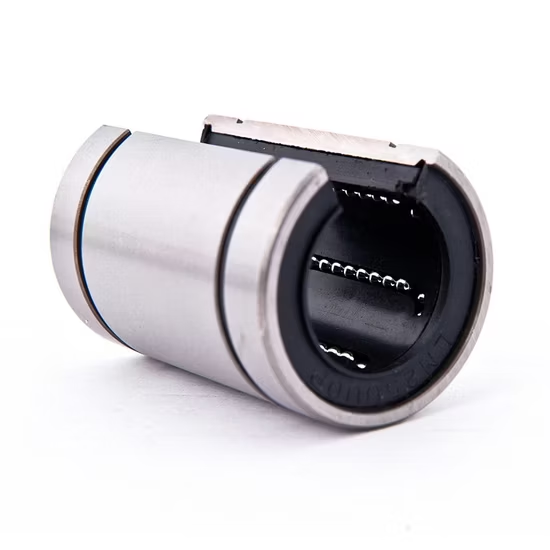

Lme50-Aj Linear Bearing — constructed from bearing steel with an open circular shape for adjustable mounting in automation equipment.
Unified Multi-Brand Sourcing — Consolidate your linear motion and rotary bearing requirements into a single authorized shipment with complete cross-brand documentation and batch traceability.
| Parameter | Value |
|---|---|
| Designation | Lme50-Aj |
| Product Type | Linear Bearing |
| Series | LM |
| Shape | Open |
| Flange Shape | Circular |
| Material | Bearing Steel |
| Cage Material | Nylon Cage |
| Precision Rating | P0, P6, P5, P4, P2 |
| Feature | High Temperature, High Speed |
| Lm Feature | High Speed, Low Voice |
| Type | Universal |
Note: The "Aj" suffix in Lme50-Aj is an unverified suffix requiring manufacturer catalog confirmation for exact adjustable clearance specifications.
| Industry | Typical Applications |
|---|---|
| Machine Tools | CNC spindle linear guides, precision milling table feeds |
| Automation | High-frequency pick-and-place arms, automated assembly sliders |
| Packaging | High-speed cartoning machine linear actuators, filling station guides |
| Textile | Automated loom shuttle guides, yarn tensioning linear tracks |
Nylon cage integrity under high-frequency reciprocation prevents catastrophic automation line shutdowns.
I have seen entire automated assembly lines paralyzed for days because a secondary market linear bearing disintegrated under high-speed往复 loads. The root cause is almost always a compromised cage material that cannot withstand the continuous impact of the rolling elements. When procurement focuses solely on the base designation while ignoring the internal cage specification, the resulting friction and heat rapidly degrade the polymer structure. Sourcing a genuine Lme50-Aj linear bearing ensures the nylon cage is engineered for high-speed, low-voice operation, eliminating the hidden risk of premature cage fragmentation .
Achieving smooth, silent motion in high-rigidity environments requires strict adherence to slider mating tolerances. The open shape and circular flange configuration of this component allow for precise adjustable clearance when paired with the correct housing. By verifying the internal design rather than just the outer dimensions, we ensure the high-speed nylon cage maintains optimal rolling element alignment, preventing the thermal binding that plagues poorly matched linear motion systems.
High-frequency reciprocating motion generates localized heat that drastically affects internal clearance and lubrication film thickness. In open-type linear systems, the lack of integrated seals exposes the rolling elements to ambient particulate contamination, demanding rigorous external lubrication schedules. If the thermal expansion of the shaft exceeds the initial clearance allowance, the rolling elements will skid rather than roll. Selecting the appropriate precision class and verifying the high-temperature capability of the nylon cage are critical to maintaining dimensional stability under continuous dynamic loading .
The transition from a standard steel retainer to a specialized nylon cage fundamentally alters the speed and vibration profile of the linear system. This polymer construction significantly reduces the moving mass, allowing for higher acceleration rates while dampening operational noise. The open design facilitates direct contact with the shaft for adjustable preload applications, but it also necessitates a clean operating environment to prevent abrasive wear. Available across multiple precision ratings from P0 to P2, the exact tolerance class must be matched to the specific runout requirements of the machine tool or automation equipment to prevent uneven load distribution across the ball circuits.
Installing a component with incorrect internal clearance or mismatched cage material leads to unplanned downtime and accelerated shaft wear. When the base number matches but the internal geometry differs, the resulting friction can cause catastrophic damage to the linear guide rail and void equipment warranties. According to industry failure analysis frameworks, a significant share of premature linear motion failures stems from these subtle cross-reference errors rather than inherent material defects .
We eliminate cross-reference errors by matching the internal design, cage material, and precision suffixes, not just the base designation. For high-speed linear applications, verifying the exact polymer grade of the nylon cage prevents thermal degradation that generic substitutes often suffer. Our batch traceability ensures every component can be verified through official brand applications, protecting your facility from counterfeits with cloned QR codes. Furthermore, our application-based selection review covers load, speed, and temperature parameters to guarantee the selected precision class aligns with your specific machine tool requirements.
To ensure optimal performance and verify cross-reference compatibility, please provide the specific radial and axial load profiles, operating speeds, and ambient temperature ranges of your application. Supplying the exact OEM equipment number or the required precision class allows our engineering team to conduct a thorough technical selection review. Sharing the housing design and slider mating tolerances ensures the adjustable clearance features are correctly utilized in your linear motion system.
Q: How do I verify the authenticity of the nylon cage material?
A: We provide full batch traceability and QR verification support through official brand applications. This allows you to confirm the exact production lot and material specifications, eliminating the risk of counterfeits that use inferior polymers prone to high-speed fragmentation.
Q: What cross-reference checks are needed beyond the base designation?
A: A valid cross-reference must align the internal cage material, precision class, and open-shape geometry. We verify these internal parameters against your application requirements to prevent thermal binding or premature wear caused by mismatched internal clearances.
Q: How do I select the correct precision rating for CNC machinery?
A: CNC applications typically require tighter tolerances to maintain machining accuracy. By providing your specific runout requirements and load profiles, we can recommend the appropriate P-class rating to ensure smooth, low-voice operation without over-specifying the component.
Q: What are the lubrication requirements for this open-type design?
A: Since the open shape lacks integrated seals, it requires a strict external lubrication schedule to protect the bearing steel and nylon cage from particulate contamination. We can recommend specific grease types and re-lubrication intervals based on your operating speed and environment.
Q: How is the adjustable clearance achieved with the Aj suffix?
A: The open design allows the housing to compress the bearing slightly, adjusting the internal clearance to the shaft. Please note that the specific Aj suffix configuration requires manufacturer catalog confirmation to ensure your housing design matches the intended adjustment parameters.
Our 5-step process ensures every order is engineered, validated, and supported for optimal performance.
Technical needs assessment
Custom specifications
Free samples for $50k+
Pre-shipment inspection
On-site & predictive
Our certified engineers respond within 24 hours with detailed technical specifications, pricing, and lead time information.