01
Consultation
Technical needs assessment


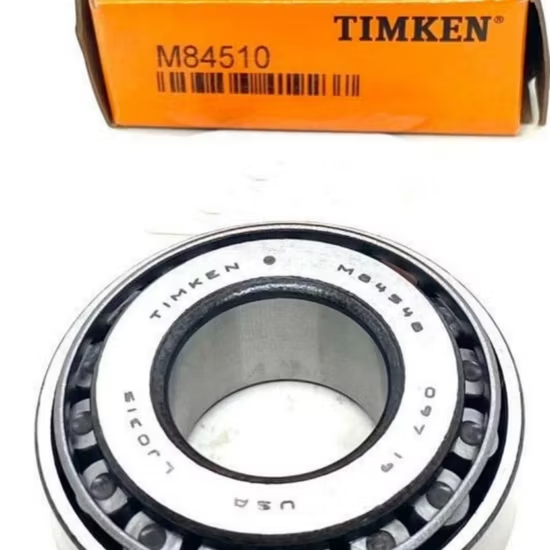
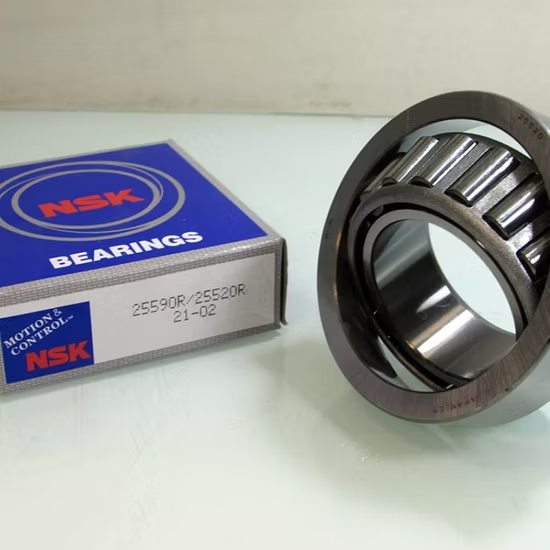
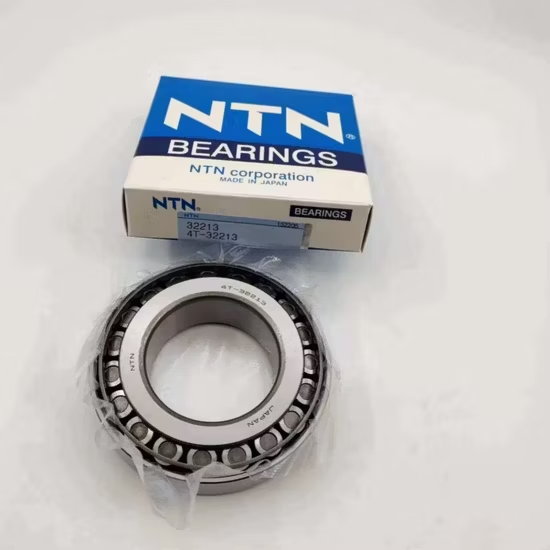
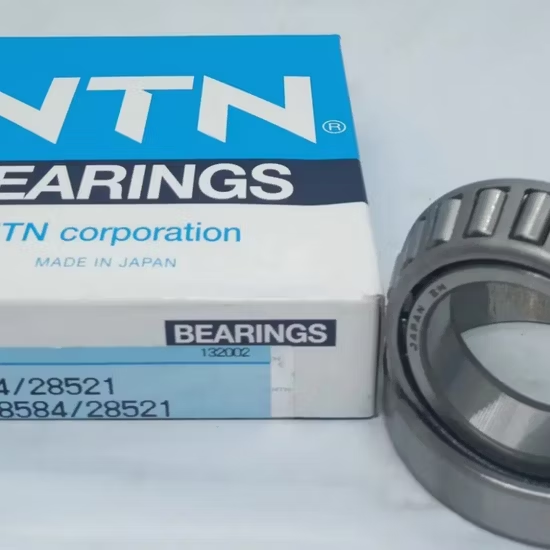

LM11949/10 Tapered Roller Bearing P4 — constructed from GCr15 steel for optimal hardness and wear resistance under combined radial and axial loads. The P4 precision class guarantees tighter dimensional and running accuracy for demanding industrial gearboxes and automotive wheel hub applications.
Authenticity via official QR — Every LM11949/10 tapered roller bearing we dispatch includes scannable manufacturer codes for direct verification through brand apps.
| Parameter | Value |
|---|---|
| Designation | LM11949/10 |
| Bearing Type | Tapered Roller Bearing |
| Bore Diameter (d) | 19.05 mm |
| Outside Diameter (D) | 45.237 mm |
| Total Width (T) | 15.494 mm |
| Inner Ring Width (B) | 16.637 mm |
| Outer Ring Width (C) | 12.065 mm |
| Precision Class | P4 |
| Material | GCr15 bearing steel |
| Cage Material | Available in nylon, brass, or pressed steel variants |
| Origin | Germany, Japan, Sweden, Malaysia, or China |
| Industry | Typical Applications |
|---|---|
| Automotive and Heavy Vehicle Repair | Trailer wheel hubs and light truck axle assemblies |
| Industrial Power Transmission | Agricultural PTO shafts and marine drive couplings |
| Material Handling | Conveyor pulley ends and automated guided vehicle wheels |
Matching the base designation is never enough when internal clearances and cup angles dictate field performance.
Early in my career handling export documentation across the Yangtze River Delta, I processed a rushed shipment of inch-series bearings where the supplier matched the basic part number perfectly. The paperwork looked flawless, but the physical units lacked complete batch traceability and featured subtle tolerance deviations. When the overseas client pressed the cones into their trailer hubs, the mismatched internal geometry caused immediate thermal binding. That incident shifted my entire focus from merely checking packing lists to rigorously auditing dimensional inspection reports and cross-referencing internal design variations. Procurement teams often assume a matching number guarantees a drop-in replacement, yet overlooking the specific cup angle or cage design leads to rapid wear .
The LM11949/10 tapered roller bearing is engineered to manage the combined radial and thrust loads typical in rotating wheel and shaft applications. By securing units with verified P4 precision, maintenance teams eliminate the micro-vibrations that typically degrade seal lips and accelerate grease breakdown in high-cycle environments. Our technical review process ensures the cross-reference aligns not just with the outer dimensions, but with the exact internal geometry required by your specific housing.
Wheel hubs and gearbox shafts experience severe temperature fluctuations that directly impact internal clearance. If the assembly generates excess friction, the resulting heat expands the shaft and eliminates the necessary operational clearance, leading to catastrophic seizure. Furthermore, environments like agricultural processing or marine docks expose the rolling elements to abrasive dust and moisture. Selecting the appropriate seal configuration and verifying the correct initial preload during mounting are critical steps to prevent lubricant washout and premature raceway spalling .
The P4 precision class dictates exceptionally tight tolerances for both dimensional accuracy and running deviation, which is vital for minimizing noise and vibration at higher rotational speeds. The GCr15 high-carbon chromium bearing steel provides the necessary core hardness and wear resistance to withstand repetitive contact stress. Depending on the operational speed and load profile, the cage material can be specified from available nylon, brass, or pressed steel variants to optimize lubricant flow and reduce friction. Note: The specific suffix breakdown for the LM, 11949, and 10 designations requires direct manufacturer catalog confirmation to verify internal contact angles and specific sub-component interchangeability.
Substituting a bearing based solely on outer dimensions while ignoring the precise contact angle or internal profile often results in uneven load distribution across the rollers. This localized stress triggers early surface fatigue and micro-pitting on the raceways. When a wheel hub or drive shaft fails unexpectedly, the resulting unplanned downtime and secondary damage to adjacent seals and housings far exceed the initial component savings. Adhering to strict dimensional verification protocols prevents these cascading mechanical failures and protects warranty validity .
Sourcing inch-series components requires more than just finding a matching part number on a supplier's list. We provide comprehensive cross-brand interchange expertise that verifies the exact cup and cone geometry, ensuring your replacement units seat perfectly without requiring housing modifications. Every shipment includes unbroken batch traceability back to the manufacturer's production facilities, eliminating the risk of receiving counterfeit units with soft inner rings. Furthermore, our pre-shipment inspections confirm that the physical dimensions match the P4 tolerance requirements before the cargo ever leaves our warehouse.
To ensure the selected units perfectly match your assembly requirements, please provide the exact radial and axial load profiles along with the operational speed range. Sharing the original OEM equipment number allows our engineering team to perform a comprehensive cross-reference check, verifying that the internal geometry and clearance class align with your housing design. This technical validation guarantees that the replacement components will deliver reliable service life without unexpected field modifications.
Q: How can I verify the authenticity of the LM11949/10 units upon delivery?
A: Every unit we supply features a unique traceability code that can be scanned using the manufacturer's official mobile application. This digital verification confirms the original production facility, the specific batch number, and the material grade, protecting your operation from the widespread issue of counterfeit bearings with substandard metallurgy.
Q: Why is cross-referencing more complex for inch-series tapered roller bearings?
A: Unlike standard metric series, inch-series components often share similar outer dimensions while featuring entirely different internal contact angles and roller profiles. A successful cross-reference must validate the precise cup and cone geometry, not just the basic envelope dimensions, to prevent uneven load distribution and premature raceway fatigue in the field.
Q: What is the practical difference between standard and P4 precision in this application?
A: The P4 precision class enforces significantly tighter limits on dimensional deviations and running accuracy compared to standard grades. In high-speed or heavily loaded wheel hub applications, this enhanced precision minimizes operational vibration, reduces friction-induced heat generation, and substantially extends the effective service life of the assembly.
Q: How do I select the correct cage material for my specific operating environment?
A: The choice between available nylon, brass, or pressed steel cages depends on your specific speed, temperature, and load conditions. Nylon offers low friction and quiet operation at moderate temperatures, while brass provides superior durability and heat dissipation under heavy loads and higher thermal stress, ensuring optimal lubricant distribution.
Our 5-step process ensures every order is engineered, validated, and supported for optimal performance.
Technical needs assessment
Custom specifications
Free samples for $50k+
Pre-shipment inspection
On-site & predictive
Our certified engineers respond within 24 hours with detailed technical specifications, pricing, and lead time information.