01
Consultation
Technical needs assessment


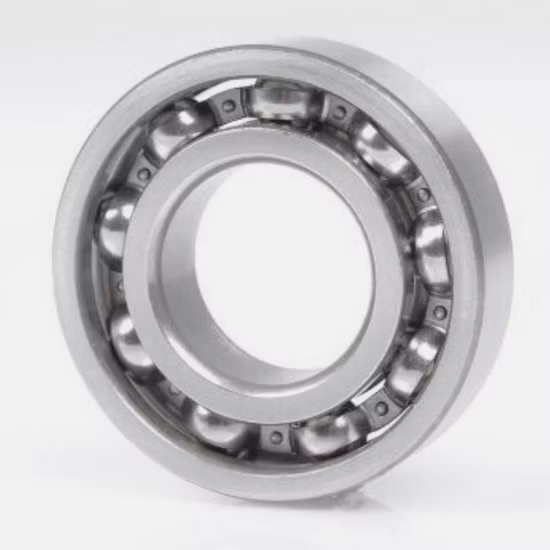


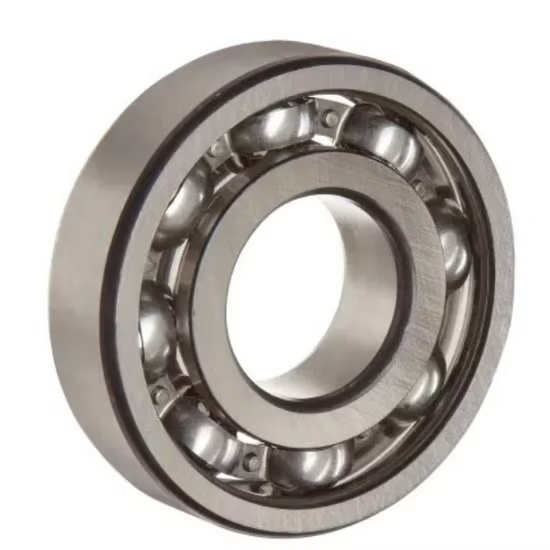
Koyo 6305 Deep Groove Ball Bearing features a standard open design with normal CN internal clearance and a pressed steel cage for reliable general machinery operation.
Traceable Koyo batches — Every Koyo 6305 deep groove ball bearing ships with verifiable lot documentation directly from the manufacturer's production facilities.
| Parameter | Value |
|---|---|
| Designation | Koyo 6305 |
| Bearing Type | Deep Groove Ball Bearing |
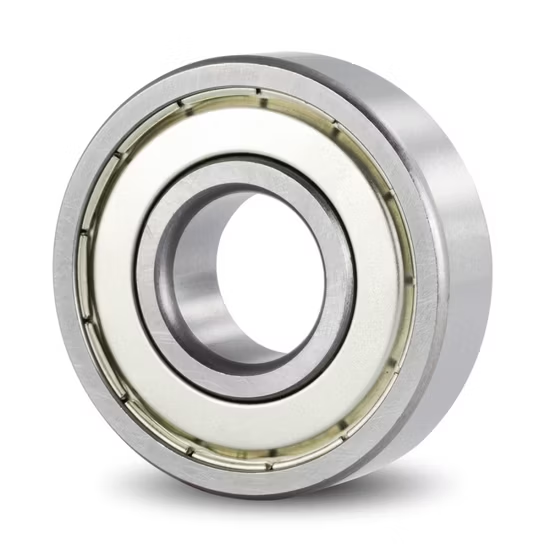
| Seal or Shield Type | Open, Rubber Seals, Iron Shields |
| Noise and Vibration Class | Z1V1, Z2V2, Z3V3, Z4V4 |
| Cage Material | Pressed steel |
| Clearance Class | CN (Normal) |
| Precision Class | P0 (Normal) |
| Industry | Typical Applications |
|---|---|
| Electric Motors | Rotor shaft supports requiring low noise and vibration grading |
| Industrial Gearboxes | High-speed input shafts subjected to continuous radial loading |
| Material Handling | Conveyor roller drives operating in moderately dusty environments |
Assuming normal clearance fits all thermal environments is the fastest route to motor seizure.
Early in my trading career in Dongguan, I watched a motor manufacturer destroy an entire batch of newly assembled units. They procured standard bearings without checking the internal clearance suffix, installing normal clearance variants into high-temperature housings. As the motors heated up, thermal expansion eliminated the internal play, causing the rolling elements to bind and the inner rings to weld themselves to the shafts. Sourcing a Koyo 6305 deep groove ball bearing requires looking past the base designation to verify that the internal geometry actually matches the thermal profile of the application .
Selecting the correct variant goes far beyond matching the bore and outside diameter. When we process an inquiry for a Koyo 6305 deep groove ball bearing, our engineering review cross-references the operating temperature and load profile to determine if the standard normal clearance is sufficient, or if a C3 clearance is necessary to accommodate thermal shaft expansion. This application-based selection review prevents the catastrophic binding that occurs when buyers blindly accept base-number equivalents without verifying the internal design suffixes.
Electric motor shafts demand a careful balance between sealing effectiveness and rotational friction. Rubber seals provide excellent protection against moisture and fine particulate ingress but generate higher friction, which can elevate operating temperatures in high-speed applications. Iron shields offer a non-contact labyrinth that minimizes friction and heat generation, making them ideal for high-speed rotor supports where external contamination is less severe. Furthermore, specifying the correct noise and vibration class, such as Z3V3 or Z4V4, is critical for applications where acoustic performance is strictly regulated .
When a Koyo 6305 deep groove ball bearing carries no additional suffixes, it defaults to specific baseline engineering parameters. The absence of a seal designation means the bearing is open, requiring external housing seals and a controlled lubrication environment. The lack of a clearance suffix indicates normal clearance (CN), which is suitable for standard ambient temperatures but highly risky for hot-running motors. Similarly, the default cage is pressed steel, which provides adequate strength for standard radial loads but may lack the damping characteristics of machined brass cages required in high-vibration gearboxes.
Procuring a bearing based solely on its base number frequently leads to premature failure modes classified under ISO 15243, particularly surface distress and smearing caused by inadequate internal clearance. When a standard clearance bearing is forced into a high-temperature application, the resulting thermal binding causes unplanned downtime, catastrophic damage to the motor housing, and immediate warranty voidance. The financial impact of replacing a seized motor shaft far exceeds the minimal effort required to verify the exact clearance and cage specifications before placing a bulk order .
The market is flooded with cloned deep groove ball bearings featuring soft inner rings that fail under continuous radial loads. We mitigate this risk by providing authorized distribution coverage, ensuring every unit possesses full batch traceability back to the manufacturer. Our cross-brand interchange expertise guarantees that if a substitution is required, the replacement matches not just the base dimensions, but the exact clearance, cage material, and precision class. This prevents the dangerous practice of installing a P0 grade bearing into a precision spindle application simply because the base number matched the OEM drawing.
To ensure the selected bearing perfectly matches your application, please provide the specific radial and axial loads, operating speeds, and expected thermal ranges. Supplying the original OEM equipment number allows our technical team to perform a comprehensive cross-reference check, verifying that the internal clearance and sealing configuration align precisely with your machinery's design requirements.
Q: How can I verify the authenticity of the received bearings?
A: Authenticity is confirmed by scanning the QR code on the packaging using the official brand mobile application. This digital check links directly to the manufacturer's database, verifying the production batch and ensuring the internal components, including the pressed steel cage, are genuine and not counterfeit clones with soft inner rings.
Q: What cross-reference checks are critical when substituting this model?
A: A valid cross-reference must align the internal clearance, cage material, and precision class, not just the base dimensions. Substituting a standard clearance bearing into a high-temperature motor application without verifying the C3 requirement will lead to thermal binding and catastrophic seizure during operation.
Q: How do I choose between rubber seals and iron shields?
A: Rubber seals provide superior protection against moisture and dust but generate higher friction, making them better for moderate-speed, dirty environments. Iron shields offer non-contact protection with minimal friction, making them the preferred choice for high-speed electric motor rotors where heat generation must be strictly minimized.
Q: What is the practical difference between Z1V1 and Z4V4 noise classes?
A: The Z and V classifications measure acoustic noise and vibration velocity, respectively. A Z4V4 rating indicates exceptionally low noise and vibration, which is strictly required for high-end household appliances and precision electric motors, whereas Z1V1 is generally sufficient for standard industrial gearboxes and conveyors.
Q: Which mounting practices are recommended for this bearing type?
A: For cylindrical bore bearings, induction heating is the preferred method for expanding the inner ring. This ensures uniform thermal expansion without damaging the pressed steel cage or altering the internal clearance, which frequently occurs when mechanics use improper mechanical force or open-flame heating techniques.
Our 5-step process ensures every order is engineered, validated, and supported for optimal performance.
Technical needs assessment
Custom specifications
Free samples for $50k+
Pre-shipment inspection
On-site & predictive
Our certified engineers respond within 24 hours with detailed technical specifications, pricing, and lead time information.