01
Consultation
Technical needs assessment

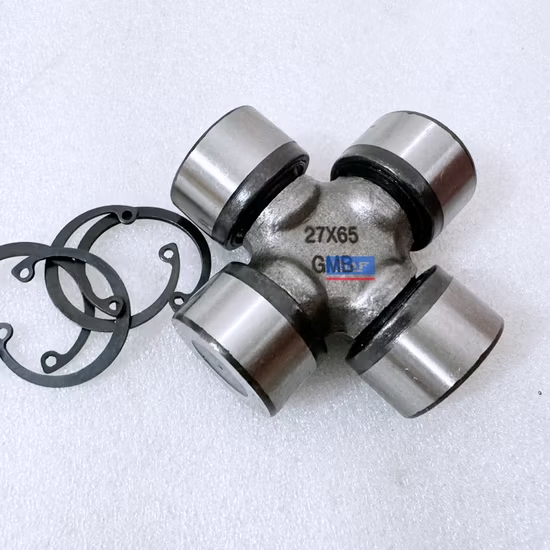
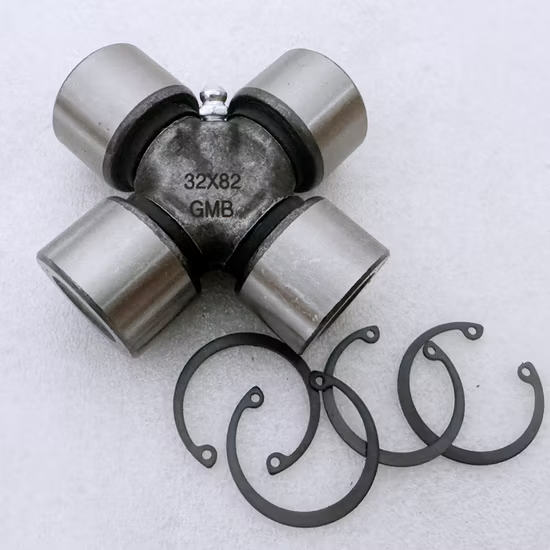

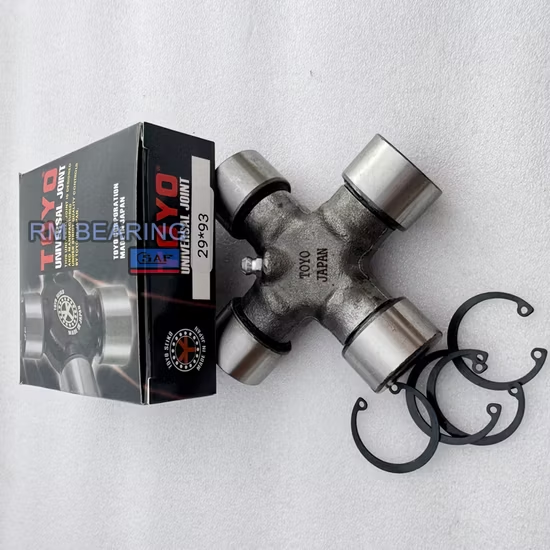

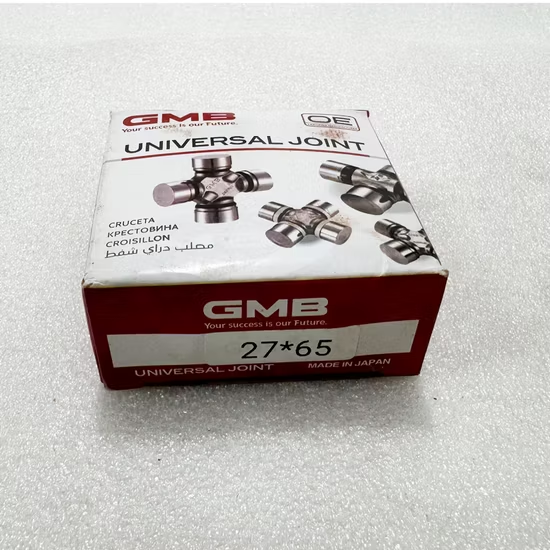
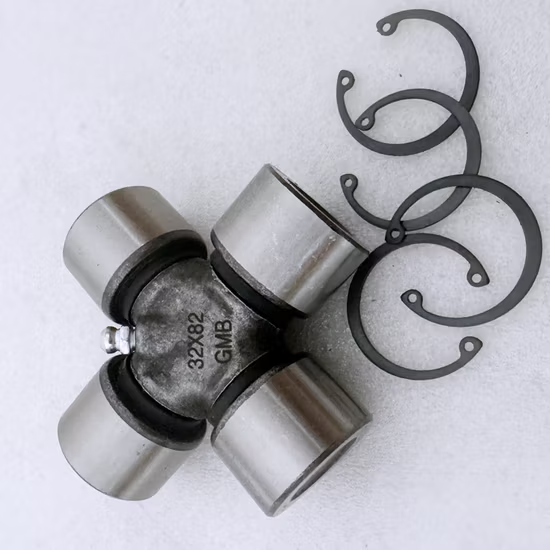
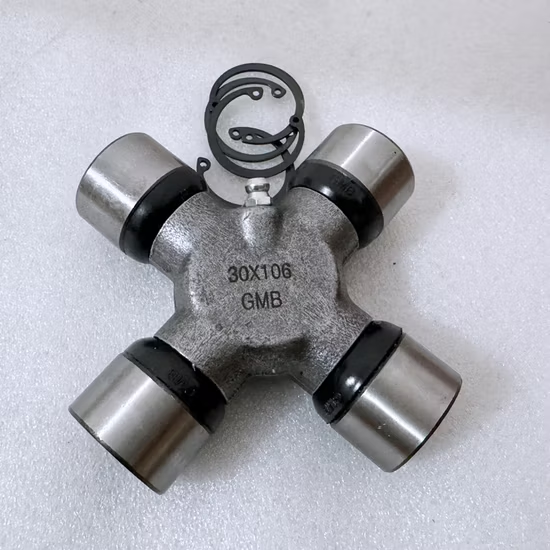
Gu-7640 Universal Joint Cross Bearing 38x112 mm — engineered for automotive and construction machinery drivetrains, this ISO-certified component ensures reliable torque transmission under heavy loads.
Cross-reference three-point alignment — We verify base dimensions, internal clearance, and seal types against OEM specs to prevent thermal binding in driveline applications.
| Parameter | Value |
|---|---|
| Designation | Gu-7640 |
| Bearing Type | Universal Joint Cross Bearing |
| Bearing Cup Outer Diameter (D) | 38 mm |
| Overall Length (L) | 112 mm |
| Material Options | Standard bearing steel or stainless steel variants |
| Structure | Single |
| Certification | ISO |
| Origin | Germany / Japan / Sweden / Malaysia / China |
Note: Gu and 7640 are unverified suffixes requiring manufacturer catalog confirmation for exact internal design codes.
| Industry | Typical Applications |
|---|---|
| Automotive | Driveline propeller shafts, steering column joints, auto hub assemblies |
| Construction Machinery | Articulation joints, hydraulic pump drives, mixer drum rollers |
| Agricultural Tractors | PTO shaft connections, steering linkages |
Cage material mismatch and incorrect clearance selection cause catastrophic fatigue long before the cup steel reaches its yield limit.
Sourcing a Gu-7640 universal joint cross bearing based solely on the outer diameter and length is a common trap that leads to premature driveline failure. Many aftermarket replacements match the basic 38x112mm footprint but substitute high-strength machined brass cages with stamped steel alternatives to cut costs. Under the continuous high-vibration and shock-loading conditions typical of heavy vehicle propeller shafts, these inferior cages quickly deform and disintegrate. Furthermore, ignoring the required internal clearance for thermal expansion results in needle rollers binding against the cup walls as the assembly heats up during operation .
Selecting the correct configuration for a Gu-7640 universal joint cross bearing requires looking past the basic dimensions to evaluate the actual torque transmission and angular misalignment demands. Our technical team reviews the specific OEM equipment numbers to ensure the cross-reference aligns not just with the 38 mm cup diameter, but also with the precise needle roller profile and seal geometry required to keep contaminants out of the auto hub or propeller shaft assembly.
Driveline components endure a brutal combination of oscillating movements, severe shock loads, and exposure to road debris, water, and corrosive de-icing salts. The internal clearance must be carefully calibrated to accommodate the thermal expansion generated by friction during high-speed rotation, while the seal design must balance low rotational friction with maximum exclusion of abrasive particulates. Inadequate lubrication retention or the ingress of moisture rapidly accelerates wear on the needle rollers and cup raceways, leading to catastrophic joint seizure .
The material selection for this cross bearing dictates its survival in specific operating environments. While standard high-carbon bearing steel provides the necessary core toughness and raceway hardness for typical automotive driveline applications, stainless steel variants are available for machinery operating in highly corrosive or washdown environments. The internal geometry, particularly the needle roller profile and the cage design, governs how evenly the radial loads are distributed across the 112 mm overall length, directly influencing the component's resistance to edge loading and brinelling under heavy static torque.
Installing a cross bearing that matches the base number but ignores critical internal design suffixes frequently results in unplanned downtime and severe collateral damage to the surrounding driveline components. When a replacement unit lacks the correct thermal clearance or utilizes an incompatible grease type, the resulting friction generates excessive heat that can warp the yoke ears or destroy the transmission output seal. According to ISO 281 framework principles, ignoring these application-specific variables drastically reduces the calculated L10 life, turning a simple maintenance swap into a major mechanical overhaul .
We eliminate the risk of receiving cloned QR codes and soft inner rings by enforcing strict batch traceability directly from the manufacturer's production facilities. When cross-referencing a Gu-7640 designation, our engineers do not stop at the 38x112mm dimensions; we actively verify the cage material, seal lip design, and pre-packed lubricant compatibility to match your exact field conditions. This rigorous three-point alignment ensures that whether you are fulfilling a mixed-brand MRO order or sourcing critical spares for a mining fleet, every unit delivered performs exactly as the original equipment designer intended.
To guarantee optimal driveline performance, please provide the specific OEM equipment numbers or the exact radial and axial load profiles alongside the operating speed and ambient temperature ranges. Supplying these application parameters allows our engineering team to execute a precise cross-reference review, confirming that the internal clearance, cage material, and seal configuration of the selected unit perfectly align with your operational demands.
Q: How can we verify the authenticity of the Gu-7640 upon delivery?
A: Every unit we supply includes original manufacturer batch traceability documentation and a unique identification code. You can verify the authenticity directly by scanning the QR code through the brand's official mobile application, which instantly confirms the production origin and completely eliminates the risk of installing counterfeit parts with soft inner rings.
Q: What internal parameters must align during a cross-reference check?
A: Beyond matching the basic 38x112mm footprint, it is critical to align the internal radial clearance to accommodate thermal expansion, verify the cage material for high-vibration resistance, and ensure the seal type matches the environmental contamination level. Overlooking these internal design suffixes is the primary cause of premature thermal binding and cage disintegration in the field.
Q: When should we specify stainless steel variants over standard bearing steel?
A: Standard bearing steel is optimal for typical automotive and construction machinery drivelines requiring maximum load capacity and fatigue resistance. Stainless steel variants should be specified when the equipment operates in highly corrosive environments, frequent washdown areas, or applications where surface rust could compromise the seal integrity and contaminate the internal lubricant.
Q: How do we determine the correct relubrication interval for this joint?
A: The relubrication cycle depends heavily on the operating environment, load magnitude, and the specific seal configuration installed. We recommend consulting the OEM maintenance manual for baseline intervals, but our technical team can help adjust this schedule based on your specific exposure to dust, moisture, and heavy shock loads to prevent needle roller wear.
Our 5-step process ensures every order is engineered, validated, and supported for optimal performance.
Technical needs assessment
Custom specifications
Free samples for $50k+
Pre-shipment inspection
On-site & predictive
Our certified engineers respond within 24 hours with detailed technical specifications, pricing, and lead time information.