01
Consultation
Technical needs assessment



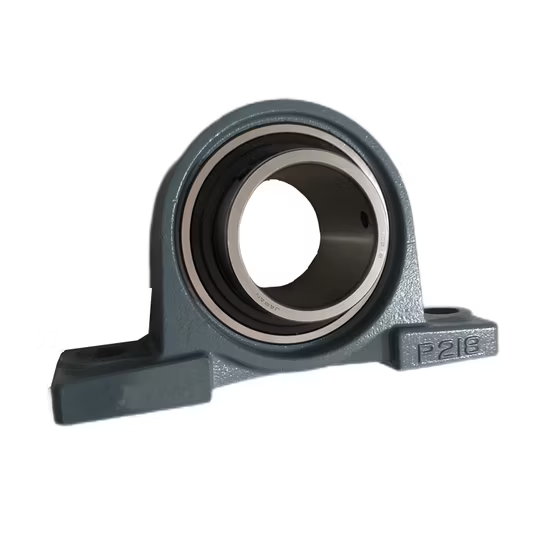
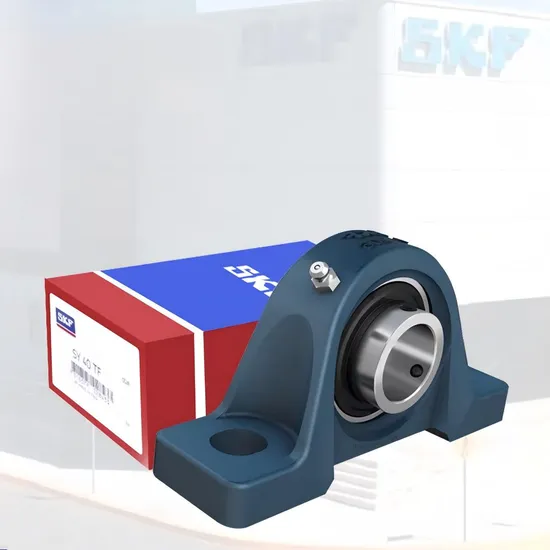
UCFL211-32 UCFL211-33 UCFL211-34 UCFL211-35 Two-Bolt Oval Flanged Pillow Block Units feature cast iron housings and deep groove raceways for radial loads in agricultural and conveyor systems.
Cross-reference alignment verified — Base designation, oval flange geometry, and inch-bore locking mechanisms are matched precisely across all brand equivalents to prevent field mismatches.
| Parameter | Value |
|---|---|
| Designation | UCFL211-32 UCFL211-33 UCFL211-34 UCFL211-35 |
| Product Type | Pillow Block Bearing |
| Bearing Type | Insert Bearing with Two-Bolt Oval Flanged Housing |
| Rows Number | Single |
| Raceway | Deep Groove Raceway |
| Material Options | Cast iron housing; bearing steel or stainless steel insert variants available |
| Origin | Germany / Japan / Sweden / Malaysia / China |
| HS Code | 8483200000 |
Note: The fractional inch bore suffixes (-32, -33, -34, -35) denote specific shaft diameters and require manufacturer catalog confirmation for exact dimensional equivalents prior to ordering.
| Industry | Typical Applications |
|---|---|
| Agricultural Machinery | Combine harvester auger drives, tractor PTO shaft supports, and fertilizer spreader agitators |
| Material Handling | Belt conveyor tail pulley mounts, bucket elevator return idlers, and sortation diverter arms |
| Textile Machines | Yarn guide roller supports, loom let-off mechanisms, and spinning frame drafting assemblies |
Matching the internal clearance and seal type to the actual field environment prevents catastrophic dust intrusion.
I have seen too many agricultural setups fail within weeks because a standard deep groove ball bearing was forced into an oval flanged housing, or a standard clearance insert was used where thermal expansion demanded C3. When fine crop dust bypasses an inadequate seal on a UCFL211-32 UCFL211-33 UCFL211-34 UCFL211-35 pillow block bearing, the grease turns into an abrasive paste. The inner ring seizes on the shaft, the outer ring spins in the cast iron housing, and the entire assembly tears itself apart . True interchangeability requires verifying the exact locking collar and seal lip design, not just the base number.
Procurement engineers often focus solely on the 211 dimension series, overlooking the critical interface between the insert outer ring and the cast iron housing bore. A proper UCFL211-32 UCFL211-33 UCFL211-34 UCFL211-35 pillow block bearing relies on a slightly convex outer ring to handle minor shaft misalignments without edge-loading the rolling elements. We review your specific mounting bracket geometry to ensure the oval flange bolt spacing and housing bore sphericity match the OEM requirements, eliminating the risk of housing cracking under dynamic radial loads.
In conveyor and agricultural applications, these units face a brutal combination of heavy radial loads, moderate rotational speeds, and severe particulate contamination. Moisture from crop washing or outdoor weather accelerates corrosion on unprotected surfaces, making the choice of housing coating and insert material critical. Temperature fluctuations throughout the day cause shaft expansion and contraction, which can compromise the grip of the set screw locking collar if the clearance class is incorrectly specified. Furthermore, relubrication intervals are often extended in remote field locations, demanding seals that retain grease effectively while excluding fine silica dust without generating excessive friction heat .
The UCFL prefix confirms a two-bolt oval flanged housing designed for compact mounting spaces, while the 211 series dictates the specific outer diameter and width profile of the insert. The deep groove raceway geometry is optimized to handle combined loads, though the primary burden remains radial. The inch-bore designations ensure a precise slip-fit onto standard imperial shafting without the need for adapter sleeves. Selecting the correct seal variant—whether standard rubber lips or heavy-duty triple-lip designs—dictates the unit's survival in high-dust environments.
Substituting a metric bore insert into an inch-bore application, or ignoring the housing bore tolerance, leads to micro-movements that destroy the shaft surface. According to ISO 281 frameworks, even minor misalignment or incorrect internal clearance drastically reduces the calculated L10 life. This results in unplanned downtime during peak harvest or production seasons, collateral damage to adjacent drive components, and immediate warranty voidance by the equipment manufacturer .
We verify the exact housing bore sphericity and insert outer ring convexity to ensure the self-aligning feature functions as engineered. Our cross-referencing goes beyond the base number, confirming that the set screw spacing and locking collar geometry match your existing shaft keyways. We provide full batch traceability for the cast iron housings to guarantee structural integrity under shock loads. Our technical team reviews your specific seal requirements to prevent the exact dust-intrusion failures I have documented in the field. Furthermore, we consolidate mixed-brand requirements into a single shipment, simplifying your MRO inventory management.
To ensure the selected unit survives your specific operating environment, please provide the exact radial and axial load profiles, operating speeds, and ambient temperature ranges. Sharing the OEM equipment number or the physical shaft diameter allows our engineering team to verify the precise inch-bore variant and locking mechanism required. This technical review guarantees the internal clearance and seal type are perfectly matched to your application, preventing early field failures.
Q: How do I verify the authenticity of the UCFL units upon delivery?
A: Counterfeit bearings often feature soft inner rings and cloned QR codes that pass casual visual checks. We supply full batch traceability documentation, allowing you to scan the markings using the manufacturer's official mobile app. This confirms the metallurgical origin and production date, ensuring the cast iron housing and insert meet genuine OEM specifications.
Q: What cross-reference checks are needed beyond the base 211 designation?
A: Matching the base number is insufficient. You must verify the housing flange bolt spacing, the insert outer ring convexity, and the specific locking collar design. We align these three critical dimensions across brand equivalents to ensure the replacement unit fits your existing bracket and grips the shaft securely without modification.
Q: How do I select the correct inch-bore variant for my shaft?
A: The suffixes denote specific fractional inch diameters. Providing your exact shaft measurement or the OEM equipment manual reference allows us to pinpoint the correct variant. This prevents the dangerous practice of forcing a metric insert onto an imperial shaft, which ruins the self-aligning capability and causes premature seizure.
Q: What is the difference between P-series and L-series housings?
A: P-series designates standard pillow block bases, while the UCFL utilizes an L-series two-bolt oval flanged housing. Confusing these mounting styles leads to severe installation errors. We verify the housing geometry against your machinery's mounting surface to ensure the bolt holes and load-bearing base align correctly with your structural supports.
Our 5-step process ensures every order is engineered, validated, and supported for optimal performance.
Technical needs assessment
Custom specifications
Free samples for $50k+
Pre-shipment inspection
On-site & predictive
Our certified engineers respond within 24 hours with detailed technical specifications, pricing, and lead time information.