01
Consultation
Technical needs assessment

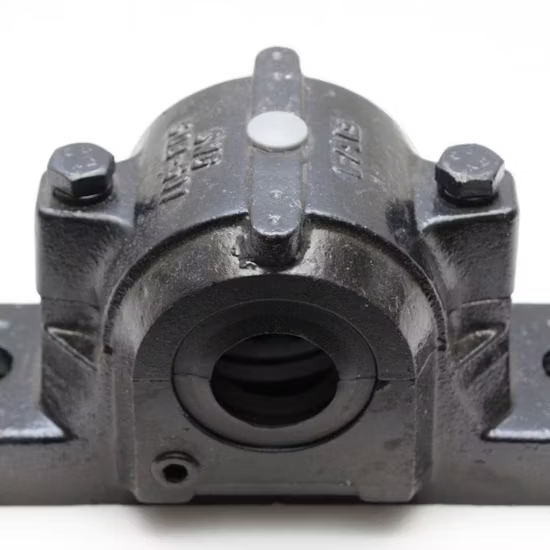
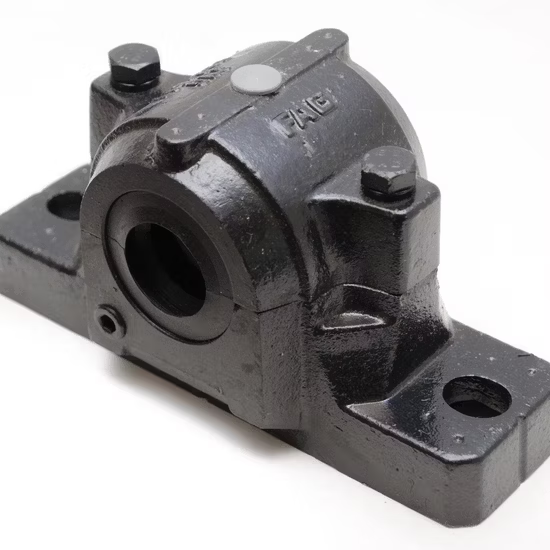
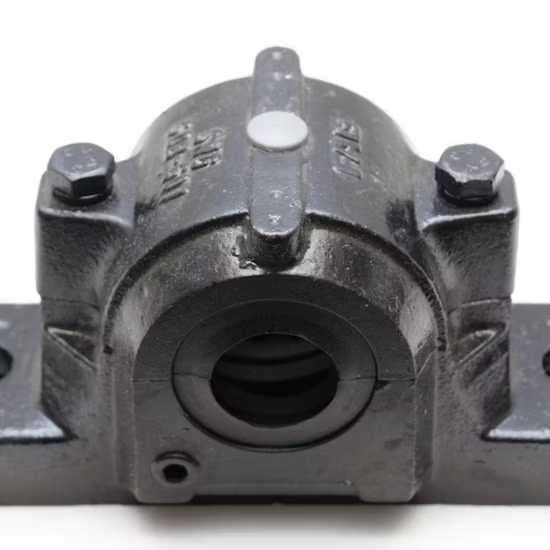
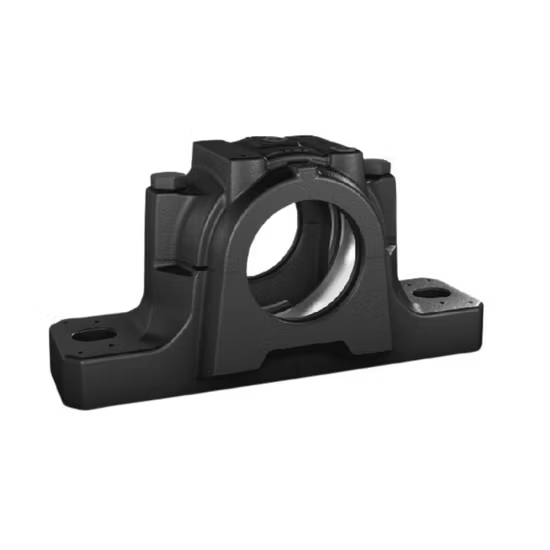
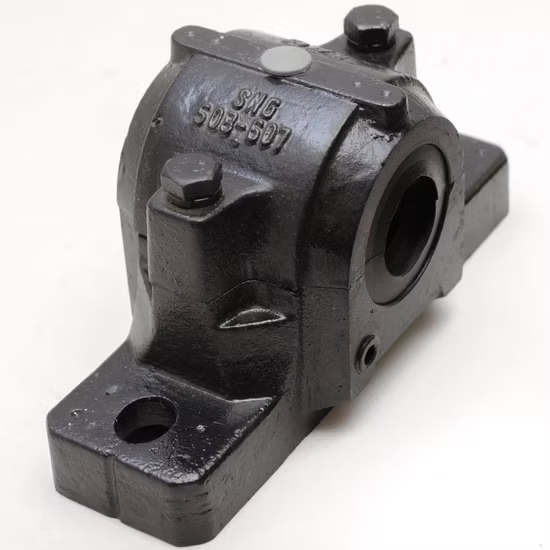
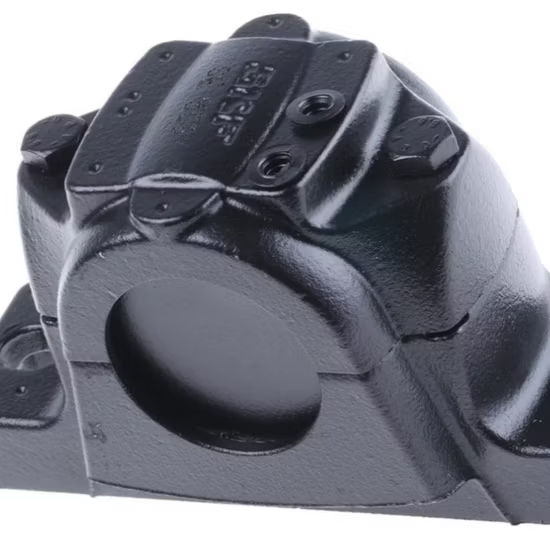
Snl3034 Split Plummer Block Housings — cast iron construction featuring non-aligning and separated architecture for heavy-duty environments.
Cross-reference dimension alignment — verifying housing bore, seal compatibility, and mating bearing clearance prevents field binding.
| Parameter | Value |
|---|---|
| Designation | Snl3034 |
| Product Type | Split Plummer Block Housings |
| Bearing Block Model | P |
| Material | Cast Iron |
| Aligning | Non-Aligning |
| Separated | Separated |
| Feature | Corrosion Resistant, High Temperature, High Speed |
| Origin | Germany / Japan / Sweden / Malaysia / China |
Note: The "3034" sequence functions as a housing dimension code rather than a standard bearing suffix; exact dimensional interchange requires manufacturer catalog confirmation.
| Industry | Typical Applications |
|---|---|
| Mining and crushing | Jaw crusher toggle plate pivot points and vibrating screen eccentric shaft supports |
| Steel and metallurgy | Continuous caster roll guide assemblies and rolling mill run-out table idlers |
| Material handling | Overland conveyor belt drive pulley shafts and bucket elevator head sprocket bearings |
Matching the base designation while ignoring internal seal and clearance requirements guarantees premature field failure.
Procurement engineers frequently source Timken Koyo NACHI NSK NTN Fyh Asahi Snl3034 split plummer block housings based solely on the base number, only to experience catastrophic outer ring creep when the housing bore tolerance fails to match the specific mating bearing. I have investigated multiple mining crusher shutdowns in the Middle East where identical-looking housings caused severe thermal binding simply because the internal labyrinth seal clearance was mismatched for high-temperature expansion . Relying on visual inspection or cloned QR codes leaves heavy machinery vulnerable to soft cast iron structures that deform under shock loads.
Sourcing genuine Timken Koyo NACHI NSK NTN Fyh Asahi Snl3034 split plummer block housings requires looking past the external casting to evaluate the internal machining precision. The non-aligning separated architecture demands exact shaft and base alignment during installation, but it rewards the maintenance team with significantly easier dismounting procedures in confined spaces. Our technical review ensures the housing bore tolerance strictly aligns with the outer ring diameter of the mating spherical roller bearing, preventing the micro-movements that lead to fretting corrosion.
In cement kilns and crushing plants, equipment faces intense radial shock loads combined with heavy particulate contamination. The cast iron construction provides the necessary damping characteristics, but high-temperature environments dictate strict attention to the seal arrangement and lubrication pathways. When ambient heat combines with friction, inadequate grease purging channels cause rapid lubricant degradation. Selecting the correct non-contact or heavy-duty contact seal variant is critical to keeping abrasive dust out while accommodating the thermal expansion of the shaft .
The core value of the Snl3034 lies in its precise bore machining and rigid base footprint. The separated design allows technicians to inspect the bearing and seals without completely dismantling the drive shaft, but this split line must be perfectly matched to prevent cap shift under heavy vibration. Furthermore, the housing must accommodate the specific seal width and grease volume required by the application. Specifying the correct clearance class for the internal bearing is equally vital; installing a standard clearance bearing inside this housing in a high-heat zone will inevitably result in internal preload and cage failure.
Ignoring the exact housing bore tolerance and seal compatibility leads directly to unplanned downtime and catastrophic damage to the shaft journal. When the outer ring creeps within a slightly oversized housing bore, the resulting friction generates localized heat that compromises the entire assembly. Following ISO 281 guidelines for life calculation becomes irrelevant if the fundamental mounting interfaces are compromised by out-of-spec castings. This type of premature failure voids equipment warranties and forces emergency air-freight replacements .
We maintain authorized coverage across all major brands, meaning a single order handles mixed-brand requirements without sacrificing traceability. Our cross-brand interchange process verifies the housing bore, seal width, and mating bearing clearance—not just the base designation. We actively review application parameters to catch errors like specifying a standard seal when a high-temperature variant is required. Every batch is traced back to the manufacturer, ensuring the structural integrity of the cast iron meets the demanding shock loads of mining and metallurgy.
To ensure accurate selection and cross-reference verification, please provide the exact radial and axial loads, operational speeds, and ambient temperature ranges. Sharing the OEM equipment number or the specific mating bearing designation allows our engineering team to confirm the housing bore tolerance and seal compatibility. Detailing the environmental exposure, such as heavy dust or moisture, helps us specify the optimal sealing arrangement for your application.
Q: How do we verify the authenticity of these split plummer blocks?
A: Authenticity is confirmed through official brand applications using the unique QR codes or batch numbers etched on the housing. We supply full traceability documentation, ensuring the cast iron material and machining tolerances meet original manufacturer specifications, completely eliminating the risk of counterfeit products with soft inner structures.
Q: What cross-reference checks are needed when substituting SNL housings?
A: Substituting housings requires verifying three critical dimensions: the exact housing bore tolerance, the split-line seal width compatibility, and the grease pathway alignment. A base number match is insufficient if the internal geometry does not perfectly support the specific mating bearing and seal arrangement required for your operational environment.
Q: How do we select the right seal for high-temperature mining environments?
A: High-temperature and abrasive mining environments demand specialized labyrinth or heavy-duty contact seals that prevent particulate ingress without generating excessive friction heat. We review your specific operating temperatures and contamination levels to recommend the exact seal variant that maintains lubrication integrity and prevents premature bearing failure.
Q: What causes outer ring creep in non-aligning separated housings?
A: Outer ring creep typically occurs when the housing bore tolerance is too loose for the specific bearing outer diameter, or when thermal expansion is miscalculated. This micro-movement causes severe fretting corrosion and heat generation, which is why we strictly verify the dimensional match between the housing and the mating bearing before shipment.
Q: How should we mount non-aligning housings to prevent thermal binding?
A: Mounting requires precise alignment of the base to the shaft axis and strict adherence to the recommended tightening sequence for the separated cap bolts. Ensuring the correct internal clearance class for the mating bearing is equally critical, allowing sufficient room for thermal expansion without inducing destructive internal preload during high-speed operation.
Our 5-step process ensures every order is engineered, validated, and supported for optimal performance.
Technical needs assessment
Custom specifications
Free samples for $50k+
Pre-shipment inspection
On-site & predictive
Our certified engineers respond within 24 hours with detailed technical specifications, pricing, and lead time information.