01
Consultation
Technical needs assessment


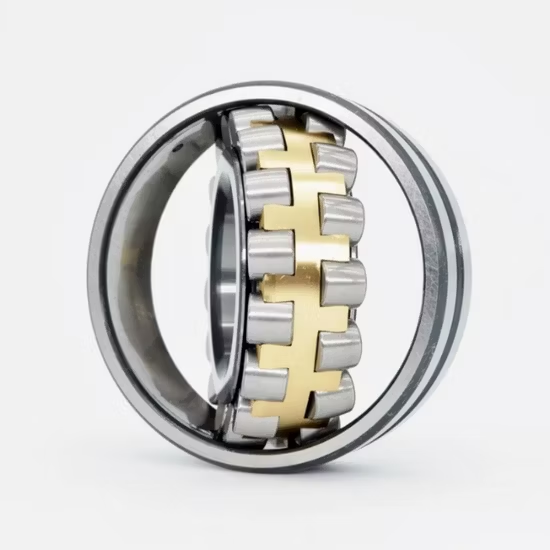
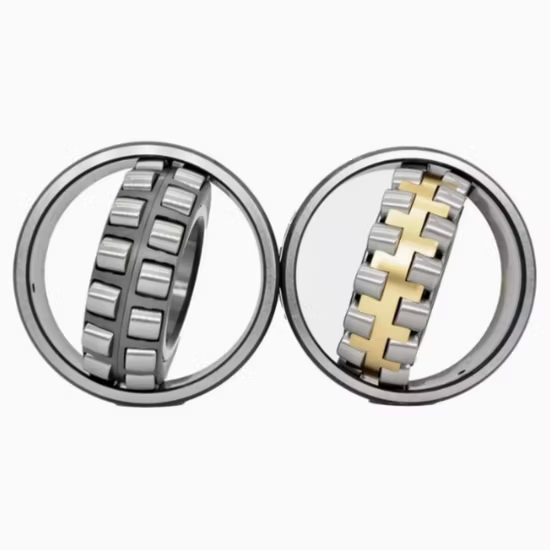
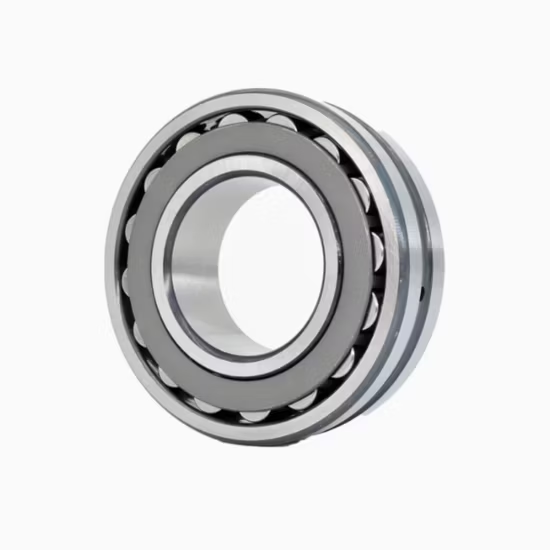
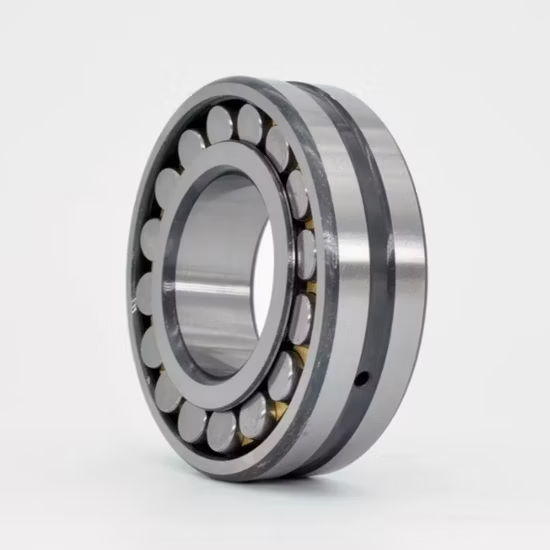
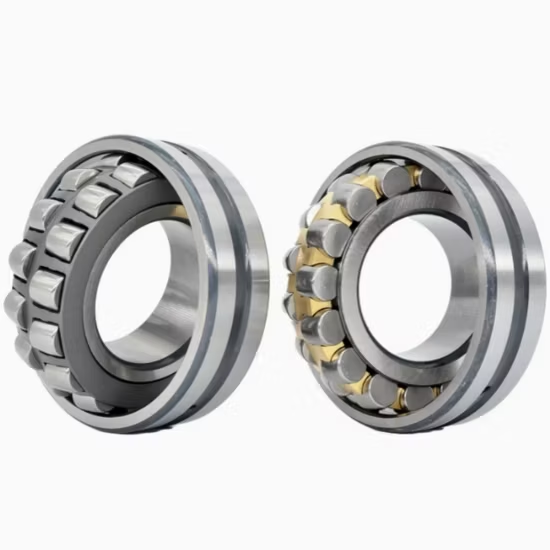
Self-Aligning Spherical Roller Bearing for Mining and Crusher Applications — optimized internal design for high-vibration and heavy-load environments.
Official App QR Verification — Every shipment includes traceable batch codes scannable via the manufacturer's official application to confirm authenticity before heavy machinery installation.
| Parameter | Value |
|---|---|
| Product Type | Spherical Roller Bearing |
| Bearing Type | Self-Aligning Spherical Roller Bearing |
| Material Options | Available in standard bearing steel, stainless steel, or ceramic hybrid variants |
| Origin | Germany / Japan / Sweden / Malaysia / China |
| Certification | Certificate of Conformity, Material Test Report |
| Industry | Typical Applications |
|---|---|
| Mining and Quarrying | Vibrating screen exciter mechanisms, jaw crusher eccentric shafts |
| Mineral Processing | Cone crusher main shaft assemblies, rotary kiln support rollers |
| Steel and Metallurgy | Continuous caster roll segments, rolling mill table rollers |
Standard internal clearances collapse under the intense thermal and dynamic loads of mining equipment.
When a vibrating screen operates continuously, the massive centrifugal forces and structural flexing generate significant internal heat. If the replacement parts lack the correct radial internal clearance or feature inadequate cage designs, the rolling elements quickly bind against the raceways. This thermal seizure leads to catastrophic cage fragmentation, forcing an unplanned shutdown that halts the entire crushing circuit . Sourcing from a reliable self-aligning spherical roller bearing supplier ensures the internal geometry is specifically engineered to accommodate these extreme thermal expansions and shaft misalignments.
Selecting the right material option is critical when dealing with abrasive dust and heavy shock loads. While standard high-carbon chromium steel handles immense radial loads, environments with high moisture or corrosive leaching chemicals require stainless steel variants to prevent raceway pitting. For applications demanding reduced rotational mass and extended service intervals, ceramic hybrid options provide noticeably lower friction and superior wear resistance. A qualified self-aligning spherical roller bearing supplier will evaluate your specific contamination and load profiles to recommend the optimal material configuration.
Mining crushers subject rotating assemblies to severe, repetitive shock loads combined with elevated operating temperatures. Under these conditions, standard lubricants degrade rapidly, and inadequate sealing allows abrasive silica dust to infiltrate the contact zones. The bearing must feature robust, heavy-duty cages—typically machined brass or reinforced steel—to withstand the violent vibrations without fracturing. Furthermore, the internal clearance must be sufficiently large to prevent thermal binding when the shaft expands, yet controlled enough to maintain load distribution .
The internal architecture dictates survival in high-vibration environments. Machined brass cages offer superior damping characteristics and structural integrity under heavy shock loads compared to pressed steel alternatives, which may fatigue and crack over time. Regarding clearance, standard CN clearance is entirely unsuitable for vibrating screens; C3 or C4 clearances are mandatory to compensate for the heat generated by continuous vibration and the interference fits required for heavy-duty shaft mounting. Understanding these internal design nuances prevents the costly mistake of installing a dimensionally correct but internally incompatible component.
Installing a dimensionally matched part with the wrong internal design inevitably triggers premature failure. According to failure analysis frameworks like ISO 15243, improper clearance selection directly causes surface distress, smearing, and eventual cage disintegration. The resulting unplanned downtime in a continuous mining operation incurs massive financial penalties, far exceeding the initial component cost. Furthermore, secondary damage to the crusher housing or shaft often voids equipment warranties, transforming a simple replacement into a major capital repair .
We eliminate the risk of cross-reference errors by verifying not just the base dimensions, but the critical internal suffixes. While a basic part number might match, substituting a stamped steel cage for a machined brass one in a vibrating screen guarantees rapid field failure. Our engineering team reviews your specific load, speed, and temperature parameters to ensure the selected clearance class and cage material perfectly align with the OEM intent. As an authorized self-aligning spherical roller bearing supplier, we provide batch-level traceability for every unit, ensuring you receive genuine components capable of surviving the harshest extraction environments.
To ensure precise application matching, please provide the specific equipment model, operating RPM, and the nature of the dynamic loads involved. If you are replacing an existing component, sharing the exact OEM equipment number or the full designation stamped on the current part allows our team to perform a comprehensive cross-reference review. Detailing the environmental conditions, such as dust ingress or moisture exposure, enables us to recommend the most appropriate sealing and material options for your machinery.
Q: How do we determine the exact suffix requirements for a vibrating screen application?
A: Vibrating screens demand specific internal clearances and heavy-duty cages to survive continuous high-frequency oscillation. By providing the screen's operating frequency, eccentric mass, and shaft diameter, our engineering team calculates the required C3 or C4 clearance and selects the appropriate machined brass cage configuration to prevent thermal binding and structural fatigue.
Q: What are the most common failure modes in crusher bearings and how are they prevented?
A: Crushers typically suffer from cage fragmentation and raceway smearing due to severe shock loads and inadequate internal clearance. Prevention requires selecting bearings with robust machined cages and verifying that the radial clearance accommodates the thermal expansion generated during heavy crushing cycles, alongside ensuring proper housing fits to prevent outer ring creep.
Q: How do you ensure cross-brand replacements maintain the correct internal geometry?
A: We never rely solely on the base dimension number. When substituting across brands, our technical team strictly aligns the internal radial clearance class, cage material design, and internal profile modifications. This guarantees the replacement component behaves identically under load, preventing premature failure caused by overlooked suffix discrepancies.
Q: What information is needed to select the right material for corrosive mining environments?
A: We require details regarding the specific chemicals, moisture levels, and washdown procedures used in your facility. This data allows us to evaluate whether standard bearing steel with advanced sealing is sufficient, or if stainless steel variants are necessary to prevent raceway corrosion and subsequent surface spalling in your material handling equipment.
Our 5-step process ensures every order is engineered, validated, and supported for optimal performance.
Technical needs assessment
Custom specifications
Free samples for $50k+
Pre-shipment inspection
On-site & predictive
Our certified engineers respond within 24 hours with detailed technical specifications, pricing, and lead time information.


