01
Consultation
Technical needs assessment

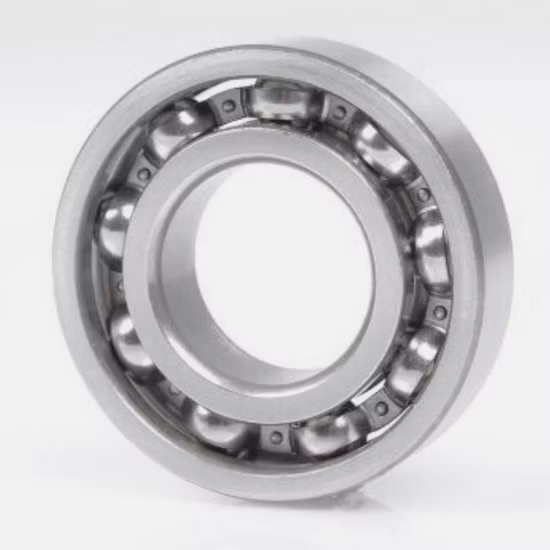


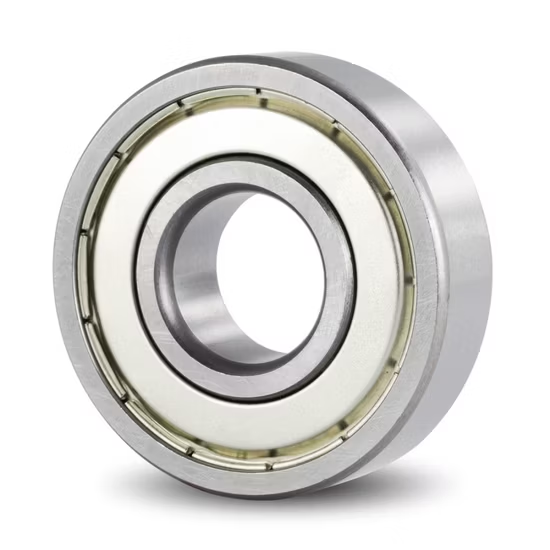
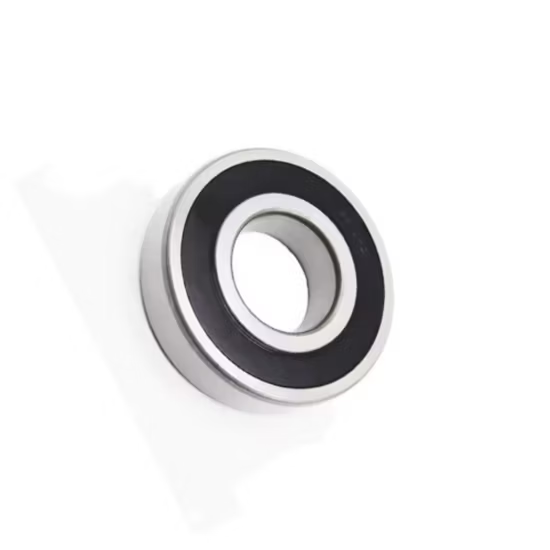
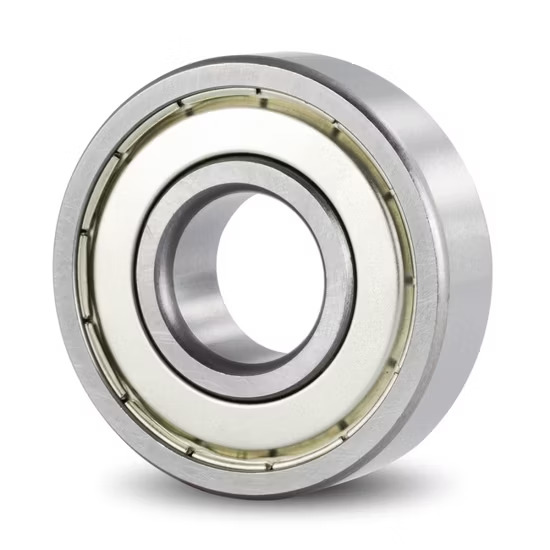
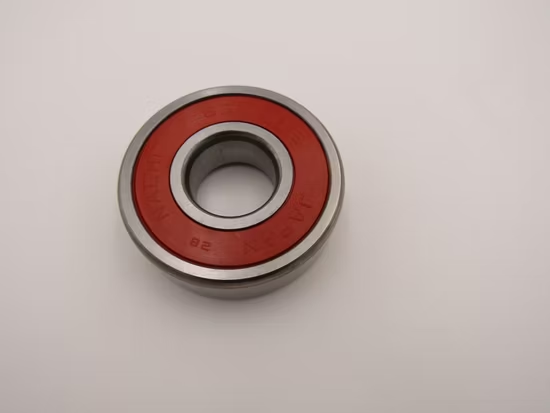
Deep Groove Ball Bearing for Electric Motors and Industrial Gearboxes — engineered for continuous operation with adaptable sealing configurations.
Multi-brand authorized coverage — Consolidate mixed requirements for NTN, NSK, and Koyo into a single verified shipment without coordinating fragmented vendors.
| Parameter | Value |
|---|---|
| Product Type | Deep Groove Ball Bearing |
| Seal or Shield Type | Open, Rubber Seals, Iron Seals |
| Noise and Vibration Level | Z1V1, Z2V2, Z3V3, Z4V4 |
| Material Options | Standard bearing steel, stainless steel, or ceramic rolling element variants available |
| Origin | Germany, Japan, Sweden, Malaysia, China |
| HS Code | 848210 |
| Industry | Typical Applications |
|---|---|
| Electric Motors | Rotor shaft support, cooling fan drive assemblies |
| Industrial Pumps | Impeller shaft alignment, mechanical seal housing support |
| Material Handling | Conveyor roller idlers, drive pulley tensioning units |
| Household Appliances | Washing machine drum support, HVAC blower motor shafts |
Clearance and seal mismatches cause catastrophic thermal binding long before the steel fatigues.
During my years handling export documentation in Ningbo, I reviewed countless shipping manifests for electric motors destined for high-temperature regions. A recurring failure pattern emerged: standard CN clearance bearings were substituted where C3 thermal expansion clearance was strictly required. The resulting thermal binding during ocean transit or initial operation led to complete motor seizure. Selecting the right deep groove ball bearing supplier is not just about matching the base part number; it requires rigorous verification of internal clearance classes and seal friction characteristics to prevent these hidden field failures .
Matching the internal geometry to the specific electrical or mechanical load profile ensures operational stability. As a reliable deep groove ball bearing supplier, we review the application's radial loads, axial thrust from magnetic fields, and operating speeds to recommend the precise internal design. This prevents premature cage wear in high-speed spindle applications or excessive friction in low-torque household appliance motors.
Electric motors and industrial pumps generate significant internal heat while operating in environments laden with moisture or particulate matter. Selecting the appropriate clearance class accommodates thermal expansion of the shaft and housing, preventing the internal rolling elements from binding under operating temperatures. Simultaneously, choosing between rubber seals for maximum contamination exclusion or iron shields for lower friction heat generation dictates the ultimate service life of the assembly .
For precision appliances and high-efficiency electric motors, acoustic performance is a critical quality metric. The Z1V1 through Z4V4 noise and vibration classifications define the strictness of the manufacturing tolerances and the dynamic balance of the rotating assembly. Furthermore, while standard bearing steel serves most general industrial purposes, stainless steel or ceramic material options are available for applications demanding corrosion resistance or electrical insulation to prevent bearing fluting caused by variable frequency drive shaft currents.
Installing a standard clearance bearing in a high-temperature pump or using an open bearing in a dusty conveyor environment leads to rapid, unplanned downtime. According to the failure classification frameworks outlined in ISO 15243, surface distress and smearing frequently originate from inadequate internal clearance or improper seal selection rather than material fatigue. These misconfigurations void equipment warranties and trigger cascading mechanical damage far exceeding the initial component cost .
We intercept cross-reference errors that automated catalogs miss, ensuring the replacement matches the original equipment's exact clearance, cage material, and precision requirements. Our distribution network covers all major international brands, allowing procurement teams to fulfill mixed-brand MRO requirements through a single, consolidated order. Every batch is verified for authenticity, eliminating the risk of counterfeit products with soft inner rings that pass superficial visual inspections. We provide comprehensive technical support for unusual load or speed conditions, ensuring the selected configuration survives the actual operating environment.
To ensure the selected components perfectly match your machinery, please provide the specific equipment model, available mounting space, and detailed operating parameters including radial and axial loads. Supplying the exact operating temperature range and environmental contamination levels allows our engineering team to determine the optimal material, clearance class, and seal configuration for your application.
Q: How do we determine the exact designation needed for our specific electric motor application?
A: Provide the equipment model, shaft diameter, housing bore, and detailed operating parameters such as speed, load, and temperature. Our engineering team uses these inputs to calculate the required internal clearance, select the appropriate seal type, and identify the precise manufacturer designation that guarantees reliable performance in your specific operating environment.
Q: Why do cross-reference errors in clearance suffixes cause catastrophic field failures?
A: Automated cross-referencing often matches the base number while ignoring critical internal geometry suffixes. Installing a standard CN clearance bearing in an application requiring C3 thermal expansion clearance causes the rolling elements to bind as the shaft heats up, leading to rapid thermal runaway, cage destruction, and complete motor seizure under load.
Q: What are the selection boundaries between rubber seals and iron shields for industrial gearboxes?
A: Rubber seals provide superior exclusion of liquid and fine particulate contamination but generate higher friction heat due to lip contact. Iron shields offer lower friction and higher speed capabilities but only protect against larger debris. The choice depends entirely on the contamination severity and the thermal limits of the specific gearbox application.
Q: How can procurement teams verify bearing authenticity and trace batch origins effectively?
A: Procure exclusively through authorized channels and demand a Certificate of Conformity. Upon receipt, scan the QR codes on the packaging using the manufacturer's official mobile application. This instantly verifies the batch origin, confirms the product is genuine, and rules out sophisticated counterfeits featuring cloned packaging and soft inner rings.
Q: What documentation is required to ensure compliance for critical MRO spares?
A: Critical spares require a Certificate of Conformity, full batch traceability records, and dimensional inspection reports confirming running accuracy. For international shipments, country-of-origin documentation is also necessary. These documents prove the components meet exact engineering specifications and satisfy stringent quality audits for heavy machinery maintenance.
Our 5-step process ensures every order is engineered, validated, and supported for optimal performance.
Technical needs assessment
Custom specifications
Free samples for $50k+
Pre-shipment inspection
On-site & predictive
Our certified engineers respond within 24 hours with detailed technical specifications, pricing, and lead time information.