01
Consultation
Technical needs assessment

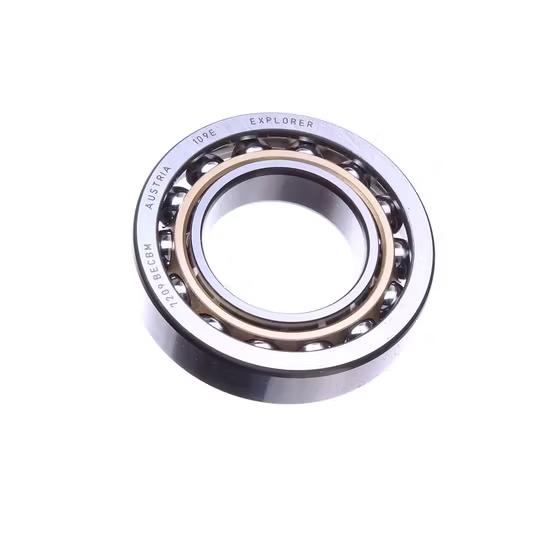

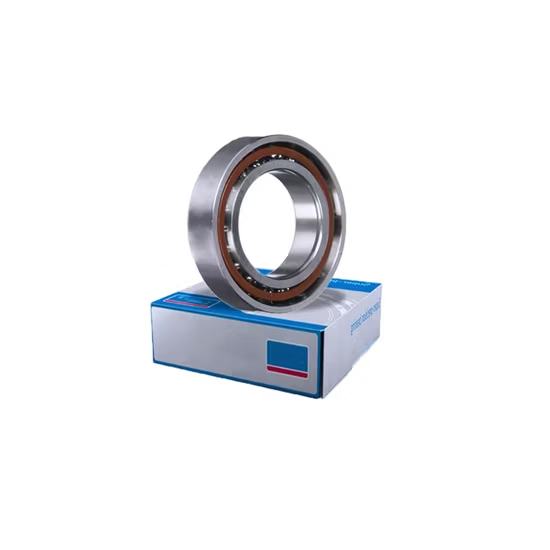
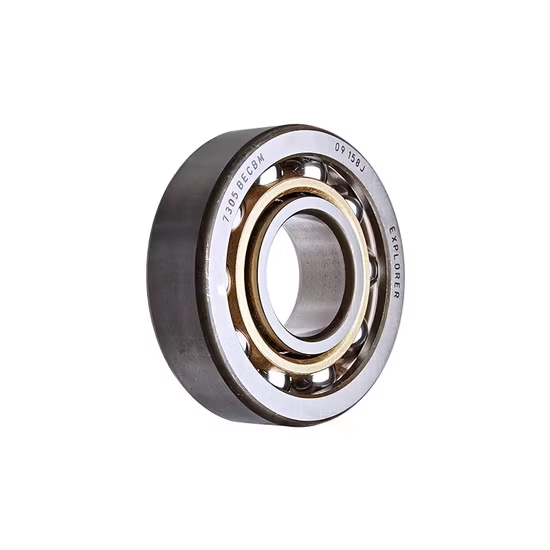
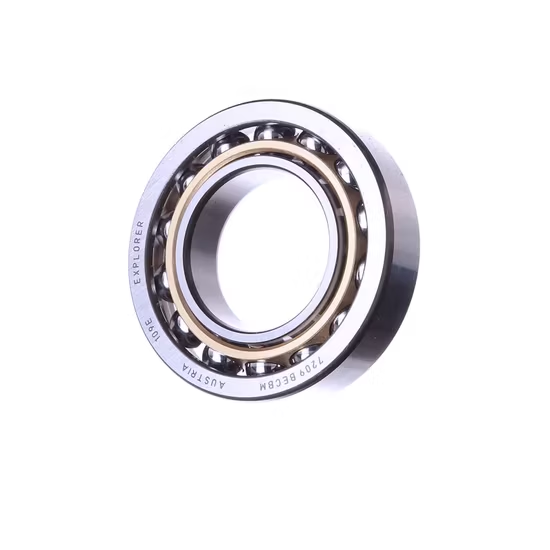
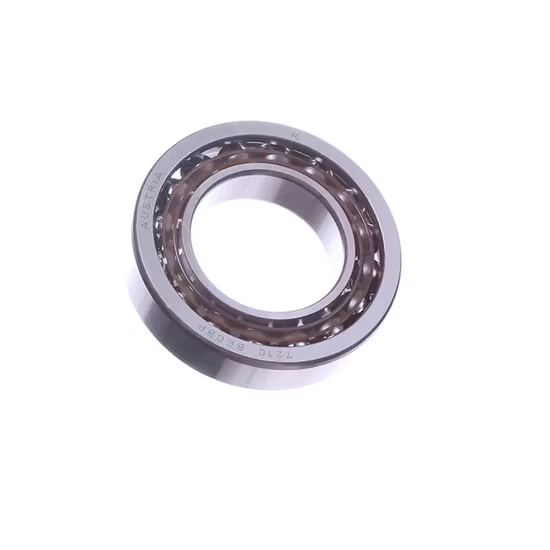
7000 7001 7002 7003 7004 Angular Contact Ball Bearings — engineered to support combined radial and axial loads for machine tool spindles and precision robotics.
Multi-Brand Authorized Coverage — Sourcing the 7000 7001 7002 7003 7004 angular contact ball bearing across mixed OEM requirements is handled through a single verified supply chain.
| Parameter | Value |
|---|---|
| Designation | 7000 7001 7002 7003 7004 |
| Bearing Type | Angular Contact Ball Bearing |
| Material | Bearing steel (stainless or ceramic variants available upon request) |
| Number of Rows | Single |
| Separable | Yes |
| Aligning | Non-aligning |
| Load Direction | Combined radial and axial |
| Vibration Grade | Z1V1, Z2V2, Z3V3 options |
| Origin | Germany, Japan, Sweden, Malaysia, China |
| HS Code | 8482102000 |
| Industry | Typical Applications |
|---|---|
| Machine Tool Manufacturing | High-speed spindle nose and tailstock assemblies |
| Precision Robotics | Joint actuators requiring low-friction axial support |
| Industrial Pump Production | High-speed impeller shaft thrust containment |
| General Automation | Precision ball screw support and rotary indexing tables |
Matching the base designation without verifying the exact internal geometry is a primary cause of catastrophic thermal binding in precision equipment.
Procurement teams often assume that any 7000 7001 7002 7003 7004 angular contact ball bearing will fit the spindle housing, overlooking the fact that high-speed applications demand specific contact angles and precision classes. When a standard clearance and precision grade is installed in a high-speed spindle, the thermal expansion generated during operation rapidly eliminates the internal clearance. This leads to excessive friction, cage failure, and ultimately, a seized spindle that halts the entire production line . The cost of replacing a damaged spindle shaft far exceeds the initial investment in correctly specified components.
Selecting the correct configuration for these designations requires a deep understanding of the target equipment's operational profile. Our technical review process ensures that the selected bearing matches the specific axial load, rotational speed, and thermal environment of your application, preventing the common mismatch between base numbers and actual field requirements.
High-speed spindles generate significant heat, which directly impacts the internal clearance and lubrication film thickness of the bearing. If the selected variant lacks the appropriate thermal stability or if the lubrication strategy fails to manage the heat, the rolling elements will experience localized stress and premature fatigue. Furthermore, the axial loads inherent in machining operations require a contact angle that provides sufficient thrust capacity without introducing excessive friction. Proper sealing or shielding is also critical to prevent coolant and metal particulates from contaminating the raceways, which would otherwise accelerate wear and degrade running accuracy .
While the base numbers 7000 through 7004 define the physical envelope dimensions, the operational success of the assembly relies entirely on the unlisted configuration parameters. The contact angle determines the axial load capacity and the rigidity of the spindle system, with different angles suited for varying machining forces. The cage material dictates the maximum permissible speed and the vibration characteristics; machined brass cages offer stability under heavy loads, while polyamide cages reduce weight and friction for ultra-high-speed applications. Precision classes govern the dimensional and running accuracy, ensuring minimal runout at the tool tip. Finally, the internal clearance must be carefully selected to accommodate the thermal expansion of the shaft and housing during operation, preventing the bearing from binding under load.
Installing a bearing that matches the housing dimensions but lacks the necessary precision or thermal clearance leads to unplanned downtime and severe collateral damage. According to failure analysis frameworks like ISO 15243, improper internal clearance is a leading root cause of smearing and thermal cracking in high-speed applications. The resulting spindle seizure often damages the mating shaft and housing, requiring extensive re-machining and extended lead times for replacement parts. This cascading effect voids equipment warranties and severely impacts production schedules, turning a minor procurement oversight into a major operational crisis .
We eliminate the risk of receiving counterfeit parts with cloned QR codes by sourcing exclusively through authorized manufacturer channels, ensuring every batch is fully traceable. Our cross-reference expertise goes beyond matching base numbers; we verify that the internal design, cage material, and precision suffixes align perfectly with your OEM specifications. This prevents the thermal binding and cage failures caused by substituting a standard grade where a high-precision variant is required. Furthermore, our single-source capability allows you to consolidate mixed-brand requirements into one verified shipment, simplifying your procurement process without compromising on authenticity or technical accuracy.
To ensure the selected configuration meets your exact operational demands, please provide the specific radial and axial loads, maximum operating speed, and anticipated thermal gradients of your application. Sharing the OEM equipment number or the existing bearing's full designation allows our engineering team to perform a precise cross-reference and L10 life calculation. This technical validation guarantees that the supplied components will deliver reliable performance in your specific machining environment.
Q: Why do base number matches fail in precision spindle applications?
A: Base numbers only define physical dimensions. Spindles require specific contact angles, precision classes, and thermal clearances. Installing a standard variant where a high-precision, thermally stable configuration is needed causes rapid heat buildup, eliminating internal clearance and leading to thermal binding and catastrophic spindle seizure during high-speed operation.
Q: How to verify bearing authenticity using official brand QR apps?
A: Counterfeiters often clone standard QR codes that pass casual visual checks. We provide genuine products with unique batch traceability. You can scan the QR code using the manufacturer's official mobile application, which cross-references the unique batch and lot numbers against the factory database to confirm the product's authentic origin and specifications.
Q: What are the critical differences in the 7xxx series that affect performance?
A: The critical differences lie in the unlisted configuration parameters: contact angle for axial load capacity, cage material for speed and vibration limits, precision class for running accuracy, and internal clearance for thermal expansion. Selecting the wrong combination of these variables will result in excessive vibration, premature fatigue, or thermal failure in demanding applications.
Q: How to select the correct vibration grade for high-speed motors?
A: Vibration grades like Z1V1 to Z3V3 indicate the strictness of the manufacturing tolerances regarding noise and vibration. High-speed motors and precision spindles require higher grades to ensure smooth operation and prevent resonant frequencies from damaging the equipment. Our technical team reviews your speed and load parameters to recommend the appropriate grade.
Our 5-step process ensures every order is engineered, validated, and supported for optimal performance.
Technical needs assessment
Custom specifications
Free samples for $50k+
Pre-shipment inspection
On-site & predictive
Our certified engineers respond within 24 hours with detailed technical specifications, pricing, and lead time information.


![71915 CD/P4a Angular Contact Ball Bearing NSK NTN Timken Koyo P4A Precision [WARN] draft identifier mismatch](https://skfiso.com/wp-content/uploads/2026/09/71915-cd-p4a-angular-contact-ball-bearing-nsk-ntn-timken-koyo-p4a-precision-warn-draft-identifier-mismatch-fffc66.avif)