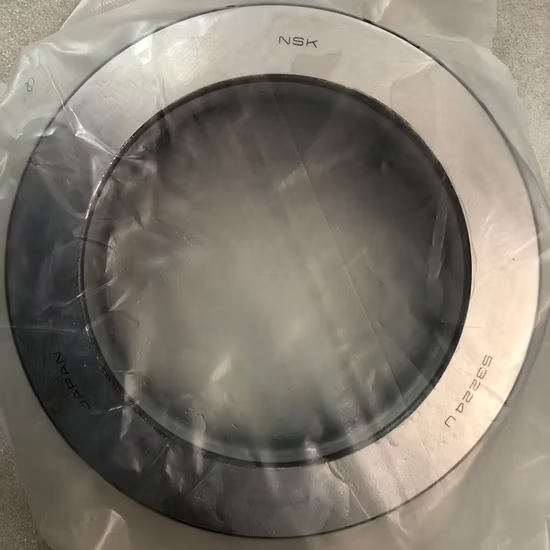
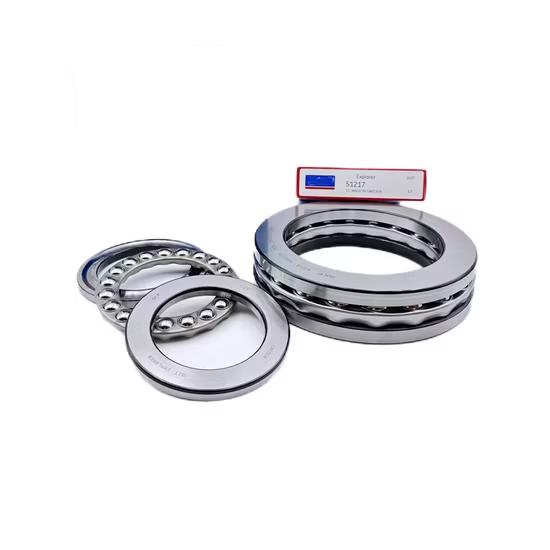
01
Consultation
Technical needs assessment

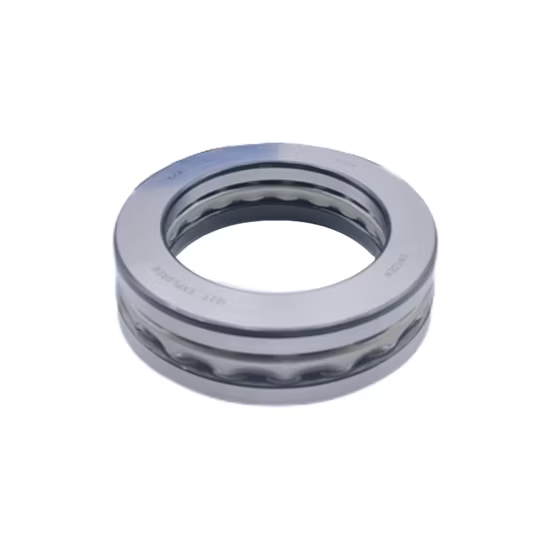
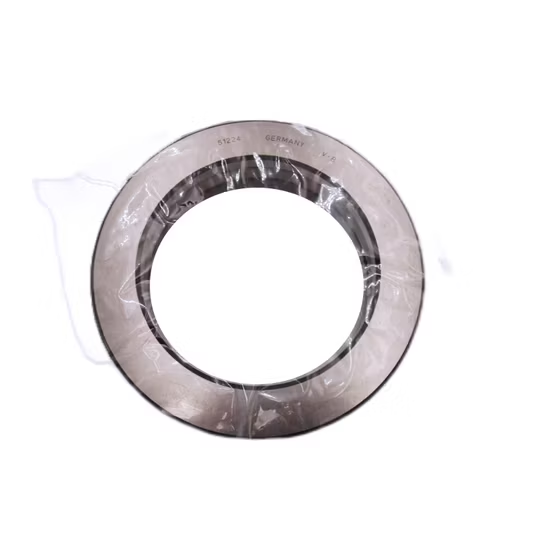
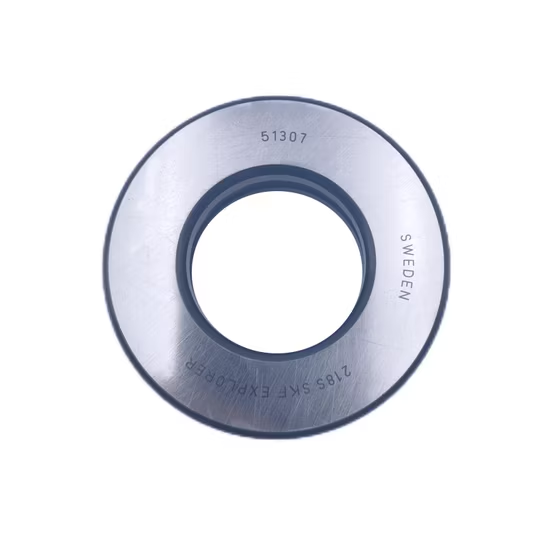

52210 52310 54310 54410 Double Direction Thrust Ball Bearings P6 — The 52 series provides standard height for vertical shafts, while the 54 series features a sphered seat washer to accommodate initial misalignment in crane hooks. P6 precision ensures tighter running accuracy for heavy axial loads in both directions.
Precision Cross-Reference Alignment — Matching base numbers alongside exact series heights and sphered seat configurations to prevent axial binding in vertical shafts.
| Parameter | Value |
|---|---|
| Designation | 52210 52310 54310 54410 |
| Bearing Type | Double Direction Thrust Ball Bearing |
| Precision Class | P6 |
| Origin | Germany / Japan / Sweden / Malaysia / China |
| Customization | Available |
| Industry | Typical Applications |
|---|---|
| Material Handling | Crane hook blocks and heavy-duty vertical lifting mechanisms |
| Fluid Management | Vertical water pump impeller shafts and axial locating positions |
| General Machinery | Vertical shaft assemblies requiring bidirectional axial restraint |
Thrust bearings manage pure axial loads; radial bearings cannot compensate for vertical shaft displacement.
Early in my career sourcing components in the Pearl River Delta, I watched a client's vertical pump tear itself apart because a supplier swapped a required 52210 52310 54310 54410 double direction thrust ball bearing with a standard deep groove alternative. The visual similarity of the outer dimensions masked the internal geometry differences, leading to immediate axial positioning failure under load . When procurement teams focus solely on the bore and outside diameter without verifying the bidirectional thrust raceway depth, the equipment faces catastrophic axial drift.
Selecting the correct 52210 52310 54310 54410 double direction thrust ball bearing requires validating that the bidirectional axial load capacity aligns with the equipment's vertical shaft dynamics. Our technical review process goes beyond basic part number matching to verify the exact series configuration, ensuring the thrust raceways can handle the specific lifting or pumping forces without structural deformation. This prevents the common field issue where undersized thrust washers crush under peak vertical loads.
Crane hooks and vertical pumps subject bearings to severe unidirectional and reversing axial shocks, demanding precise raceway alignment. In lifting applications, slight hook swing introduces angular misalignment that standard flat washers cannot accommodate, causing edge loading and rapid raceway spalling . Furthermore, vertical pump shafts often operate at moderate speeds where thermal expansion alters the internal axial clearance, meaning the initial mounting fit must account for operational temperature shifts to prevent the thrust collars from binding or running loose.
The core distinction within this designation range lies in the structural approach to misalignment and load distribution. The 52210 and 52310 belong to the 52 series, featuring standard height washers designed for rigid, perfectly aligned vertical housings where axial space is constrained. Conversely, the 54310 and 54410 represent the 54 series, which integrates sphered seat washers to accommodate initial static misalignment during crane hook articulation. The 54410 further steps up in cross-sectional height compared to the 54310, providing a larger ball complement for heavier axial lifting duties. Selecting between these variants depends entirely on whether the housing can guarantee perfect perpendicularity to the shaft axis.
Installing a standard 52 series bearing into a housing that naturally flexes under heavy crane loads guarantees localized stress concentrations on the thrust washers. This edge loading accelerates fatigue spalling, resulting in unplanned downtime and potential load-drop hazards that void equipment warranties. Conversely, using a 54 series with sphered seats in a high-speed vertical pump where precise axial rigidity is mandatory introduces unwanted shaft float, degrading impeller clearances and pump efficiency . These misapplications rarely fail quietly; they typically result in catastrophic shaft displacement and secondary damage to surrounding seals and housings.
Counterfeit thrust bearings often feature soft inner rings that deform under heavy axial loads, a flaw hidden beneath cloned QR codes that pass casual visual checks. We eliminate this risk by supplying fully traceable units where every batch is verifiable through official brand applications. When cross-referencing OEM requirements, our engineering team aligns the base designation with the exact series height and seat profile, ensuring you receive the precise structural geometry your vertical shaft demands. This rigorous verification prevents the dangerous assumption that any double-direction thrust bearing with the correct bore will safely support a suspended crane load.
To ensure the selected thrust geometry matches your equipment, provide the maximum bidirectional axial loads, operational shaft speeds, and expected thermal gradients. For crane hook replacements, sharing the OEM equipment number allows our team to verify whether the original design specified the rigid 52 series or the self-aligning 54 series. Supplying housing perpendicularity tolerances helps us confirm if sphered seat washers are necessary to prevent edge loading during heavy lifting operations.
Q: What is the difference between 52 series and 54 series double direction thrust ball bearings?
A: The 52 series features standard flat washers for rigid, perfectly aligned housings, while the 54 series incorporates sphered seat washers to accommodate static misalignment. Choosing the wrong series leads to either edge loading in flexing crane structures or excessive shaft float in precision vertical pumps.
Q: How to verify the authenticity of NSK, NTN, or Koyo thrust bearings using official apps?
A: Genuine bearings feature specific batch markings and scannable QR codes that link directly to the manufacturer's secure database. We provide units that pass these official app verifications, protecting your lifting equipment from counterfeit rings that suffer from soft metallurgy and premature axial deformation.
Q: Why is P6 precision critical for vertical water pump and crane hook applications?
A: P6 precision ensures tighter dimensional and running accuracy, which minimizes axial vibration and ensures uniform load distribution across all rolling elements. In vertical pumps, this maintains strict impeller clearances, while in crane hooks, it prevents localized stress concentrations that cause early raceway spalling.
Q: What are the common failure modes of thrust ball bearings under heavy axial loads?
A: Common failures include raceway spalling from edge loading due to misalignment, cage deformation from shock loads, and false brinelling during equipment vibration. Proper selection between rigid and self-aligning series, combined with correct axial preload, mitigates these failure modes per ISO 15243 guidelines.
Q: How to ensure correct cross-referencing when replacing OEM thrust bearings across different brands?
A: Accurate cross-referencing requires matching not just the base bore and diameter, but also the specific series height and seat profile. We verify these structural details across brands to ensure the replacement provides the exact axial rigidity or misalignment tolerance required by your vertical machinery.
Our 5-step process ensures every order is engineered, validated, and supported for optimal performance.
Technical needs assessment
Custom specifications
Free samples for $50k+
Pre-shipment inspection
On-site & predictive
Our certified engineers respond within 24 hours with detailed technical specifications, pricing, and lead time information.