01
Consultation
Technical needs assessment



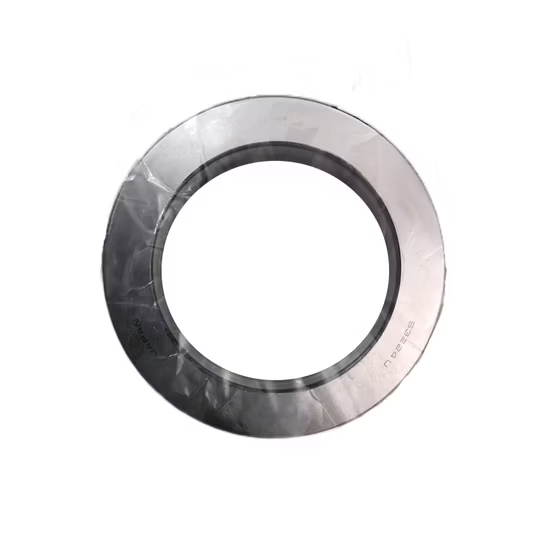
51116 Single Direction Thrust Ball Bearing — engineered to sustain heavy unidirectional axial loads in vertical shaft alignments without radial support.
Full Batch Traceability — Every 51116 single direction thrust ball bearing ships with manufacturer lot records and official QR verification to eliminate counterfeit risks in critical axial load applications.
| Parameter | Value |
|---|---|
| Designation | 51116 |
| Bearing Type | Thrust Ball Bearing |
| Direction | Single Direction |
| Cage Material | Pressed Steel (Standard) |
| Clearance Class | Normal (CN) |
| Precision Class | Standard (P0) |
| Cross Reference | 8116 |
| Origin | Germany / Japan / Sweden / Malaysia / China |
| Industry | Typical Applications |
|---|---|
| Material Handling | Crane hook thrust collars and heavy-duty hoist swivel mechanisms |
| Fluid Management | Vertical water pump shaft alignments and impeller thrust washers |
| General MRO | Industrial gearbox axial locating positions and rotary table bases |
Sourcing a genuine 51116 single direction thrust ball bearing requires more than matching the base number on a warehouse shelf.
When procurement teams overlook internal clearance and cage material specifications, the resulting thermal binding in vertical water pumps or crane hooks leads to catastrophic shaft damage. I have seen standard pressed steel cages deform under the sustained heavy axial loads and elevated temperatures typical in Middle Eastern industrial sites, turning a minor maintenance task into a complete gearbox rebuild . The hidden cost of an incorrectly specified thrust component always exceeds the price difference of a properly validated unit.
This component is engineered specifically to handle unidirectional axial forces while completely rejecting radial loads. In crane hook assemblies, the 51116 single direction thrust ball bearing absorbs the vertical tension of the lifted payload, transferring it smoothly to the structural housing. Our technical review process ensures the selected unit aligns perfectly with your specific load profile, preventing the premature raceway spalling that occurs when radial forces accidentally bypass the thrust collar alignment.
Vertical shaft orientations in water pumps introduce unique thermal and lubrication hurdles.* collar, demanding precise grease retention strategies or continuous oil bath circulation. Furthermore, the heat generated by sustained axial friction requires adequate internal clearance to accommodate thermal expansion of the shaft and housing. If the operating temperature pushes beyond the thermal limit of standard bearing steel, the normal clearance class will close up, leading to severe preload and eventual cage failure .
The base 51116 designation without additional suffixes indicates a standard single-direction thrust ball bearing featuring a pressed steel cage and normal internal clearance. The pressed steel cage provides a reliable balance of strength and low friction for moderate-speed applications, keeping the rolling elements evenly spaced under heavy axial compression. The normal clearance class is optimized for standard industrial ambient temperatures and typical interference fits. When applications involve higher operating temperatures or tighter housing tolerances, specifying a C3 clearance variant becomes essential to prevent the thermal binding that plagues standard configurations.
Installing a standard clearance thrust bearing in a high-temperature crane slewing ring guarantees unplanned downtime. As the shaft expands under load, the internal clearance vanishes, creating immense friction that rapidly degrades the raceway and shatters the cage. This catastrophic damage often scores the mating shaft and housing surfaces, voiding equipment warranties and forcing expensive machining repairs. Adhering to ISO 281 life calculation principles requires exact alignment between the bearing's internal geometry and the actual thermal environment of the application .
The market is flooded with counterfeit thrust bearings featuring soft inner rings that pass casual visual checks but fail under load. We supply the 51116 single direction thrust ball bearing exclusively through authorized distribution networks, ensuring every unit features a hardened, properly heat-treated raceway. Our cross-reference verification goes beyond the base number, confirming that the clearance class and cage material exactly match your OEM requirements. We also consolidate mixed-brand requirements, allowing you to source NSK, NTN, or Koyo variants in a single shipment without compromising traceability.
To ensure the selected thrust component survives your specific operating environment, please provide the exact axial load magnitude, rotational speed, and expected operating temperature range. If you are replacing an existing unit, sharing the OEM equipment number or the exact dimensions of the shaft and housing bore allows our engineering team to perform a precise cross-reference check. This technical review confirms whether the standard 51116 configuration is sufficient or if a modified clearance and cage material combination is required for your vertical pump or crane application.
Q: How do I verify the authenticity of the 51116 bearing using official brand apps?
A: Scan the QR code printed on the individual packaging using the specific manufacturer's official mobile application. This instantly retrieves the production batch, manufacturing date, and origin data directly from the brand's secure database, confirming the unit is not a refurbished or counterfeit product with cloned packaging.
Q: Why do cross-reference errors in thrust bearings cause thermal binding in vertical pumps?
A: Cross-referencing only the base number often ignores the required internal clearance class. If a standard clearance bearing is installed in a high-temperature pump shaft, thermal expansion eliminates the internal gap. This creates massive friction, leading to rapid cage failure and shaft seizure under continuous axial load.
Q: What are the clearance differences between standard and C3 variants for the 51116?
A: The standard variant features normal internal clearance suited for typical ambient temperatures and standard fits. The C3 variant provides greater internal clearance, which is strictly necessary when the shaft operates at elevated temperatures or when heavy interference fits are used, preventing the clearance from closing up during operation.
Q: How should I select the correct cage material for high-temperature crane hook applications?
A: Standard pressed steel cages are suitable for moderate temperatures and speeds. However, if the crane hook operates in high-heat environments or experiences severe vibration, a machined brass cage variant is required. Brass offers superior thermal conductivity and structural stability, preventing cage deformation under sustained heavy axial loads.
Q: What documentation is provided for customs clearance and origin verification?
A: Every shipment includes a comprehensive documentation package featuring a Certificate of Conformity, detailed material test reports, and official country-of-origin certificates. These documents satisfy strict customs requirements and provide full traceability for quality assurance audits in regulated industrial sectors.
Our 5-step process ensures every order is engineered, validated, and supported for optimal performance.
Technical needs assessment
Custom specifications
Free samples for $50k+
Pre-shipment inspection
On-site & predictive
Our certified engineers respond within 24 hours with detailed technical specifications, pricing, and lead time information.