01
Consultation
Technical needs assessment


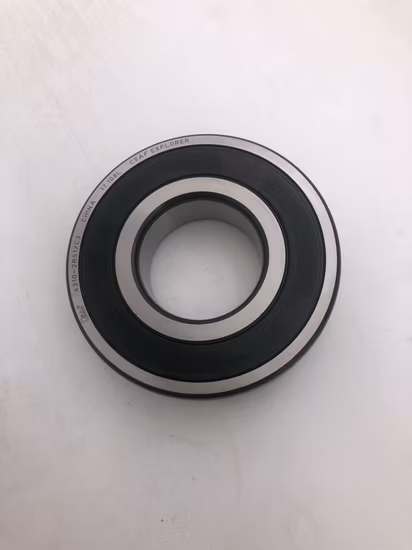
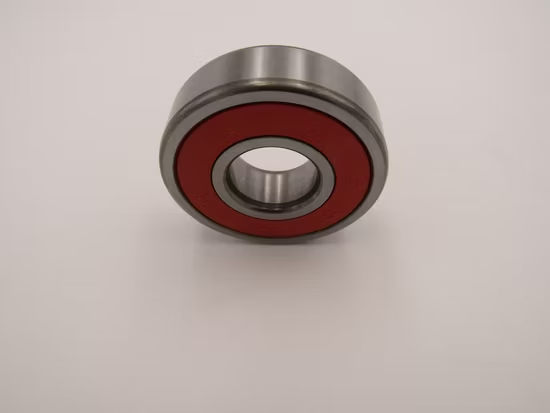
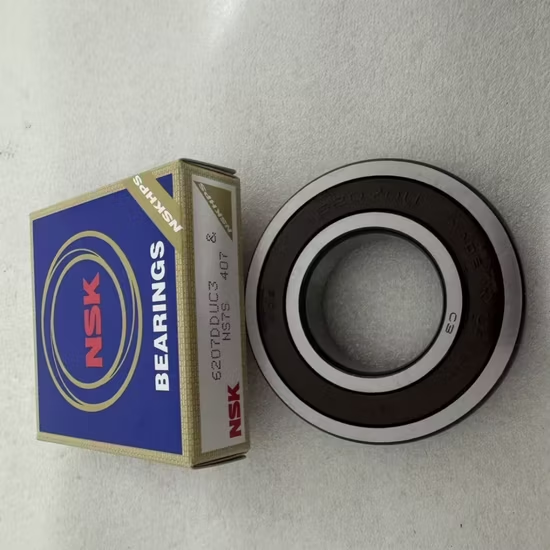
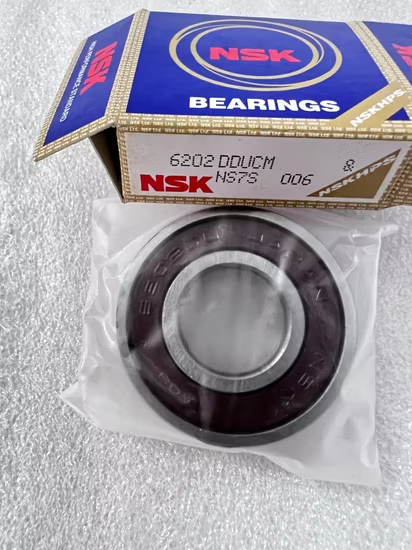

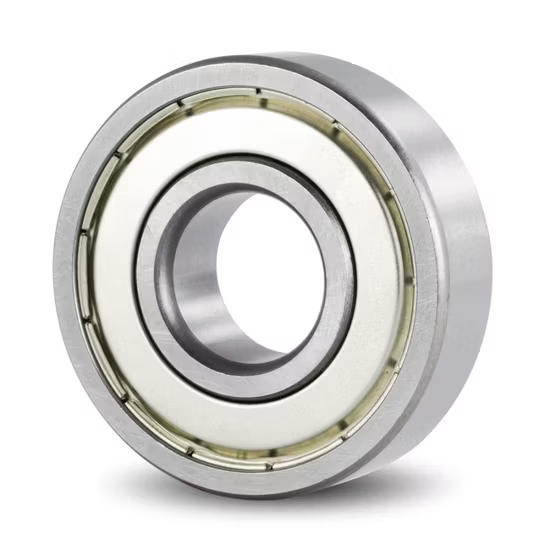
6603 2RS NSK Deep Groove Ball Bearing features double-sided rubber contact seals that ensure maintenance-free operation while effectively blocking dust and moisture ingress.
Batch Traceability Assurance — Every 6603 2RS NSK shipped includes verifiable lot documentation linked directly to the manufacturer's production records.
| Parameter | Value |
|---|---|
| Designation | 6603 2RS NSK |
| Bearing Type | Deep Groove Ball Bearing |
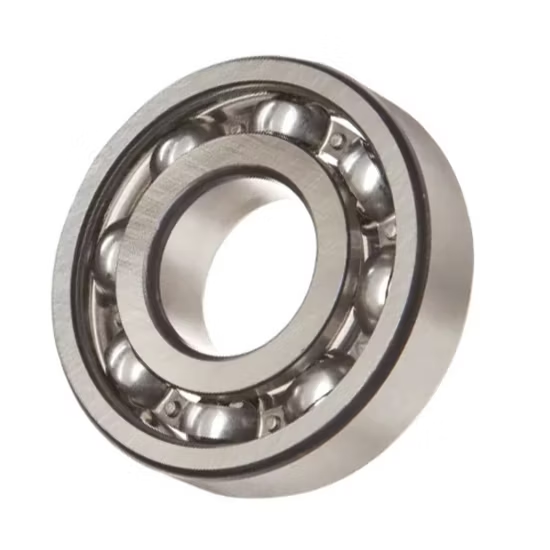
| Seal or Shield Type | Rubber Seals (2RS), Iron Seals, Open variants available |
| Noise and Vibration Level | Z1V1, Z2V2, Z3V3, Z4V4 |
| Origin | Japan, Germany, Sweden, Malaysia, China |
| HS Code | 848210 |
| Industry | Typical Applications |
|---|---|
| Electric Motors | Rotor shaft support, cooling fan drives, stator end-shield mounts |
| Industrial Gearboxes | Input/output shaft sealing, intermediate gear support |
| Pumps & Conveyors | Impeller shaft bearings, drive roller end journals |
| Household Appliances | Washing machine drum supports, compressor motor shafts |
Rubber contact seals are the only reliable barrier against microscopic abrasive particles in electric motor environments.
During years of tearing down failed electric motors in Dongguan repair workshops, a recurring pattern emerged: bearings that failed prematurely rarely suffered from steel fatigue. Instead, the root cause was almost always contamination. When maintenance crews substitute the specified 6603 2RS NSK with open or iron-shielded variants to save time or cost, microscopic dust bypasses the non-contact gaps. This abrasive ingress grinds away the raceway finish, leading to catastrophic seizure long before the calculated L10 life is reached .
Selecting the correct variant of the NSK 6603 2RS deep groove ball bearing requires looking beyond the basic dimension. In electric motor applications, the internal clearance and seal friction directly dictate the operating temperature. Our technical team reviews the specific motor thermal profile to ensure the selected rubber seal compound and internal geometry prevent excessive friction heat while maintaining an absolute barrier against workshop dust and moisture.
Electric motor shafts subject bearings to continuous high-speed rotation where radial loads are moderate but thermal management is critical. The friction generated by contact seals must be carefully balanced against the need for total contamination exclusion. Furthermore, the operating temperature rises significantly during continuous duty cycles, which alters the internal clearance. If the initial clearance is not matched to the thermal expansion of the motor housing and shaft, the bearing will experience thermal binding, drastically increasing vibration and accelerating lubricant degradation .
The "2RS" suffix on the 6603 2RS NSK designates double-sided rubber contact seals, which provide the highest level of protection against solid contaminants and moisture compared to non-contact iron shields. This sealing arrangement is essential for maintaining grease purity in dusty environments. Additionally, the availability of Z1V1 through Z4V4 noise and vibration grades allows precise matching to the acoustic requirements of the equipment. For high-efficiency electric motors and household appliances, specifying Z3V3 or Z4V4 ensures the bearing's internal geometries and surface finishes are optimized to minimize operational hum and vibration transmission to the motor housing.
Substituting a specified rubber-sealed bearing with an open or iron-shielded alternative inevitably leads to unplanned downtime and premature failure. When abrasive particles breach the bearing cavity, the resulting raceway damage often causes secondary catastrophic damage to the motor shaft and housing seals. This voids equipment warranties and forces complete motor rewinding or replacement. Adhering to the exact seal and clearance specifications outlined in ISO 281 is not merely a recommendation; it is a fundamental requirement to prevent these cascading mechanical failures .
Sourcing genuine components requires more than just matching the base number on a purchase order. We prevent cross-reference errors by strictly verifying that the replacement matches the original 2RS seal type and the exact noise/vibration grade required by the OEM. Every batch is secured through authorized channels, eliminating the risk of receiving counterfeit products with soft inner rings that pass casual visual inspections but fail under load. Our mixed-brand order consolidation allows procurement teams to fulfill complex MRO requirements without compromising on traceability or technical accuracy.
To facilitate an accurate technical review and cross-reference validation, please provide the specific radial and axial loads, operational speeds, and continuous duty temperature ranges of your application. Supplying the original OEM equipment number or the exact suffix requirements allows our engineering team to confirm the optimal noise and vibration grade. This data ensures the proposed solution aligns perfectly with your mechanical design parameters and maintenance intervals.
Q: How can we verify the authenticity of the received batch?
A: Each unit features a unique QR code scannable via the manufacturer's official mobile application. This digital verification confirms the production facility, manufacturing date, and original specification, effectively eliminating the risk of cloned packaging or counterfeit inner rings that plague the secondary market.
Q: Why is substituting the 2RS seal with an iron shield problematic?
A: Iron shields provide a non-contact gap that allows microscopic dust and moisture to infiltrate the bearing cavity. In electric motor applications, this contamination degrades the grease and scores the raceways, leading to premature failure and severe unplanned downtime compared to the absolute barrier provided by rubber contact seals.
Q: What dictates the choice between Z1V1 and Z4V4 vibration levels?
A: The selection depends on the acoustic and dynamic requirements of the driven equipment. Standard industrial gearboxes typically operate efficiently with Z1V1 or Z2V2, whereas high-efficiency electric motors, precision spindles, and household appliances demand the refined internal geometries and superior surface finishes inherent in Z3V3 or Z4V4 classifications.
Q: How do you ensure cross-reference accuracy beyond the base number?
A: Our technical team evaluates the complete designation, strictly aligning the seal configuration, internal clearance class, and cage material. This comprehensive verification prevents the installation of dimensionally identical but functionally incompatible variants that would otherwise suffer thermal binding or premature cage failure in the field.
Our 5-step process ensures every order is engineered, validated, and supported for optimal performance.
Technical needs assessment
Custom specifications
Free samples for $50k+
Pre-shipment inspection
On-site & predictive
Our certified engineers respond within 24 hours with detailed technical specifications, pricing, and lead time information.