01
Consultation
Technical needs assessment


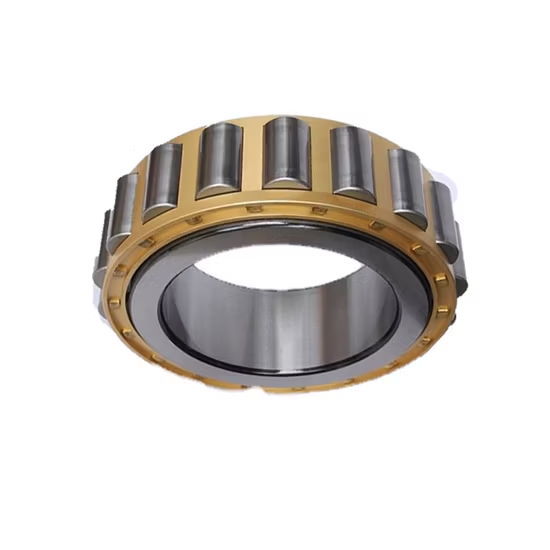


Nj2207/Nj2208/Nj2209/Nj2210 E M Cylindrical Roller Bearings — featuring optimized internal geometry and machined brass cages.
Multi-brand authorized coverage — Fulfill mixed SKF, FAG, and NSK cylindrical roller requirements through a single verified supply chain without juggling multiple vendors.
| Parameter | Value |
|---|---|
| Designation | Nj2207/Nj2208/Nj2209/Nj2210 E M |
| Bearing Type | Cylindrical Roller Bearing |
| Cage Material | Machined brass (M suffix) |
| Internal Design | Enhanced capacity (E suffix) |
| Separability | Separated |
| Origin | Germany / Japan / Sweden / Malaysia / China |
| HS Code | 8482500090 |
| Industry | Typical Applications |
|---|---|
| Heavy-duty gearboxes | Main shaft and intermediate shaft radial support in industrial reducers |
| Traction motors | Rotor shaft bearing positions in electric traction drive systems |
| Rolling mills | Work roll and backup roll neck positions in metal forming equipment |
| Machine tool spindles | High-rigidity radial support in precision machining centers |
Base number matches do not guarantee field survival when internal design and cage material suffixes are overlooked.
I once saw a production line in the Yangtze River Delta manufacturing zone halt entirely because a maintenance team replaced a brass-caged unit with a pressed steel alternative. The base number matched, but under high vibration, the wrong cage suffered early fracture. This exact scenario repeats constantly when procurement teams focus solely on the core designation. Sourcing the Nj2207 E M cylindrical roller bearing requires strict alignment of the enhanced internal geometry and the machined brass cage to prevent thermal binding and catastrophic cage failure .
Heavy-duty gearboxes and rolling mills generate intense radial forces and sustained vibration that quickly destroy inadequately specified components. The machined brass cage provides the structural rigidity needed to guide rollers accurately under these extreme conditions. By supplying authorized inventory with exact suffix matching, we ensure your equipment receives the precise internal geometry required to handle severe operational stress without premature degradation.
Radial loads in industrial reducers are rarely uniform, often introducing shock loads that test the fatigue limits of the rolling elements. High rotational speeds generate significant friction heat, making the enhanced roller-to-raceway contact profile critical for distributing stress evenly. Proper lubrication is equally vital; oil or grease must penetrate the machined brass cage pockets to prevent skidding during rapid acceleration. Furthermore, the separated design simplifies maintenance, allowing technicians to mount the inner ring onto the shaft independently before installing the outer ring assembly .
The M suffix designates a machined brass cage, which offers superior structural integrity and damping characteristics compared to pressed steel alternatives, making it indispensable for high-vibration applications. Meanwhile, the E suffix indicates an enhanced internal design with optimized roller profiles and increased load-carrying capacity. This specific combination ensures the bearing can withstand heavy radial loads while maintaining stability at elevated speeds. Selecting a standard internal design without the E optimization would noticeably reduce the dynamic load rating, while substituting a polyamide cage would risk thermal degradation in hot gearbox environments.
Installing a bearing where the base number matches but the cage material differs often leads to unplanned downtime and catastrophic damage to the shaft and housing. Under ISO 281 life calculation frameworks, an incorrect internal design drastically reduces the calculated fatigue life, voiding equipment warranties and forcing emergency shutdowns. The resulting secondary damage to gearbox gears and seals multiplies the repair costs far beyond the price of the initial component .
We maintain authorized distribution across all major international brands, allowing you to consolidate mixed-brand orders into a single, traceable shipment. Our technical team reviews every cross-reference request to ensure the clearance, cage material, and internal design suffixes align perfectly with your OEM specifications. We specifically flag the E and M suffix requirements for this series to prevent the dangerous substitution of standard internal geometries. Every batch is backed by manufacturer traceability, eliminating the risk of counterfeit rings with soft inner cores that pass casual visual inspections.
To ensure precise application matching, please share your radial and axial load parameters, operational speeds, and housing temperature ranges. Our engineering team will use this data to verify the L10 life calculation and confirm the suitability of the enhanced internal design. If you are replacing an existing component, providing the OEM equipment number allows us to perform a comprehensive cross-reference check against original specifications.
Q: How can I verify the authenticity of the brass cage and internal design?
A: Authenticity is confirmed by scanning the QR code on the packaging using the manufacturer's official mobile app. This digital verification links the physical unit to its original production batch, confirming the presence of the machined brass cage and enhanced internal geometry while exposing cloned codes used on counterfeit products.
Q: Why is it dangerous to ignore the E and M suffixes during cross-referencing?
A: Ignoring these suffixes means you might receive a bearing with standard load capacity or a pressed steel cage. In heavy-duty gearboxes, this mismatch causes inadequate load distribution and cage fracture under high vibration, leading to catastrophic equipment failure despite the base designation matching perfectly.
Q: What are the selection boundaries between machined brass and pressed steel cages?
A: Machined brass cages are mandatory for high-speed, high-vibration, or heavy-load applications due to their superior rigidity and damping properties. Pressed steel cages are generally limited to lighter loads and lower speeds where cost reduction is prioritized over extreme operational stability and structural resilience.
Q: What mounting practices are recommended for these separated cylindrical roller bearings?
A: The separated design allows the inner ring to be mounted independently. We recommend using controlled induction heating for the inner ring to achieve the necessary expansion without overheating the brass cage. The outer ring with the roller and cage assembly should then be carefully aligned and slid into position to prevent roller skidding.
Q: How do I determine the correct lubrication for heavy-duty gearbox applications?
A: Lubrication must match the operating temperature and speed. For machined brass cages in industrial reducers, high-quality gear oil or specialized grease with adequate EP additives is required. Relubrication intervals should be calculated based on the specific thermal load and contamination risk of your gearbox environment.
Our 5-step process ensures every order is engineered, validated, and supported for optimal performance.
Technical needs assessment
Custom specifications
Free samples for $50k+
Pre-shipment inspection
On-site & predictive
Our certified engineers respond within 24 hours with detailed technical specifications, pricing, and lead time information.


