01
Consultation
Technical needs assessment

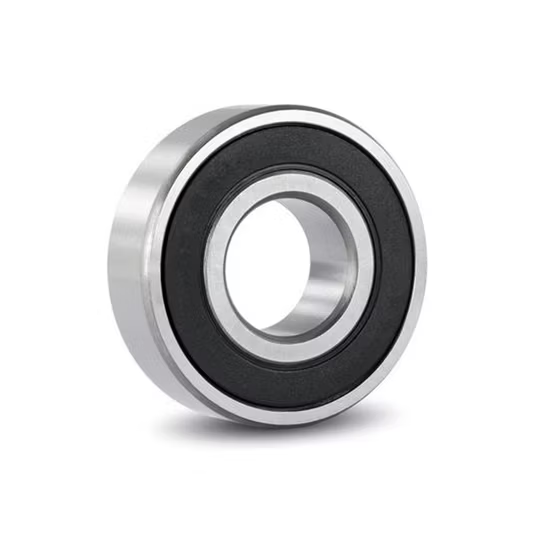


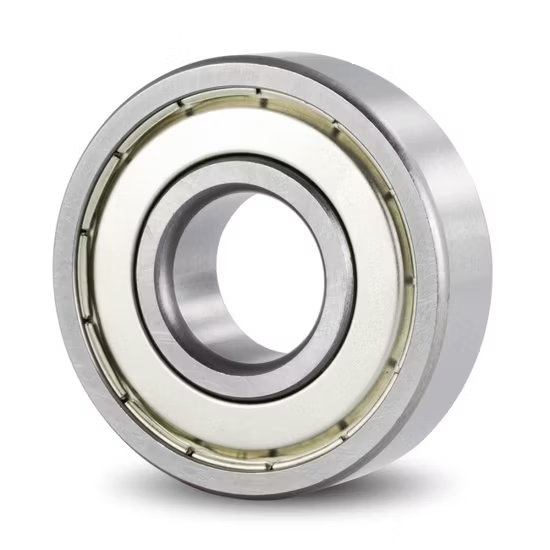
6004 2RS Deep Groove Ball Bearing — featuring double rubber seals for maintenance-free operation and optimal contamination protection in electric motors and gearboxes.
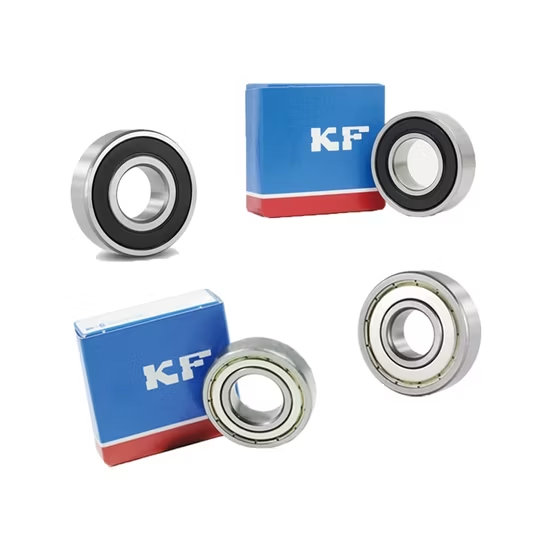
Multi-brand authorized coverage — Consolidate your SKF, FAG, and NSK requirements for this specific deep groove ball bearing into a single, fully documented shipment without coordinating multiple vendors.
| Parameter | Value |
|---|---|
| Designation | 6004 2RS |
| Product Type | Deep Groove Ball Bearing |
| Bearing Style | Open, Rubber Seals, Iron Seals |
| Seal or Shield Type | Double rubber seals (2RS) / Iron seals (Zz) |
| Noise and Vibration Level | Z1V1, Z2V2, Z3V3, Z4V4 |
| HS Code | 848210 |
| Origin | Germany / Japan / Sweden / Malaysia / China |
| Industry | Typical Applications |
|---|---|
| Electric Motors | Rotor shaft support in industrial AC/DC motors and servo drives |
| Industrial Gearboxes | High-speed input shafts and intermediate gear reduction stages |
| Pumps & Conveyors | Centrifugal pump impeller shafts and conveyor drive pulley bearings |
| General MRO | Replacement spares for household appliances and automated assembly lines |
A basic designation match is never enough when thermal expansion and moisture collide.
Years ago in Nigeria, I dismantled a batch of seemingly perfect 6004 2RS deep groove ball bearings from overheating electric motors. The inner rings were severely scored, and the cages had failed completely. The root cause was not counterfeit steel, but a standard clearance class installed in an environment that demanded extra internal clearance to accommodate thermal expansion and high ambient humidity. Sourcing the correct 6004 2RS deep groove ball bearing requires looking past the base number to verify the exact internal geometry and seal friction characteristics . When procurement teams rely solely on the base designation, they risk deploying components that bind thermally under load, leading to catastrophic motor seizures and unplanned production halts.
Selecting the right seal type dictates the operational lifespan of the component in contaminated or high-speed environments. The 6004 2RS deep groove ball bearing utilizes double rubber seals that provide excellent protection against moisture and dust ingress, making it ideal for agricultural machinery or outdoor conveyor systems. However, for high-speed electric motor applications where seal friction generates excess heat, verifying the exact rubber compound and lip design is critical to prevent premature grease degradation. Our technical review ensures the seal configuration aligns perfectly with your specific RPM and environmental contamination levels.
Electric motors and industrial gearboxes subject bearings to continuous radial loads combined with rapid temperature fluctuations. In high-heat environments, standard internal clearances can disappear as the inner ring expands against the shaft, creating destructive preload. Proper lubrication is equally vital; while rubber-sealed variants are typically pre-greased and maintenance-free, the initial grease fill must match the operating temperature range to avoid churning losses or starvation. Furthermore, minimizing vibration transmission in precision motor applications requires strict adherence to specified noise and vibration classes, ensuring smooth operation across the entire speed spectrum .
The distinction between sealing mechanisms fundamentally alters the thermal and contamination performance of the component. The 2RS suffix indicates double rubber contact seals, which offer superior exclusion of liquid contaminants and fine particulates but introduce slight frictional torque. Conversely, the Zz suffix denotes iron shields that provide a non-contact labyrinth seal, minimizing friction and allowing for higher limiting speeds, though with reduced protection against liquid ingress. Additionally, verifying the noise and vibration grades—from Z1V1 for standard industrial use up to Z4V4 for ultra-quiet precision motors—ensures the internal raceway finishing meets the acoustic requirements of the end equipment.
Failing to validate the internal clearance and precision class before installation inevitably leads to premature failure and voided equipment warranties. When a standard clearance bearing is pressed onto a tight shaft tolerance in a hot running motor, the resulting loss of internal play causes excessive rolling friction and rapid cage deterioration. According to established fatigue life calculation frameworks, operating under unintended preload drastically reduces the theoretical L10 life of the component . This silent degradation manifests as increased power consumption, elevated motor housing temperatures, and ultimately, catastrophic shaft seizures that demand expensive emergency maintenance.
Sourcing authentic components requires more than just matching a part number on a purchase order. We provide authorized distribution across all major international brands, allowing you to fulfill mixed-brand MRO requirements in a single consolidated order. Our cross-reference validation goes beyond basic interchange lists; we verify that the replacement matches the original equipment manufacturer's required clearance, cage material, and precision suffixes. Every batch is backed by strict traceability to the manufacturer's production facilities, ensuring you receive genuine products rather than visually identical clones with soft inner rings. Furthermore, our application-based selection review evaluates your specific load, speed, and temperature parameters to prevent the costly mismatch of seal types or vibration classes.
To ensure precise cross-referencing and application suitability, please provide your specific operating parameters, including continuous radial and axial loads, maximum operating RPM, and ambient temperature ranges. Sharing the original equipment manufacturer's part number or motor frame designation allows our engineering team to validate the exact clearance class and noise等级 required for your application. If you are replacing a failed unit, detailing the observed failure mode—such as inner ring scoring or cage discoloration—helps us recommend the optimal seal and grease configuration to prevent recurrence.
Q: How can I verify the authenticity of the bearings using official brand apps?
A: Every genuine unit we supply features a unique, factory-applied QR code linked directly to the manufacturer's secure database. By scanning this code with the official brand application on your mobile device, you can instantly verify the production batch, origin, and specific suffix configuration, effectively eliminating the risk of installing counterfeit components with cloned packaging.
Q: What cross-reference checks are critical beyond matching the base designation?
A: Matching the base number is only the first step. A reliable cross-reference must also align the internal clearance class, cage material, and specific seal friction characteristics. Installing a standard clearance unit where an expanded clearance was specified for thermal growth will cause immediate binding, which is why we validate every suffix against your application parameters.
Q: How do I choose between rubber seals and iron shields for my electric motors?
A: The choice depends on your operating environment and speed requirements. Double rubber seals offer maximum protection against moisture and dust but generate slight frictional heat. Iron shields provide non-contact sealing for higher-speed applications with less heat generation but offer lower protection against liquid contaminants. We review your specific RPM and contamination exposure to recommend the optimal configuration.
Q: Why are specific noise and vibration classes required for certain motor applications?
A: High-precision electric motors and household appliances demand ultra-smooth operation to minimize acoustic emissions and vibration transmission. Grades ranging from standard Z1V1 up to ultra-quiet Z4V4 dictate the strictness of the raceway finishing and ball sorting processes. Selecting the correct class ensures the component meets the acoustic and dynamic balance requirements of the final assembled equipment.
Our 5-step process ensures every order is engineered, validated, and supported for optimal performance.
Technical needs assessment
Custom specifications
Free samples for $50k+
Pre-shipment inspection
On-site & predictive
Our certified engineers respond within 24 hours with detailed technical specifications, pricing, and lead time information.