01
Consultation
Technical needs assessment



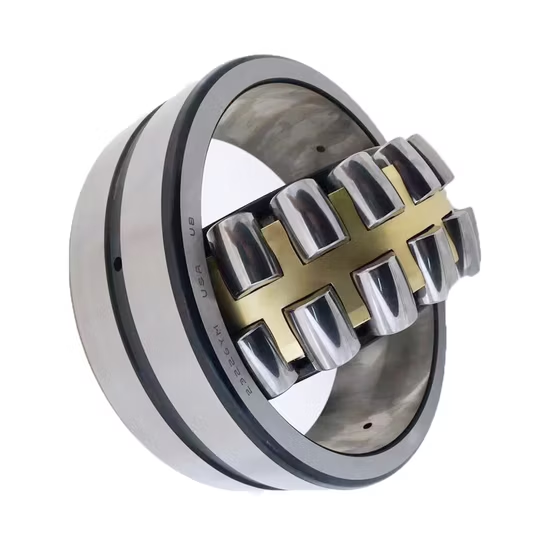
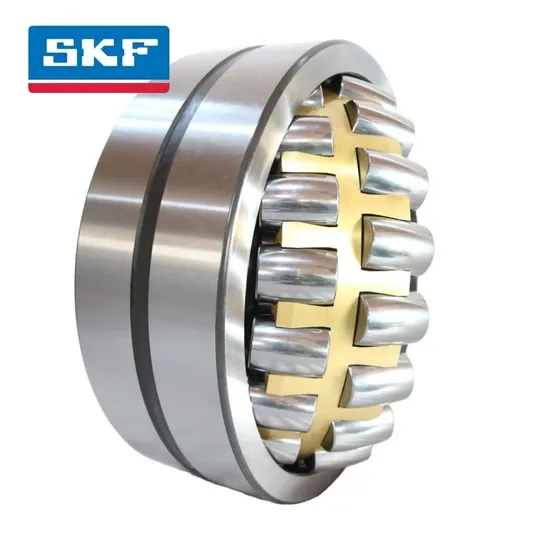
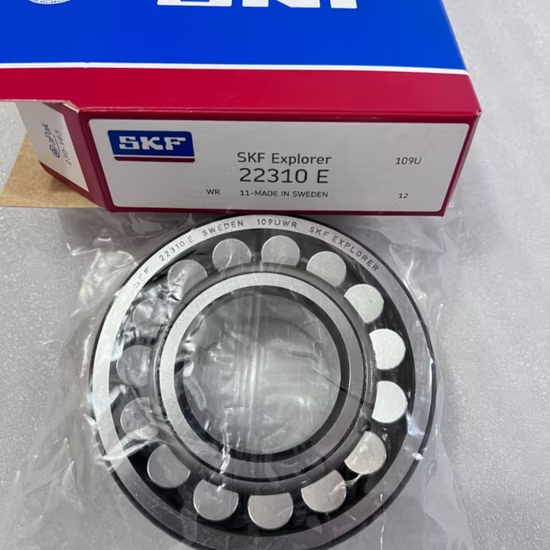
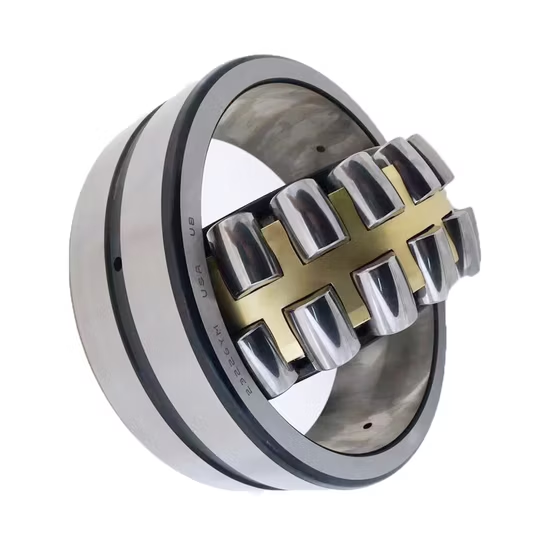
21310 Spherical Roller Bearing P4 — Single row chrome steel construction delivers reliable load capacity for heavy machinery.
Full Brand Authorization — Sourcing mixed OEM requirements in a single shipment eliminates multi-vendor coordination delays for your heavy machinery maintenance schedules.
| Parameter | Value |
|---|---|
| Designation | 21310 |
| Bearing Type | Spherical Roller Bearing |
| Number of Rows | Single Row |
| Material | Chrome Steel |
| Precision Class | P4 |
| Origin | Germany / Japan / Sweden / Malaysia / China |
| Industry | Typical Applications |
|---|---|
| Mining & Quarrying | Vibrating screen exciter mechanisms, primary jaw crusher eccentric shafts |
| Steel & Metallurgy | Continuous caster roll segments, rolling mill guide roll assemblies |
| Heavy Machinery | Hydraulic press main cylinders, heavy-duty material handling conveyors |
Standard tolerances cause microscopic misalignments that destroy heavy-duty equipment under continuous vibration.
When upgrading critical machinery, procurement teams often approve base designations while overlooking precision suffixes. Installing a standard P0 grade where the engineering blueprint demands tighter running accuracy leads to excessive vibration, accelerated cage wear, and eventual thermal binding. I have seen entire crusher shafts scrapped in the Middle East because a replacement part lacked the necessary dimensional stability . The 21310 spherical roller bearing resolves this by delivering P4 precision, ensuring the tight geometric tolerances required to keep heavy, dynamic loads perfectly centered.
Vibrating screens and crushers subject components to relentless shock loads and circular oscillations. A standard bearing might survive static loads, but dynamic vibration exposes every microscopic deviation in the raceway geometry. This 21310 spherical roller bearing provides the P4 precision necessary to maintain uniform load distribution across the single row of rollers, preventing localized stress spikes that typically initiate spalling and premature fatigue in severe heavy machinery environments.
Heavy machinery generates substantial internal friction heat, which drastically reduces operational clearance if not properly managed. Beyond thermal expansion, the ingress of abrasive dust from mining or milling operations compromises lubrication films. While the P4 precision ensures smooth rotation, the actual field survival depends heavily on matching the correct internal clearance and seal configuration to the specific ambient temperature and contamination levels of your facility .
The designation 21310 spherical roller bearing specifically identifies a single row design, which is engineered to accommodate moderate radial loads while allowing for slight angular misalignments. The P4 precision class dictates that both the bore and outside diameter, along with the running accuracy, are held to much tighter limits than standard industrial grades. This exacting dimensional control is vital for equipment where shaft deflection must be minimized to protect adjacent seals and gears from catastrophic misalignment damage.
Substituting a standard precision bearing in a high-speed or high-vibration application triggers a cascade of mechanical failures. The initial symptom is usually elevated operating temperature, followed by abnormal acoustic emissions and increased power consumption. Eventually, the cage fractures or the inner ring seizes, resulting in unplanned downtime that halts entire production lines. According to ISO 15243 frameworks, these failures are classified as surface fatigue and thermal damage, directly stemming from improper tolerance selection rather than material defects .
We do not merely process part numbers; we interrogate the application. Our authorized distribution network ensures that every 21310 spherical roller bearing is sourced directly from manufacturer production facilities, eliminating the risk of counterfeit rings with soft inner cores. We cross-reference not just the base number, but verify that the P4 precision and single row configuration align perfectly with your OEM specifications. Our technical team reviews your load and speed parameters to confirm that the selected bearing will withstand the specific thermal and mechanical stresses of your heavy machinery.
To ensure the selected bearing perfectly matches your operational demands, please provide the specific radial and axial loads, operating speeds, and ambient temperatures. If you are replacing an existing component, sharing the exact OEM equipment number allows our engineering team to perform a comprehensive cross-reference check. This data enables us to validate the L10 life calculation and confirm that the internal geometry is optimized for your specific heavy machinery application.
Q: How do I verify the authenticity of the 21310 bearing using official brand apps?
A: Every genuine bearing we supply includes a unique traceability code on the packaging or the ring itself. By scanning this code with the manufacturer's official smartphone application, you can instantly verify the production batch, origin, and confirm that the physical item matches the digital factory records, effectively eliminating the risk of installing counterfeit parts.
Q: What are the critical cross-reference checks beyond the base designation?
A: A base number match is insufficient for heavy machinery. We verify the precision class, internal clearance, and cage material to ensure they align with your OEM requirements. Overlooking these suffixes often leads to thermal binding or cage failure in the field, which is why our technical review process strictly validates every dimensional and operational parameter.
Q: How does P4 precision compare to standard P0 in heavy machinery applications?
A: P4 precision offers significantly tighter dimensional and running accuracy than standard P0 grades. In vibrating screens or crushers, this reduces microscopic misalignments and uneven load distribution. The result is noticeably lower vibration, reduced operating temperatures, and an extended operational lifespan under severe dynamic loading conditions.
Q: How to select the correct clearance class for high-temperature heavy machinery environments?
A: High temperatures cause the inner ring to expand more than the outer ring, reducing internal clearance. If your machinery operates at elevated temperatures, a standard clearance might lead to thermal binding. You must evaluate the temperature differential and shaft interference fit to determine if an increased clearance class is required to maintain optimal rolling conditions.
Our 5-step process ensures every order is engineered, validated, and supported for optimal performance.
Technical needs assessment
Custom specifications
Free samples for $50k+
Pre-shipment inspection
On-site & predictive
Our certified engineers respond within 24 hours with detailed technical specifications, pricing, and lead time information.