01
Consultation
Technical needs assessment

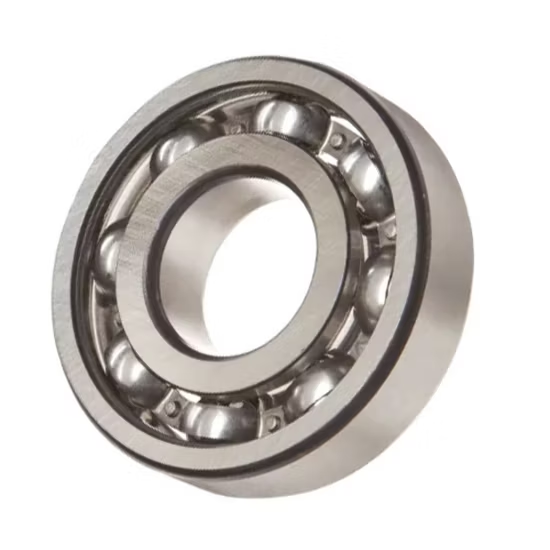


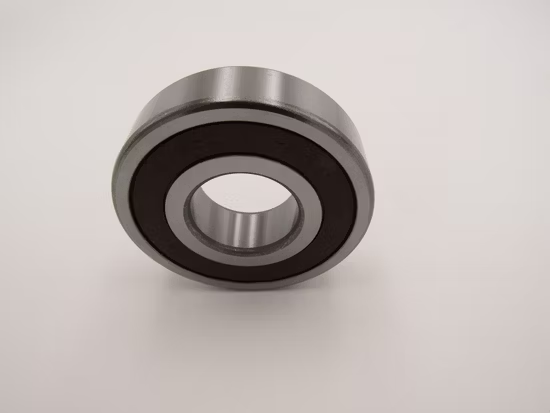
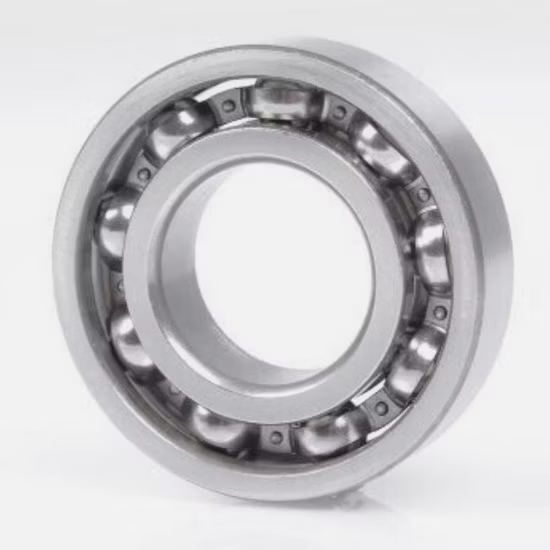
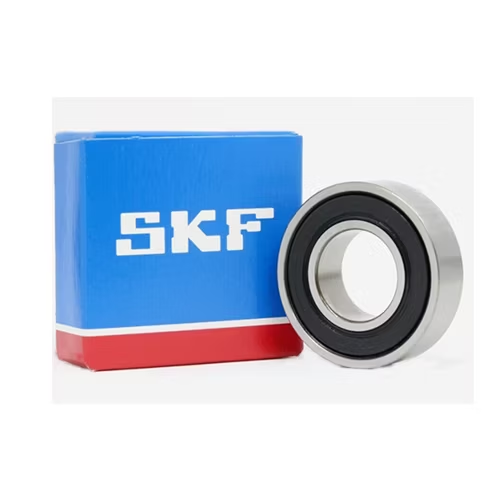
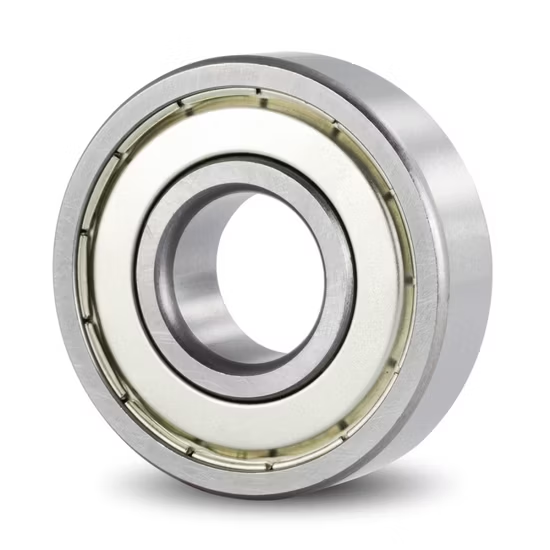
Deep Groove Ball Bearing 6000 6200 6300 Series For Auto Parts — multi-origin sourcing with flexible sealing configurations for automotive environments.
Instant QR Authenticity — Every batch is verifiable through official brand applications to guarantee genuine origin.
| Parameter | Value |
|---|---|
| Product Type | Deep Groove Ball Bearing |
| Bearing Style Options | Open, Rubber Seals, Iron Seals |
| Vibration and Noise Grading | Z1V1, Z2V2, Z3V3, Z4V4 |
| Origin Options | Germany, Japan, Sweden, Malaysia, China |
| HS Code | 848210 |
| Industry | Typical Applications |
|---|---|
| Automotive Repair | Alternator pulleys, idler tensioners, transmission shafts |
| Electric Motors | Cooling fan assemblies, drive motor rotor supports |
| Industrial Gearboxes | High-speed input shafts, intermediate gear supports |
| Material Handling | Conveyor roller ends, automated guided vehicle drive wheels |
Matching the exact seal and clearance prevents catastrophic thermal binding in high-RPM automotive environments.
Procurement teams often focus solely on the base dimension, assuming any replacement will function identically. This oversight leads to severe field failures when a standard clearance is installed in an application demanding thermal expansion room, or when an open bearing is placed in a contaminated gearbox. Rolling bearing failure mode classification per ISO 15243 frequently points to these exact specification mismatches rather than inherent material defects . An experienced auto parts deep groove ball bearing supplier bridges this gap by verifying the complete suffix and internal design before shipment.
Selecting the correct configuration requires looking beyond basic dimensions to understand the specific operating environment. As an auto parts deep groove ball bearing supplier, we review the target application's exposure to moisture, dust, and temperature fluctuations to recommend the appropriate sealing and internal clearance. This proactive alignment ensures the component handles the specific radial loads and rotational speeds of automotive assemblies without premature degradation.
Automotive and heavy vehicle environments subject components to rapid temperature spikes and significant particulate intrusion. When operating temperatures rise, internal clearance diminishes; if the initial clearance was not specified to accommodate this thermal expansion, the rolling elements will bind and generate excessive friction heat. Furthermore, sealing selection involves a direct trade-off between friction and protection. Rubber seals provide excellent contamination exclusion but generate more friction heat, while iron shields offer lower friction but less protection against fine dust or liquid ingress. Proper lubrication selection and seal matching are critical to avoid early seizure .
The Z1V1 through Z4V4 grading system categorizes the vibration and acoustic performance of the component, which is crucial for noise-sensitive automotive cabins and precision electric motors. Higher grades indicate tighter manufacturing tolerances and smoother raceway finishes, directly translating to quieter operation at high speeds. Seal configurations must be matched to the maintenance strategy of the equipment. Open designs require external lubrication systems and clean environments, while rubber-sealed variants are pre-lubricated and sealed for life, making them ideal for inaccessible automotive tensioners or alternators where relubrication is impossible.
Ignoring critical suffix details inevitably results in unplanned downtime and secondary damage to surrounding automotive components. When a standard clearance is forced into a high-temperature transmission application, the resulting thermal binding can destroy the housing and warp the shaft. ISO 281 life calculations become entirely invalid if the actual operating clearance deviates from the design assumption due to incorrect specification matching . These cascading failures void warranties and turn a simple replacement task into a major assembly rebuild.
Our procurement model eliminates the guesswork often associated with mixed-brand requirements by providing comprehensive coverage across major global manufacturers. We specifically verify that cross-referenced alternatives match not just the base number, but the exact seal type and vibration grade required by the OEM equipment. Every shipment includes batch traceability, ensuring that the components installed in critical automotive assemblies can be tracked back to the manufacturer's production facilities. This rigorous verification prevents the installation of counterfeit parts with soft inner rings that fail under high-speed rotational stress.
To ensure optimal performance and longevity, please provide the specific equipment model, available installation space, and detailed operating parameters including radial load, axial load, and maximum rotational speed. Our engineering team will utilize this data to determine the precise internal clearance and seal configuration required for your automotive application. Specifying the environmental conditions, such as exposure to road salt or extreme heat, allows us to recommend the most suitable material and sealing options.
Q: How do I determine the exact seal type needed for my automotive equipment?
A: The choice depends on the operating environment and maintenance access. Rubber seals offer maximum protection against dust and moisture for sealed-for-life applications like alternators, while iron shields provide lower friction for high-speed, cleaner environments. Provide your specific contamination and speed parameters, and our engineering team will recommend the optimal configuration.
Q: What causes premature failure in deep groove ball bearings within auto parts?
A: Premature failure often stems from cross-reference errors where the base dimension matches, but the internal clearance or seal type is incorrect. Installing a standard clearance in a high-temperature application causes thermal binding, while using an open bearing in a dirty environment leads to abrasive wear. Exact specification matching prevents these issues.
Q: How do the Z1V1 to Z4V4 vibration grades affect automotive applications?
A: These grades indicate the acoustic and vibration performance of the component. Higher grades, such as Z3V3 or Z4V4, feature tighter tolerances and smoother raceways, resulting in significantly quieter operation. This is critical for automotive cabin comfort and precision electric motors where noise and vibration must be strictly minimized.
Q: How can I source authentic replacements when original OEM parts are discontinued?
A: We provide authorized cross-referencing across major international brands, ensuring the replacement matches the original equipment's exact clearance, cage material, and seal specifications. Every component is supplied with batch traceability and official QR verification, guaranteeing authenticity and performance equivalence even when the original part number is obsolete.
Our 5-step process ensures every order is engineered, validated, and supported for optimal performance.
Technical needs assessment
Custom specifications
Free samples for $50k+
Pre-shipment inspection
On-site & predictive
Our certified engineers respond within 24 hours with detailed technical specifications, pricing, and lead time information.