01
Consultation
Technical needs assessment


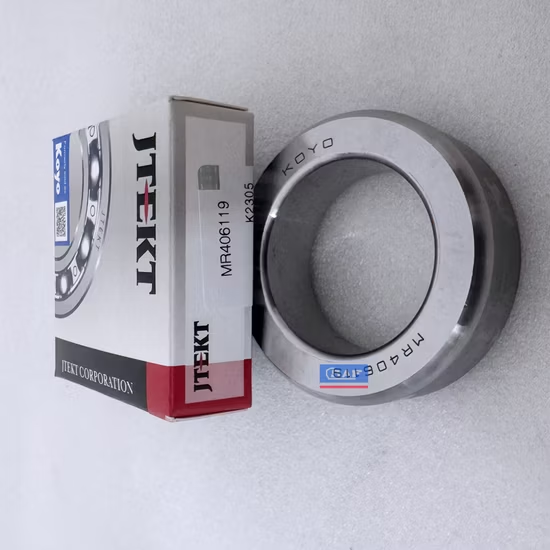
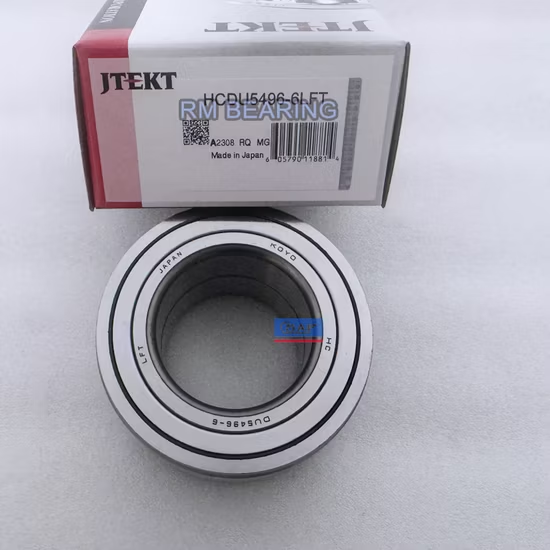
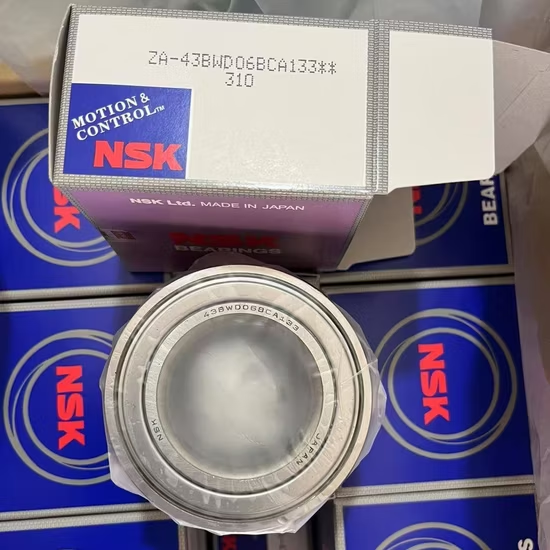
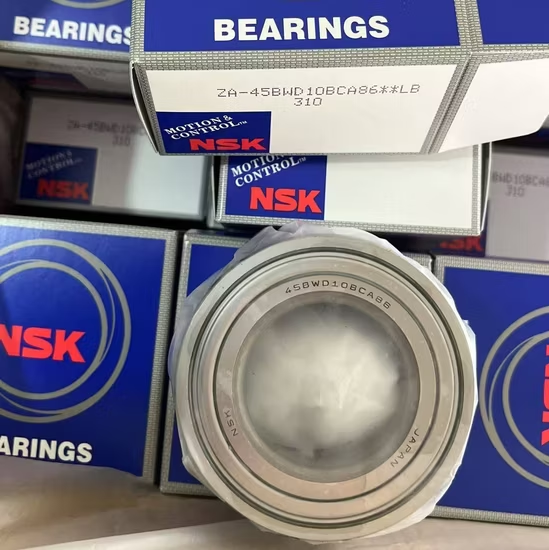
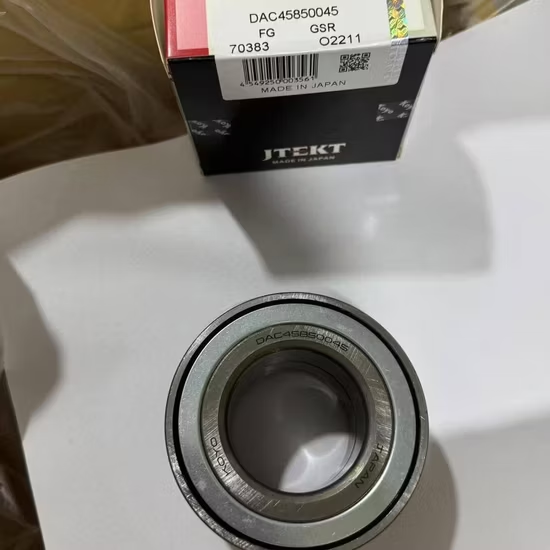
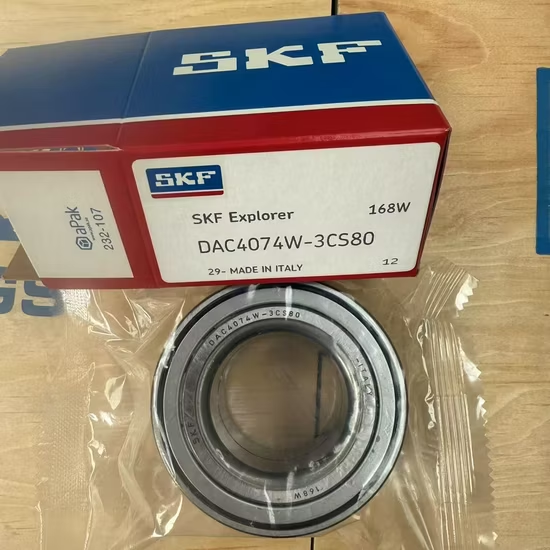
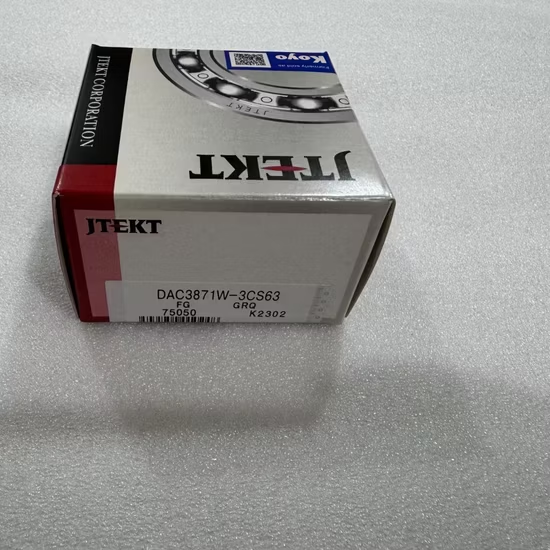
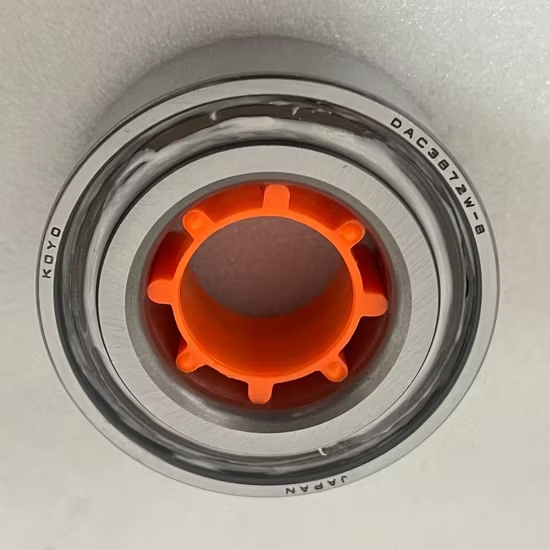
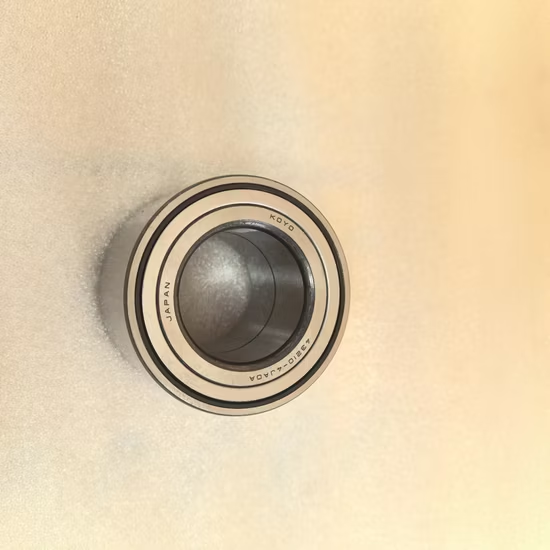
Automotive Front Wheel Hub Bearing Assembly — double-row chrome steel construction with integrated ABS compatibility and ISO9001 certification for reliable vehicle hub performance.
Precise OEM Cross-Referencing — We align internal clearances, ABS tone ring configurations, and seal materials rather than just matching base part numbers like 40202-Jg000.
| Parameter | Value |
|---|---|
| Product Type | Wheel Hub Bearing Assembly |
| Material | Chrome steel construction, with stainless steel variants available for specific environments |
| Precision Class | P4 |
| Clearance Class | C0 (Standard) |
| ABS Sensor Compatibility | Integrated ABS tone ring |
| Number of Rows | Double Row |
| Seal Type Options | Nylon, brass, or iron seals |
| Certification | ISO9001 |
| Origin | Shanghai |
| Industry | Typical Applications |
|---|---|
| Automotive Repair | Front wheel hub replacements requiring integrated ABS compatibility |
| Light Truck Maintenance | Steering axle hub assemblies subjected to combined radial and axial loads |
| Heavy Vehicle Repair | Commercial fleet MRO addressing premature seal wear and bearing fatigue |
| Automotive MRO | Critical drivetrain spares requiring precise OEM cross-reference alignment |
Matching the OEM number is only the first step; internal configuration dictates survival.
Sourcing an automotive front wheel hub bearing assembly supplier often begins with an OEM reference like 40202-Ea000. Yet, a significant share of premature hub failures stems from cross-reference errors that ignore internal design variations . When procurement focuses solely on the base designation, critical elements like ABS tone ring tooth counts and seal material compositions are overlooked. This leads to anti-lock braking system signal drops or rapid grease leakage when the installed seal cannot withstand the specific thermal and contamination profile of the vehicle's operating environment.
Selecting the correct configuration requires looking beyond the outer dimensions. As an experienced automotive front wheel hub bearing assembly supplier, we evaluate the specific load spectra and environmental exposure of the target vehicle. The double-row arrangement handles the complex moment loads generated during cornering, while the integrated ABS compatibility ensures uninterrupted braking signal integrity. By verifying the exact seal type against the vehicle's typical operating terrain, we prevent the contamination ingress that routinely destroys internal raceways.
Wheel hubs endure severe thermal cycling, which directly impacts internal clearance and lubrication stability. As brake heat transfers into the hub, standard C0 clearance must accommodate thermal expansion without inducing preload binding. Simultaneously, the seal interface faces constant exposure to road debris and moisture. A nylon seal might offer lower friction for high-speed highway cruising, whereas an iron or brass seal provides superior structural resistance against heavy off-road particulate impact . Choosing the wrong seal material inevitably leads to grease washout and catastrophic raceway scoring.
The P4 precision class ensures tight geometric tolerances, minimizing vibration and noise at highway speeds while extending the fatigue life of the chrome steel rolling elements. For applications involving severe corrosion or frequent high-pressure washdowns, stainless steel variants are available to resist surface degradation. The integrated ABS tone ring must maintain exact dimensional stability; any runout caused by inferior material processing will trigger false ABS fault codes. Understanding these material and precision options allows maintenance teams to specify assemblies that genuinely match the vehicle's lifecycle requirements rather than settling for generic replacements.
Installing a hub assembly with mismatched internal clearances or incompatible ABS rings results in immediate operational disruptions. Beyond the initial replacement labor, incorrect selections cause uneven tire wear, compromised braking safety, and potential damage to adjacent steering components. According to ISO 281 frameworks, operating a bearing outside its designed clearance and load parameters drastically accelerates subsurface fatigue . This unplanned downtime severely impacts fleet availability and voids warranty claims when failure analysis reveals improper specification.
Our technical review process addresses the exact failure points common in automotive MRO. While others might supply a hub that merely fits the knuckle, we verify the ABS ring specifications and seal materials against the original equipment requirements to prevent signal loss and grease leakage. Our cross-brand interchange expertise ensures that clearance and precision suffixes are correctly mapped, eliminating the thermal binding issues caused by generic replacements. Every batch is traced directly to the manufacturer, providing the technical confidence required for critical safety components.
To ensure precise fitment and optimal lifecycle performance, provide the exact vehicle identification number or original equipment manufacturer part number. Supplying details regarding the typical operating environment, such as exposure to heavy particulate matter or extreme thermal cycling, allows our engineering team to recommend the most appropriate seal material and clearance configuration. This technical review guarantees the selected assembly aligns perfectly with your maintenance protocols and safety standards.
Q: How do I determine the exact wheel hub bearing model for my fleet?
A: Provide the vehicle identification number or the original equipment part number, such as 40202-Ea000. Our engineering team will cross-reference the internal design, ABS tone ring tooth count, and seal specifications to identify the precise assembly required, ensuring compatibility with your specific vehicle configuration and operating conditions.
Q: Why do wheel hub bearings fail prematurely despite correct installation?
A: Premature failures often result from cross-reference errors where the base part number matches, but internal clearances or seal materials differ from the original design. Selecting a seal type incompatible with the vehicle's environmental exposure leads to rapid grease contamination, while incorrect clearance causes thermal binding under heavy braking loads.
Q: Why must cross-referencing include ABS ring specifications?
A: The anti-lock braking system relies on precise signal readings from the integrated tone ring. If a replacement assembly features an incompatible tooth count or excessive dimensional runout, it will trigger false ABS fault codes and compromise braking safety, even if the physical dimensions of the hub perfectly fit the steering knuckle.
Q: What material options are available for heavy-duty automotive wheel hubs?
A: Standard assemblies utilize high-grade chrome steel for optimal fatigue resistance under heavy radial and axial loads. For fleets operating in highly corrosive environments or requiring frequent high-pressure washdowns, stainless steel variants are available to provide substantially higher resistance to surface degradatio*
Our 5-step process ensures every order is engineered, validated, and supported for optimal performance.
Technical needs assessment
Custom specifications
Free samples for $50k+
Pre-shipment inspection
On-site & predictive
Our certified engineers respond within 24 hours with detailed technical specifications, pricing, and lead time information.