01
Consultation
Technical needs assessment

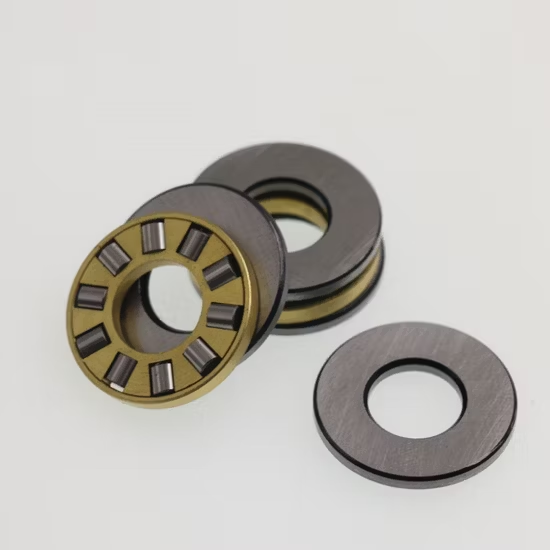
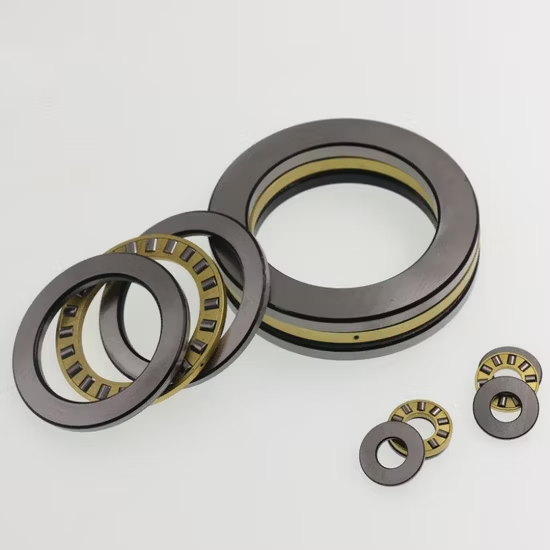


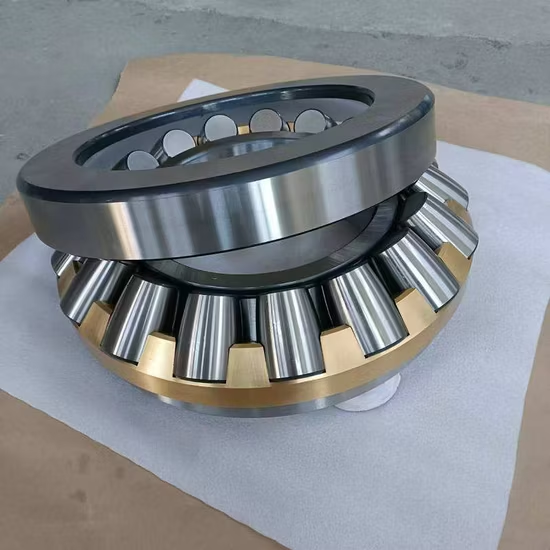
81112 81113 81114 81115 8111681117 81118 81119m Thrust Roller Bearing — Engineered for heavy-duty gearboxes and mining equipment to accommodate high axial loads.
Full Brand Authorization — One consolidated shipment covers SKF, FAG, and NSK variants for the 811 series without juggling multiple vendors.
| Parameter | Value |
|---|---|
| Designation | 81112 81113 81114 81115 8111681117 81118 81119m |
| Bearing Type | Thrust Roller Bearing |
| Origin | Germany / Japan / Sweden / Malaysia / China |
| HS Code | 8482500090 |
| Customization | Cross-brand interchange with matched clearance and cage specifications |
Note: The 'm' suffix in 81119m is an unverified designation requiring manufacturer catalog confirmation prior to procurement.
| Industry | Typical Applications |
|---|---|
| Heavy-duty gearboxes | Extruder screw thrust collars and vertical mixer drive shafts |
| Mining and crushing | Gyratory crusher main shaft support and apron feeder drive units |
| Machine tool spindles | Vertical boring mill rotary table axial load support |
Matching the base number without verifying the cage material and clearance class guarantees thermal binding under heavy axial loads.
Purchasing engineers frequently source thrust bearings by matching the basic designation alone, assuming dimensional equivalence guarantees operational success. In high-temperature environments like exhaust fans or extruder drives, a standard clearance bearing installed where thermal expansion demands a C3 or C4 fit will rapidly lose internal clearance. The rollers skew, the cage fractures, and the shaft seizes. This cross-reference error causes a significant share of premature catastrophic failures in heavy machinery .
Selecting the correct 81112 81113 81114 thrust roller bearing requires looking past the catalog dimensions to evaluate the actual operational envelope. Our technical review process cross-references your specific axial load magnitude, operating temperature, and rotational speed against the internal geometry of the bearing. We ensure the selected variant features the appropriate cage design and clearance class to handle the thermal gradients and shock loads inherent in your application, preventing the mismatched installations that plague standard supply chains.
Thrust roller bearings in vertical applications endure pure axial loads, but the real challenge emerges from thermal gradients between the housing and the rotating shaft. As temperatures rise, standard internal clearance vanishes, forcing the rollers against the raceways with destructive friction. Proper lubrication selection becomes critical; oil circulation is often required to dissipate heat in continuous heavy-duty operations, whereas grease might suffice for intermittent, lower-speed duties. Misjudging the thermal expansion rate relative to the selected clearance class leads directly to cage deformation and eventual roller skidding .
The operational lifespan of a thrust roller bearing is dictated by its internal components, not just its outer dimensions. Cage material selection defines the speed and vibration limits; machined brass cages offer superior durability under heavy loads and marginal lubrication, while pressed steel variants suit lighter, high-speed applications. Clearance classes must be matched to the assembly's thermal profile, ensuring sufficient internal play remains at operating temperature to prevent binding. Precision grades dictate the running accuracy, which is vital for machine tool spindles where axial runout directly compromises machining tolerances.
Substituting a thrust bearing based solely on dimensional interchangeability ignores critical internal design differences. A mismatched cage material or incorrect clearance class leads to unplanned downtime, premature failure, and potentially catastrophic damage to adjacent gearbox components or spindle housings. When a bearing seizes due to thermal binding, the resulting shaft scoring and housing deformation void equipment warranties and escalate repair costs far beyond the price of the component itself .
We provide authorized coverage across all major international brands, allowing mixed-brand requirements for complex gearboxes to be fulfilled in a single order. Our cross-reference protocol strictly aligns clearance, cage material, and precision suffixes, preventing the thermal binding caused by basic-number-only matching. Every batch includes full traceability to the manufacturer, verified via official brand apps to eliminate counterfeits with soft inner rings. Furthermore, our application-based selection review evaluates your specific load, speed, and temperature conditions to ensure the chosen 811 series variant survives the actual operating environment.
To ensure the selected thrust bearing survives your specific application, please provide the continuous and shock axial loads, operating speed, and expected thermal gradient. Sharing the OEM equipment number or the exact installation space dimensions allows our engineering team to perform a precise cross-reference and L10 life calculation. Detailing the environmental exposure, such as mining dust or high-temperature extruder heat, enables us to recommend the optimal cage material and clearance class for your machinery.
Q: Why must cross-referencing thrust bearings include clearance and cage suffixes?
A: Matching only the base number ignores internal design differences critical for thermal expansion and load capacity. A standard clearance bearing in a high-heat environment will bind and seize, while a pressed steel cage may fail under heavy shock loads where a machined brass cage is required. Aligning all suffixes ensures the replacement matches the original engineering intent.
Q: How do I verify the authenticity of the 811 series upon delivery?
A: Every authorized shipment includes traceable documentation and packaging marked with a unique QR code. By scanning this code using the specific brand's official mobile application, procurement and maintenance teams can instantly verify the manufacturing batch, origin, and authenticity, effectively filtering out sophisticated counterfeits with cloned visual markers.
Q: What determines the cage material selection for heavy-duty thrust applications?
A: The choice between machined brass and pressed steel cages depends on the operational vibration, load magnitude, and lubrication reliability. Brass cages provide superior guidance and durability under heavy axial loads and marginal lubrication conditions, while steel cages are typically reserved for lighter, higher-speed applications where friction and weight must be minimized.
Q: How does authorized sourcing protect international customs clearance?
A: Authorized distribution ensures every shipment is accompanied by accurate country-of-origin documentation and certificates of conformity. This prevents customs delays and penalties associated with undocumented industrial parts, ensuring that critical spare parts for mining or manufacturing operations arrive on schedule without administrative hold-ups.
Our 5-step process ensures every order is engineered, validated, and supported for optimal performance.
Technical needs assessment
Custom specifications
Free samples for $50k+
Pre-shipment inspection
On-site & predictive
Our certified engineers respond within 24 hours with detailed technical specifications, pricing, and lead time information.