01
Consultation
Technical needs assessment


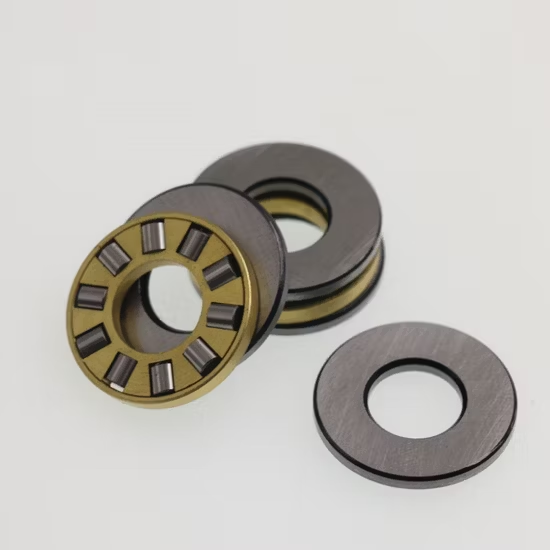
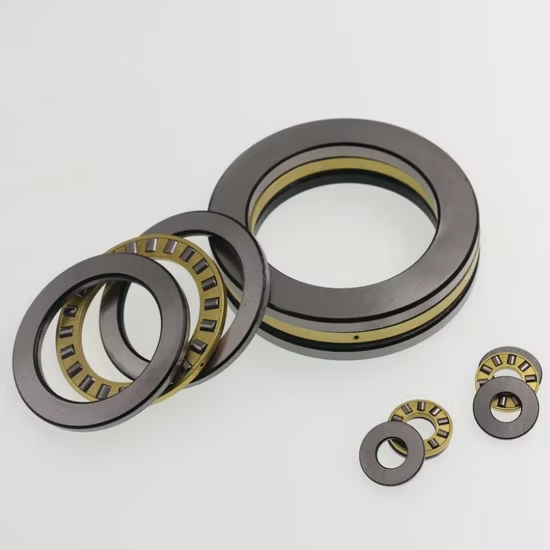
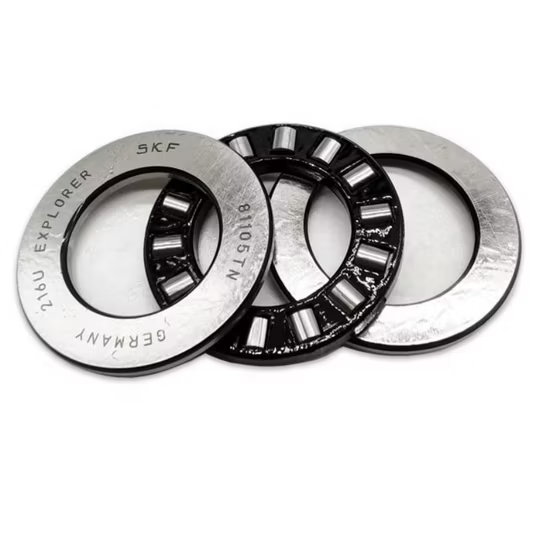

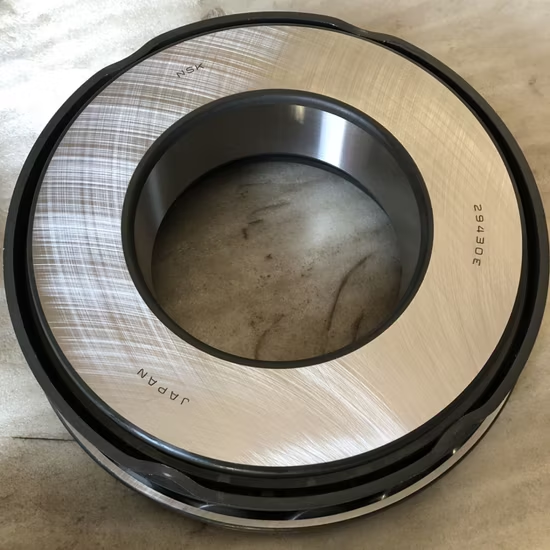
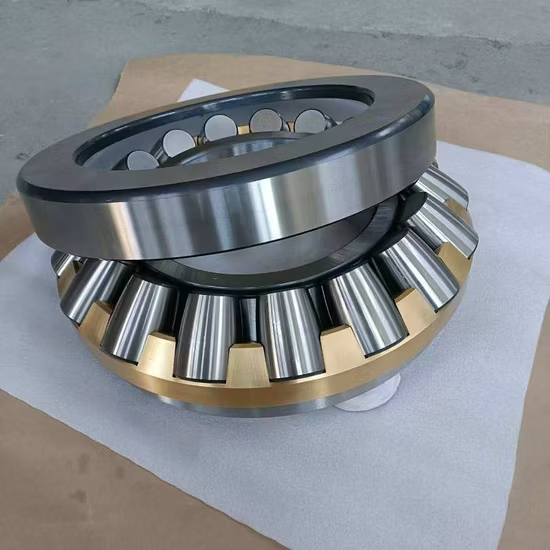
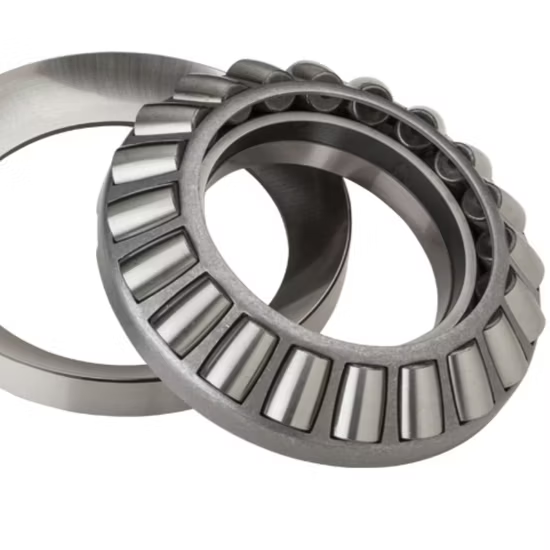
81111 Thrust Cylindrical Roller Bearing delivers high axial load capacity and rigidity for industrial gearboxes and machine tool spindles.
Traceable Thrust Roller Batches — Every 81111 unit ships with verifiable manufacturer lot codes and material certificates to eliminate soft-ring counterfeits in heavy axial applications.
| Parameter | Value |
|---|---|
| Designation | 81111 |
| Bearing Type | Thrust Cylindrical Roller Bearing |
| Origin | Germany / Japan / Sweden / Malaysia / China |
| Cage Material | Available in machined brass or pressed steel variants |
| Precision Class | Standard P0, with higher precision options available |
| Certification | ISO 9001 compliant manufacturing facilities |
| HS Code | 8482500090 |
| Industry | Typical Applications |
|---|---|
| Industrial Gearboxes | Extruder screw thrust support and heavy agitator drives |
| Machine Tool Spindles | Vertical boring mill rotary table axial positioning |
| Steel and Metallurgy | Continuous caster roll axial load management |
| Mining and Crushing | Gyratory crusher main shaft axial support |
A matching base designation guarantees nothing if the internal cage design is overlooked.
Procurement teams frequently source parts based solely on the numerical identifier, ignoring the critical internal components that dictate operational survival. I have personally inspected failed units in the Ningbo workshop where a standard pressed steel cage was installed in an 81111 application demanding high-speed rigidity, leading to rapid cage fragmentation under heavy axial loads . When evaluating an 81111 thrust cylindrical roller bearing supplier, buyers must verify that the cross-reference process accounts for cage material, precision class, and internal geometry, rather than just accepting a superficial number match that invites catastrophic field failures.
The 81111 configuration delivers exceptional axial rigidity required for vertical shafts and heavy extruder drives where radial loads are minimal but thrust forces are immense. Sourcing from a qualified 81111 thrust cylindrical roller bearing supplier ensures you receive components engineered to handle these unidirectional loads without roller skewing. Our technical team reviews your specific load profiles to confirm the selected variant aligns perfectly with your equipment's operational demands.
Thrust cylindrical roller bearings operate under severe sliding friction at the roller ends, generating substantial heat that directly impacts lubrication effectiveness. Inadequate oil flow or incorrect grease selection accelerates wear, while thermal expansion can close internal clearances and cause binding . Proper lubrication intervals and selecting the correct cage material to minimize friction are critical to preventing premature seizure in high-load environments.
While the base 81111 designation defines the envelope dimensions, the internal cage design dictates its survival in demanding applications. Machined brass cages offer superior strength, better heat dissipation, and enhanced stability under heavy loads and vibrations, making them ideal for severe gearbox environments. Conversely, pressed steel cages may suffice for lighter, lower-speed duties but risk structural failure if subjected to unexpected shock loads. Selecting the appropriate cage variant ensures the rolling elements maintain precise alignment, preventing edge-loading and extending the operational lifespan of the thrust assembly.
Installing a dimensionally correct but internally mismatched thrust bearing inevitably leads to unplanned downtime and severe secondary damage to adjacent gearbox components. A fragmented cage can jam the rotating assembly, causing catastrophic shaft scoring and housing destruction that voids equipment warranties. Following failure analysis frameworks outlined in ISO 15243, these preventable mechanical failures stem directly from inadequate technical vetting during the procurement phase .
We maintain authorized distribution channels across all major international brands, allowing you to consolidate mixed-brand requirements into a single, fully traceable shipment. Our cross-reference protocol strictly verifies cage material and internal geometry, preventing the common error of substituting a light-duty cage into a high-thrust application. Every shipment includes batch traceability and material test reports, ensuring the metallurgical integrity of the washers and rollers meets original equipment specifications. This rigorous technical vetting eliminates the risk of receiving counterfeit components with soft inner rings that pass casual visual inspections but fail rapidly under load.
To ensure optimal performance and accurate L10 life calculations, please provide detailed operating parameters including maximum axial load, rotational speed, and operating temperature ranges. Supplying the original OEM equipment number allows our engineering team to perform a comprehensive cross-reference check, verifying that the selected 81111 variant matches the exact internal design and cage material required by the machinery builder.
Q: How can I verify the authenticity of the 81111 bearings upon delivery?
A: Every genuine unit features a unique QR code on the packaging that links directly to the manufacturer's official verification app. Scanning this code confirms the batch number, production date, and origin, instantly exposing counterfeits with cloned labels or soft inner rings that fail under heavy axial loads.
Q: What cross-reference checks are critical beyond the base 81111 designation?
A: A reliable cross-reference must verify the internal cage material, precision class, and washer thickness. Matching only the base number often results in installing a light-duty pressed steel cage into an application requiring a heavy-duty machined brass cage, leading to rapid structural failure under high thrust loads.
Q: Which cage material is recommended for high-speed thrust applications?
A: Machined brass cages are generally preferred for high-speed or high-vibration environments due to their superior structural integrity, better heat dissipation, and enhanced roller guidance. Pressed steel cages are typically limited to lower-speed, steady-load applications where extreme rigidity is not the primary operational requirement.
Q: What mounting practices are required for the 81111 thrust assembly?
A: Installation must ensure that axial mounting forces are applied exclusively to the press-fit ring, never through the rolling elements or the cage. Misalignment during pressing or improper heating of the washers can cause immediate roller skewing, edge-loading, and premature catastrophic failure of the thrust mechanism.
Our 5-step process ensures every order is engineered, validated, and supported for optimal performance.
Technical needs assessment
Custom specifications
Free samples for $50k+
Pre-shipment inspection
On-site & predictive
Our certified engineers respond within 24 hours with detailed technical specifications, pricing, and lead time information.