01
Consultation
Technical needs assessment


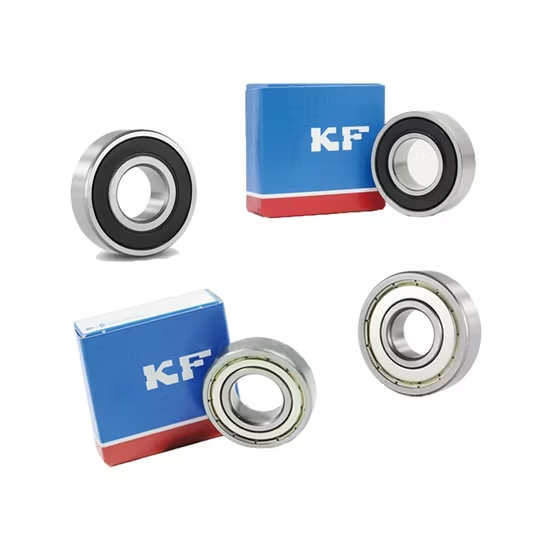


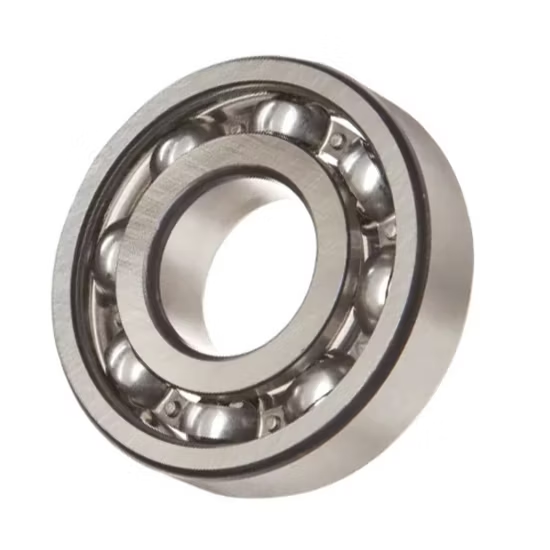
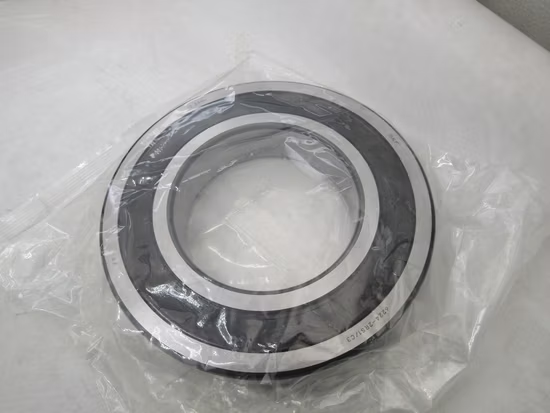
6322 C3 Deep Groove Ball Bearing — engineered with C3 internal clearance greater than standard to effectively accommodate thermal expansion during high-temperature operations or tight interference fits. This specific design prevents thermal binding in demanding industrial applications like electric motors and gearboxes.
Precision cross-reference alignment — We verify the base designation, C3 internal clearance, and exact seal configuration against your OEM requirements before shipment.
| Parameter | Value |
|---|---|
| Designation | 6322 C3 |
| Bearing Type | Deep Groove Ball Bearing |
| Clearance Class | C3 |
| Seal or Shield Type | Open, Rubber Seals, Iron Seals |
| Noise and Vibration Level | Z1V1, Z2V2, Z3V3, Z4V4 |
| Origin | Germany, Japan, Sweden, Malaysia, China |
| HS Code | 848210 |
| Industry | Typical Applications |
|---|---|
| Electric Motors | High-temperature motor shafts requiring thermal expansion compensation |
| Industrial Gearboxes | Intermediate shafts subject to combined radial loads and heat generation |
| Material Handling | Conveyor drive rollers operating in continuous duty cycles |
When sourcing a 6322 C3 deep groove ball bearing, overlooking the internal clearance specification is a frequent cause of catastrophic field failures.
Thermal expansion demands extra internal play to prevent seizure.
I have seen too many maintenance teams replace a seized unit only to find the inner ring turned blue from extreme friction. Installing a standard CN clearance where a C3 is required causes the rolling elements to bind as the shaft heats up. This thermal binding destroys the cage and ruins the housing, leading to unplanned downtime that costs far more than the component itself.
Sourcing the correct 6322 C3 deep groove ball bearing ensures your equipment maintains optimal radial play even as operating temperatures climb. Our technical review process cross-references your OEM equipment number to confirm that the C3 suffix is genuinely required for your specific thermal profile, preventing the accidental installation of standard clearance units that would inevitably bind under heat.
Electric motors and gearboxes generate substantial heat during continuous operation, which transfers directly into the bearing assembly and reduces internal clearance. Without the compensating gap provided by a C3 class, the rolling elements experience excessive preload, accelerating lubricant degradation and cage wear. Furthermore, environments with heavy particulate matter demand the correct seal selection—whether rubber or iron—to prevent contaminant ingress without introducing excessive frictional heat.
The C3 designation indicates an internal radial clearance greater than the standard CN class, specifically engineered to absorb the dimensional changes caused by thermal gradients between the inner and outer rings. For applications requiring quieter operation, such as precision electric motors, selecting the appropriate noise and vibration level—from Z1V1 up to Z4V4—ensures the bearing meets strict acoustic thresholds. The availability of open, rubber-sealed, and iron-shielded variants allows maintenance engineers to balance contamination protection against speed limitations.
Substituting a standard clearance bearing in a high-temperature application triggers a rapid cascade of failures governed by the principles outlined in ISO 281. The resulting thermal seizure not only destroys the bearing but frequently scores the shaft and damages the housing bore. This collateral damage transforms a simple component swap into a major mechanical overhaul, voiding equipment warranties and causing severe production losses.
We eliminate the risk of receiving counterfeit units with soft inner rings by providing full batch traceability directly from the manufacturer's production facilities. Our cross-reference protocol strictly aligns the base number, C3 clearance, and seal type, ensuring you never receive a mismatched variant that looks correct on the box but fails in the field. By consolidating mixed-brand requirements into a single order, we streamline your supply chain while maintaining rigorous authenticity checks for every single unit shipped.
To ensure the selected bearing perfectly matches your application, please provide your specific radial and axial load profiles, operating speeds, and expected thermal gradients. Sharing your OEM equipment numbers allows our engineering team to perform a comprehensive cross-reference review and verify the L10 life calculation. This technical alignment guarantees that the internal clearance and sealing configuration are optimized for your exact operational environment.
Q: What is the practical difference between 6322 C3 and standard CN clearance in motor applications?
A: The C3 designation provides greater internal radial clearance than the standard CN class. In electric motors, the inner ring expands faster than the outer ring due to heat transfer from the shaft. The extra play in a C3 bearing compensates for this thermal expansion, preventing the rolling elements from binding and seizing during continuous high-temperature operation.
Q: How can I verify the authenticity and batch origin of the received bearings?
A: Every unit we supply includes batch traceability documentation and a verifiable QR code. You can scan this code using the official mobile applications provided by the original manufacturer to confirm the production date, facility origin, and genuine C3 clearance specification, completely eliminating the risk of accepting cloned or counterfeit products.
Q: How do I choose between rubber seals and iron shields for gearbox applications?
A: Iron shields provide a non-contact gap that limits large particle ingress while maintaining low friction, making them ideal for high-speed shafts. Rubber seals offer contact-based protection against fine dust and moisture but generate slightly more frictional heat. The choice depends on your specific contamination levels and the thermal limits of your gearbox housing.
Q: What parameters must be checked during cross-brand substitution besides the base number?
A: A reliable cross-reference must align the base designation, internal clearance class, cage material, and seal configuration. Matching only the base number while overlooking a C3 clearance requirement or a specific noise grade will result in thermal binding or acoustic failures, as internal geometries vary significantly between different manufacturers.
Q: How do Z1V1 to Z4V4 noise and vibration levels affect motor spindle performance?
A: These grades define the strictness of the acoustic and vibration tolerances during manufacturing. Higher grades, such as Z3V3 or Z4V4, indicate tighter control over surface waviness and rolling element precision. This results in exceptionally smooth rotation, which is critical for minimizing resonance and extending the operational life of high-speed electric motor spindles.
Our 5-step process ensures every order is engineered, validated, and supported for optimal performance.
Technical needs assessment
Custom specifications
Free samples for $50k+
Pre-shipment inspection
On-site & predictive
Our certified engineers respond within 24 hours with detailed technical specifications, pricing, and lead time information.