01
Consultation
Technical needs assessment

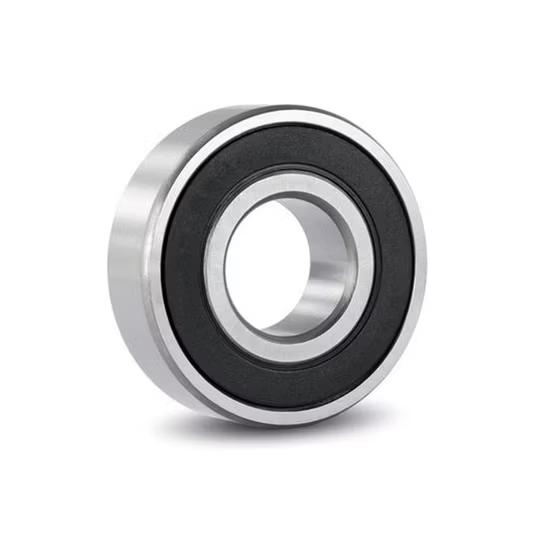

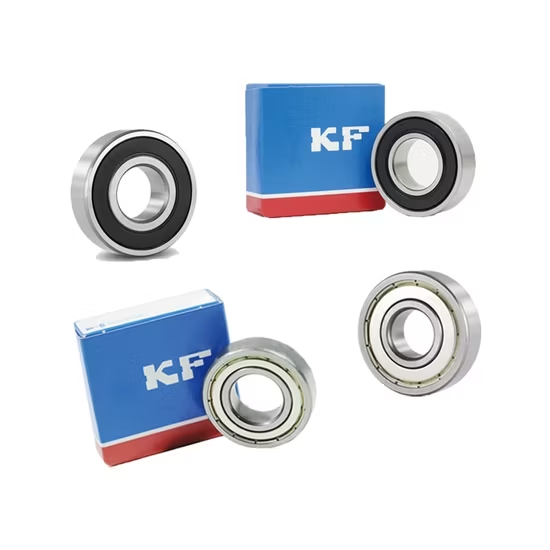


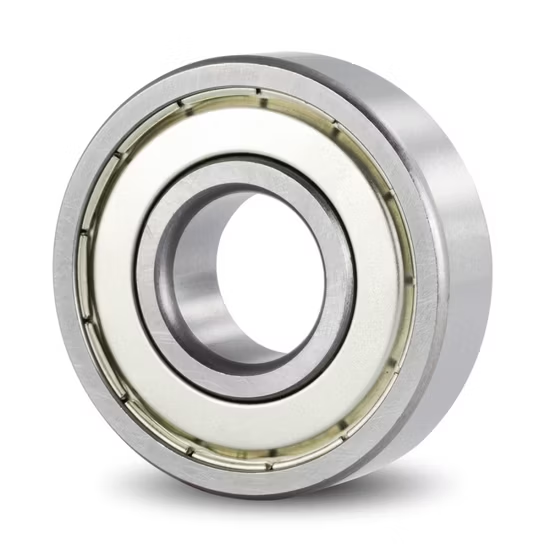
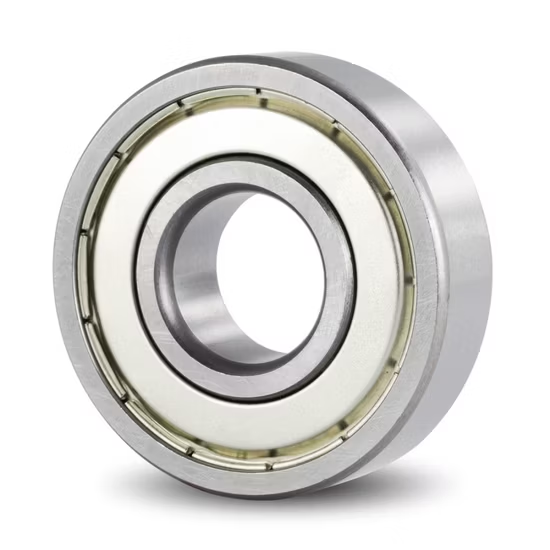
62200 Deep Groove Ball Bearing P5 P4 2RS — featuring double-sided contact seals for reliable contamination exclusion and maintenance-free operation. The P5 and P4 precision classes deliver tighter dimensional and running accuracy for demanding electric motor and gearbox applications.
Traceable Batch Origins — Every 62200 unit ships with manufacturer lot documentation for full supply chain transparency.
| Parameter | Value |
|---|---|
| Designation | 62200 |
| Bearing Type | Deep Groove Ball Bearing |
| Precision Class | P5 (ISO Class 5), P4 (ISO Class 4) |
| Seal Type | 2rsh / 2RS1 (Double-sided contact seal), Open, Iron Seals |
| Quality Level | Z1V1, Z2V2, Z3V3, Z4V4 |
| Feature | Low Noise, High Speed, Long Service Life |
| Origin | Germany, Japan, Sweden, Malaysia, China |
| Industry | Typical Applications |
|---|---|
| Electric Motors | Rotor shaft supports, stator end-shields, cooling fan drives |
| Industrial Pumps | Impeller shaft alignments, seal chamber bearing housings |
| Material Handling | Conveyor drive pulleys, belt return roller idlers |
| Gearboxes | High-speed input shafts, intermediate gear supports |
Precision and seal suffixes dictate actual field performance.
Sourcing by base number alone is a common procurement trap that leads to catastrophic field failures. When purchasing teams overlook critical suffixes, they might install standard precision components into high-speed spindles or use open bearings in dusty environments. I once inspected a batch of 62205 bearings installed in an electric motor assembly; the procurement team ignored the P5 precision and 2RS1 seal suffixes, resulting in severe operational noise and immediate dust ingress. That same logic applies directly to the 62200 deep groove ball bearing. Ignoring these specific designators causes premature thermal binding and contamination failures, turning a simple replacement into an unplanned downtime event .
Selecting the correct 62200 deep groove ball bearing requires aligning the precision class and sealing arrangement with the specific operational demands of electric motors and industrial pumps. For high-speed motor shafts, opting for P4 or P5 precision ensures tighter dimensional tolerances, drastically reducing vibration and acoustic noise. When these motors operate in dirty environments, specifying the 2RS1 or 2rsh double-sided contact seal prevents abrasive particles from entering the raceway, preserving the lubricant and extending service life.
Conveyor drive pulleys and gearbox input shafts subject bearings to continuous radial loads and moderate axial thrust, often accompanied by significant heat generation. At elevated temperatures, standard internal clearances can diminish, leading to excessive friction and premature cage failure if thermal expansion is not accounted for during selection. Furthermore, gearboxes frequently experience oil splash or mist lubrication, meaning the seal type must either retain the factory grease while excluding gear oil, or remain open to allow external lubrication flow. Properly addressing these thermal and lubrication variables prevents the accelerated fatigue documented in ISO 281 life calculations .
The P5 and P4 suffixes indicate ISO Class 5 and Class 4 precision, respectively, which govern the running accuracy and dimensional tolerances of the bearing. These tighter tolerances are non-negotiable for applications demanding minimal vibration and high rotational speeds. The 2RS1 and 2rsh suffixes denote double-sided contact seals, typically made of nitrile rubber, which provide excellent protection against dust and moisture ingress. While these contact seals introduce slightly higher friction compared to non-contact metal shields, they are essential for maintaining lubrication integrity in contaminated environments, directly supporting the low noise and long service life features required in modern machinery.
Failing to verify the exact suffix combination often results in severe operational disruptions and voided equipment warranties. Installing a standard precision bearing where P5 is required generates excessive vibration, which rapidly degrades adjacent mechanical seals and couplings. Similarly, omitting the 2RS1 seal in a dusty pump house allows particulate contamination to score the raceways, leading to catastrophic spalling and unplanned production halts. These specification mismatches transform minor maintenance tasks into major rebuilds, significantly inflating the total cost of ownership .
We eliminate cross-reference errors by verifying not just the base designation, but every critical suffix, ensuring the clearance and precision match your exact application. Our authorized multi-brand coverage means you can consolidate your SKF, FAG, and NSK requirements into a single, fully traceable order without juggling multiple suppliers. When you request a 62200 deep groove ball bearing, we review your load and speed parameters to confirm that the selected P4 or P5 class is genuinely necessary, preventing over-engineering. Furthermore, our strict batch traceability protocols guarantee that every unit shipped can be authenticated via official brand applications, completely neutralizing the risk of counterfeit parts with cloned QR codes.
To ensure the selected bearing perfectly matches your machinery, please provide detailed operational parameters, including radial and axial loads, continuous operating speeds, and ambient temperature ranges. Sharing the specific OEM equipment number allows our engineering team to perform a comprehensive cross-reference check, verifying that the precision class and seal type align with the original manufacturer's intent. This technical review guarantees that the proposed solution addresses your specific environmental challenges and load profiles.
Q: How do I verify the authenticity of the 62200 deep groove ball bearing upon delivery?
A: Every bearing we supply includes batch traceability documentation and a unique QR code. You can scan this code using the official mobile application provided by the specific manufacturer. This direct verification confirms the production facility, original batch number, and precision class, ensuring the component is genuine and protecting your equipment from the severe risks associated with counterfeit parts.
Q: What is the practical difference between P5 and P4 precision for this application?
A: P4 precision offers tighter dimensional and running tolerances compared to P5, which translates to lower vibration and reduced acoustic noise at high rotational speeds. For standard industrial motors, P5 is typically sufficient, but high-frequency spindles or sensitive laboratory equipment often mandate P4. We review your specific speed and vibration requirements to recommend the most cost-effective precision class.
Q: How do I choose between 2RS1 contact seals and open bearings?
A: The 2RS1 double-sided contact seal provides excellent exclusion of dust and moisture, making it ideal for dirty environments like conveyors or agricultural pumps. However, contact seals generate slightly more friction. If the bearing operates in a clean, sealed gearbox housing where external oil splash lubrication is required, an open design is necessary to allow the lubricant to flow freely through the bearing.
Q: Can I cross-reference this bearing to other major brands?
A: Yes, we provide cross-reference equivalents across major international brands such as SKF, FAG, NSK, and NTN. However, we strictly verify that the replacement matches not only the base 62200 designation but also the critical suffixes for precision, internal clearance, and seal type. This prevents the common field failures caused by mismatched internal geometries.
Our 5-step process ensures every order is engineered, validated, and supported for optimal performance.
Technical needs assessment
Custom specifications
Free samples for $50k+
Pre-shipment inspection
On-site & predictive
Our certified engineers respond within 24 hours with detailed technical specifications, pricing, and lead time information.