01
Consultation
Technical needs assessment

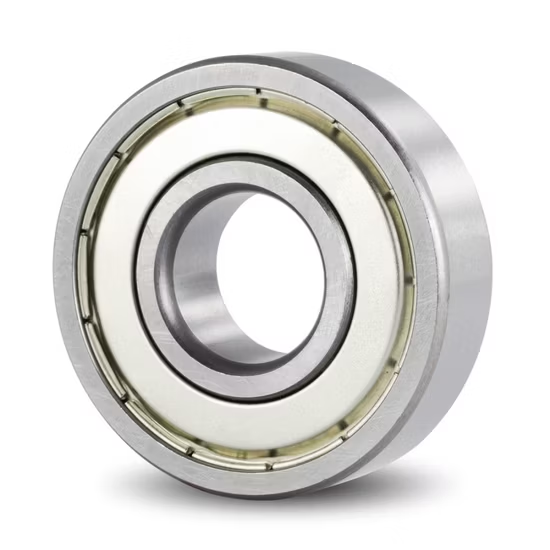


6210 2z Deep Groove Ball Bearing 50×90×20 mm — GCr15 steel construction provides high hardness for rolling contact fatigue. The double shielded setup retains lubrication and excludes dust at moderate speeds without the friction penalty of contact seals.
Multi-Brand Authorized Sourcing — Consolidate mixed OEM requirements into a single shipment without juggling multiple vendor lead times for your motor and gearbox spares.
| Parameter | Value |
|---|---|
| Designation | 6210 2z |
| Bearing Type | Deep Groove Ball Bearing |
| Bore Diameter (d) | 50 mm |
| Outside Diameter (D) | 90 mm |
| Width (B) | 20 mm |
| Seal or Shield Type | 2z (Double shielded) |
| Material | GCr15 |
| Origin | Shanghai |
| Industry | Typical Applications |
|---|---|
| Electric Motors | Rotor shaft support in standard induction motors |
| Industrial Gearboxes | Intermediate shaft positioning and radial load support |
| Material Handling | Drive and tail pulley bearings in belt conveyors |
| Fluid Management | Impeller shaft support in centrifugal water pumps |
Sourcing a generic replacement often overlooks the critical thermal limits of standard grease packed inside double shielded cavities.
The 6210 2z deep groove ball bearing delivers reliable dust exclusion, but its factory grease must match the operational temperature envelope.
Procurement teams frequently approve cross-references that match the base 50x90x20mm dimensions while ignoring internal clearance and lubricant specifications. This oversight leads to lubricant degradation and eventual cage failure when the motor operates continuously near its thermal ceiling .
Direct drop-in replacements for the 6210 series are ubiquitous in standard electric motors and light gearboxes. Specifying the correct 6210 2z deep groove ball bearing ensures the housing tolerances and shaft fits align perfectly with the original equipment design, preventing misalignment-induced friction. Our engineering team verifies these dimensional envelopes against your specific OEM equipment numbers to guarantee physical compatibility.
Deep groove ball bearings in industrial environments constantly battle particulate ingress and thermal expansion. The non-contact shield design minimizes friction heat generation compared to rubber contact seals, making it ideal for higher-speed motor applications where temperature rise is a primary concern. However, operating beyond the thermal limit of standard bearing steel and conventional greases will rapidly accelerate fatigue . Proper ventilation and ambient temperature monitoring are essential to maintain the integrity of the internal lubricant film.
The 2z suffix indicates metal shields pressed into the outer ring, providing a physical barrier against large dust particles while retaining the factory-filled lubricant. This non-contact sealing arrangement avoids the friction penalty associated with rubber lip seals, allowing the bearing to achieve higher limiting speeds in electric motor applications. The GCr15 high-carbon chromium bearing steel construction provides the necessary core hardness and rolling contact fatigue resistance required for standard radial loads. Selecting the appropriate internal clearance class alongside this shield type ensures the bearing accommodates thermal expansion without binding the rolling elements.
Installing a basic open or incorrectly sealed variant in a dusty conveyor environment invites rapid abrasive wear. According to ISO 15243 frameworks, solid particle contamination is a leading cause of premature surface distress and spalling . This unplanned downtime cascades into catastrophic damage to adjacent gearbox components, voiding equipment warranties and inflating maintenance budgets far beyond the initial savings of a cheaper, mismatched part.
We prevent the common error of supplying standard CN clearance when a C3 is actually required for high-speed motor thermal expansion. Our cross-reference protocol checks the seal type, cage material, and internal clearance, not just the base 50x90x20mm designation. Because we hold authorized distribution across all major international brands, we can fulfill mixed-brand MRO orders from a single verified inventory. Every batch is traced back to the manufacturer, ensuring you receive genuine components rather than visually identical counterfeits with soft inner rings.
To facilitate an accurate L10 life calculation and selection review, please provide the specific radial and axial loads, operating speeds, and ambient temperature ranges for your application. If you are replacing an existing component, sharing the exact OEM equipment number or motor nameplate data allows our team to perform a precise cross-reference check. Detailing the environmental exposure helps us confirm if the standard 2z shield and factory grease are sufficient for your operational demands.
Q: How do I verify the authenticity of the received units?
A: Each shipment includes batch traceability documentation and unique QR codes. You can scan these codes using the respective brand's official mobile application to instantly verify the manufacturing origin and confirm the bearings are genuine, completely eliminating the risk of installing counterfeit parts with compromised metallurgical integrity.
Q: What cross-reference checks are performed beyond the base number?
A: We verify the internal clearance class, cage material, and exact seal configuration. A base match is insufficient; installing a standard clearance variant in a high-temperature motor will cause thermal binding. Our technical review ensures all suffixes align perfectly with your specific operational parameters and OEM requirements.
Q: When should I choose 2z shields over 2RS contact seals?
A: The 2z metal shields are optimal for applications requiring higher rotational speeds and lower friction torque, such as electric motor rotors. Unlike rubber 2RS seals, non-contact shields do not generate additional friction heat, though they offer slightly less protection against fine moisture or liquid ingress compared to contact lip seals.
Q: How does internal clearance affect thermal expansion in motors?
A: Standard CN clearance may suffice for moderate temperatures, but high-speed motors often require C3 clearance to accommodate thermal expansion of the shaft and housing. If the clearance is too tight, the rolling elements will bind as the equipment reaches operating temperature, leading to rapid overheating and premature cage failure.
Our 5-step process ensures every order is engineered, validated, and supported for optimal performance.
Technical needs assessment
Custom specifications
Free samples for $50k+
Pre-shipment inspection
On-site & predictive
Our certified engineers respond within 24 hours with detailed technical specifications, pricing, and lead time information.