01
Consultation
Technical needs assessment



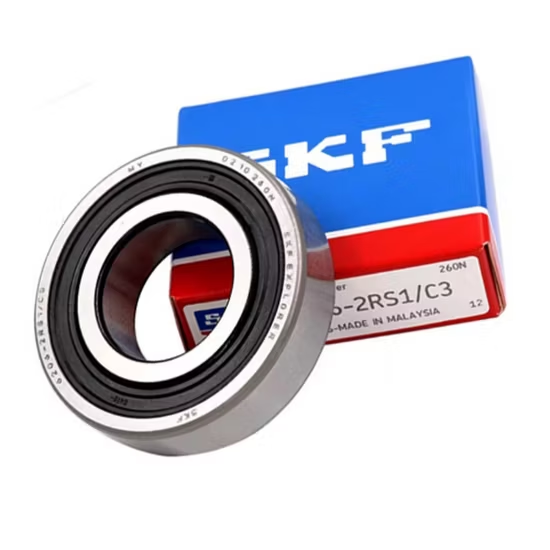
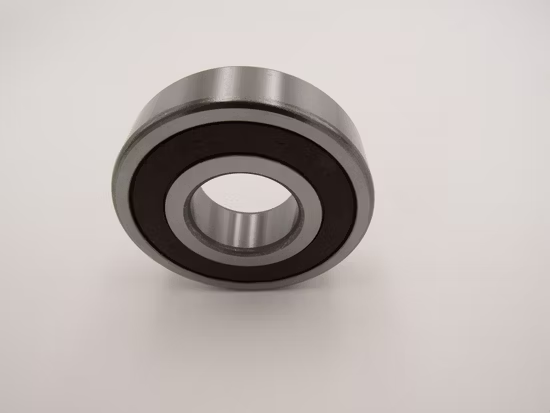


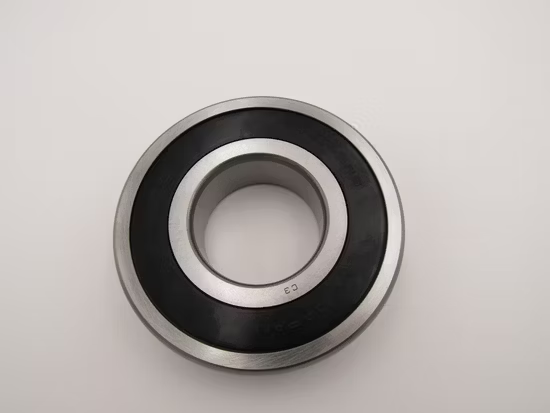
6203 2RS Deep Groove Ball Bearing — double-sided contact rubber seals retain factory grease and block contaminants, ensuring maintenance-free operation in electric motors, pumps, and industrial gearboxes. Each unit ships with full batch traceability to the original manufacturer, verified through brand-authorized distribution channels.
Precision Cross-Reference Alignment — We verify internal clearance, cage material, and seal geometry during interchange, ensuring your replacement matches exact OEM operational demands rather than just sharing a base number.
| Parameter | Value |
|---|---|
| Designation | 6203 2RS |
| Bearing Type | Deep Groove Ball Bearing |
| Bore Diameter (d) | 17 mm |
| Outside Diameter (D) | 40 mm |
| Width (B) | 12 mm |
| Seal or Shield Type | Double-sided contact rubber seal (2RS) |
| Noise and Vibration Level | Z1V1, Z2V2, Z3V3, Z4V4 options |
| Origin | Germany / Japan / Sweden / Malaysia / China |
| Industry | Typical Applications |
|---|---|
| Electric Motors | Rotor shaft support in continuous-duty induction motors requiring low-noise operation |
| Industrial Gearboxes | High-speed input shaft sealing against oil mist and fine particulate ingress |
| Material Handling | Conveyor roller drive pulleys demanding reliable grease retention and low friction |
A correct base number means nothing if the internal clearance and seal friction do not match the thermal reality of the motor shaft.
I have seen procurement teams source replacements based solely on the base designation, ignoring the suffix. In one Dongguan motor plant, substituting a standard cage where a high-vibration application demanded specific internal geometry led to early cage fracture. When the wrong seal type creates excessive friction or the clearance binds under thermal expansion, the component seizes long before its calculated fatigue life. Sourcing a genuine 6203 2RS deep groove ball bearing requires verifying that the physical seal lip and internal geometry strictly align with the equipment's thermal and mechanical profile .
Selecting the right variant goes beyond matching the outer dimensions. We review the specific axial and radial loads, operating temperatures, and vibration profiles of your electric motors to confirm the seal friction and internal geometry are appropriate. This application-based selection review ensures the 6203 2RS deep groove ball bearing operates reliably without generating excess heat or suffering from premature lubricant starvation.
Electric motor shafts experience rapid temperature rises during startup, which directly impacts internal clearance. If the clearance is too tight, thermal expansion causes the rolling elements to bind, generating catastrophic friction. Simultaneously, the double-sided contact rubber seal must retain factory grease while preventing fine dust ingress, yet it inherently creates drag. Balancing this seal friction against the motor's cooling capacity and rotational speed is critical to preventing localized overheating and early lubricant degradation .
The 2RS suffix indicates a double-sided contact rubber seal, which provides superior protection against contaminants compared to non-contact metal shields, though it introduces slightly higher rotational torque. For electric motors, this seal type is essential to retain the correct grease fill and block moisture. Furthermore, the availability of Z1V1 through Z4V4 noise and vibration grades allows procurement engineers to specify the exact acoustic performance required. Higher Z/V groups undergo stricter manufacturing tolerances to minimize operational hum in sensitive household appliances or precision industrial drives.
Overlooking the exact suffix combination often results in unplanned downtime that far exceeds the cost of the component itself. Installing a standard clearance variant in a high-temperature motor leads to thermal binding, causing catastrophic damage to the shaft and housing. Similarly, accepting counterfeit units with soft inner rings results in rapid raceway wear and warranty voidance for the final equipment. Adhering to failure mode classifications helps buyers recognize that most premature failures stem from specification mismatches rather than inherent material defects .
We provide authorized coverage across all major brands, allowing you to consolidate mixed-brand requirements into a single, traceable order. Our cross-brand interchange process strictly matches clearance, cage design, and seal types, preventing the dangerous assumption that identical base numbers are universally interchangeable. Every batch is verified for authenticity, eliminating the risk of soft inner rings and cloned QR codes that plague the secondary market. We also supply comprehensive technical support to resolve unusual load or speed conditions before the purchase is finalized.
To ensure optimal performance, please share your specific operational parameters, including radial and axial loads, continuous operating speeds, and ambient temperature ranges. Providing the exact OEM equipment number allows our engineering team to perform a precise cross-reference review, verifying that the internal clearance and seal configuration perfectly match your application. This technical validation guarantees that the selected component integrates flawlessly into your assembly without requiring physical modifications.
Q: How do I verify the authenticity of the 6203 2RS batch using official apps?
A: Scan the QR code on the packaging using the specific brand’s official mobile application. This process connects directly to the manufacturer's database, confirming the production date, facility, and batch number. It effectively exposes cloned labels and counterfeit units that merely copy the visual design of the original packaging without possessing valid digital traceability records.
Q: What is the application boundary between 2RS rubber seals and 2Z metal shields?
A: The 2RS rubber seal provides excellent protection against moisture and fine dust but generates slightly higher friction due to lip contact. Metal shields (2Z) offer lower friction and higher speed capabilities but provide less effective sealing against liquid ingress. The choice depends on whether your motor prioritizes maximum contamination exclusion or absolute minimal rotational torque.
Q: Why does a base number match but suffix mismatch cause equipment failure?
A: The base number only defines the physical envelope dimensions. Suffixes dictate internal clearance, cage material, and seal type. Installing a standard clearance unit in a high-heat application causes thermal binding, while using an open bearing where a 2RS seal is required leads to rapid grease washout. These mismatches alter the internal load distribution, triggering premature fatigue and catastrophic seizure.
Q: How should I select the appropriate Z/V noise and vibration grade for electric motors?
A: Standard Z1V1 is sufficient for general industrial gearboxes and heavy conveyors where ambient noise masks operational hum. For precision spindle motors, household appliances, or medical equipment, specifying Z3V3 or Z4V4 is necessary. These higher grades undergo stricter sorting to eliminate microscopic surface deviations that cause high-frequency acoustic emissions and structural resonance.
Q: How does authorized distribution guarantee complete inspection reports?
A: Authorized channels maintain direct data links with the manufacturer’s quality control systems. When you request documentation, we can pull the exact dimensional and running accuracy inspection reports for your specific batch. This ensures the Z/V tolerances and seal friction values are formally certified, rather than relying on generic, unverified third-party testing sheets.
Our 5-step process ensures every order is engineered, validated, and supported for optimal performance.
Technical needs assessment
Custom specifications
Free samples for $50k+
Pre-shipment inspection
On-site & predictive
Our certified engineers respond within 24 hours with detailed technical specifications, pricing, and lead time information.